
How Real-Life Movement, Design, and Experience Shape Pet-Welcoming Retail Environments
Shopping districts don’t become pet-welcoming just by allowing dogs. The real difference is how easily people can move, shop, and spend time across multiple stops with their pets. When the experience works, visitors stay longer, explore more, and return more often.
Key Takeaways
- Pet-welcoming districts support real-life movement across multiple stops, not just pet access.
- Thoughtful design—like relief areas, shade, and trash stations—improves usability.
- Well-managed environments reduce friction between visitors, pets, and businesses.
- Visitors stay longer and visit more stores when the experience feels easy.
- Pet-welcoming districts create stronger local engagement and repeat visits.
Pet ownership continues to grow, with approximately 66% of U.S. households including pets and an estimated 68 million households owning dogs. This shift is changing how people shop, turning routine errands into longer, experience-driven outings that include their pets.
For shopping districts, this is less about accommodation—and more about how the environment functions in real life.
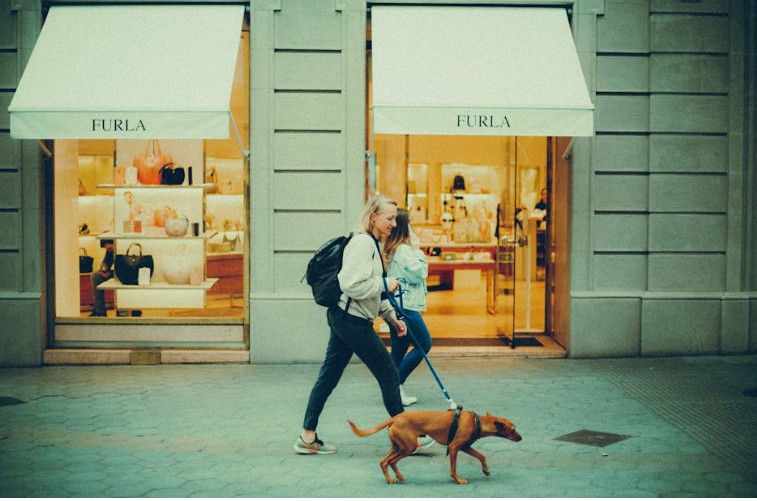
How People Actually Move Through a Shopping District with a Dog
The pet-welcoming experience starts before the first store.
- Parking and arrival: Easy access and a small dog relief area near parking (like a mini dog park) set the tone immediately
- Walking between stores: Wide walkways and clear flow reduce stress and allow dogs to move comfortably
- Entering and exiting shops: Smooth transitions matter, especially in mixed indoor-outdoor environments
- Pausing and resting: Seating, shade, and water access allow visitors to stay longer
- Multi-stop flow: When the experience works, people naturally visit more places instead of leaving early
If any part of this flow breaks down, the visit becomes shorter—and less likely to repeat.
Why Environment Design Matters More Than Format
Open-air districts often make pet inclusion easier—but the real advantage comes from how spaces are designed.
- Covered walkways or partial roofing (like El Cerrito Plaza in El Cerrito, CA) allow people to stay even in changing weather
- Thoughtful layouts create flexibility across seasons and conditions
- Consistent design across businesses reduces friction between stops
Well-designed environments support both movement and comfort, regardless of whether the district is fully open-air or mixed-use.
Real-World Design Details That Make a Difference
Small details have a big impact on whether a space actually works.
- Plenty of trash cans with dog waste bags available throughout the district
- Durable, easy-to-clean surfaces that handle wear and weather
- Shade, seating, and water stations placed along natural walking paths
- Safe, designated areas for short breaks
Districts like Santana Row show how integrating relief areas near parking and walkable paths helps support longer visits.
These features reduce friction and make the experience feel intuitive rather than managed.
Why Behavior and Flow Shape the Experience
A pet-welcoming district depends on both environment and behavior.
- Well-trained, socialized dogs are easier to integrate into busy retail settings
- Owners who manage their dogs responsibly contribute to a smoother experience
- Consistent expectations across stores prevent confusion
Flow matters just as much as design. When movement feels natural, interactions between people, pets, and businesses become easier.
How Pet-Welcoming Districts Increase Time and Spending
When the environment works, behavior changes.
- Visitors stay longer because the experience feels manageable
- People are more likely to visit multiple stores in one trip
- Dining, shopping, and socializing blend into one experience
Studies and retail observations show that pet-welcoming environments can significantly increase foot traffic and dwell time—some districts report measurable increases in visitor engagement after implementing pet-friendly strategies.
The result is not just more visitors, but more time spent per visit.
Social Interaction and Community Building
Dogs naturally change how people interact in shared spaces.
- Conversations start more easily between visitors
- Regulars begin to recognize each other
- Staff build familiarity with returning customers and their pets
These small interactions create a sense of place that goes beyond shopping. Over time, districts become destinations where people return not just for products, but for the experience.
From Retail Space to Local Destination
Some districts go further by supporting community-driven experiences.
- casual pet-friendly events
- partnerships with local rescues
- informal gatherings that encourage repeat visits
These experiences are most effective when they feel like a natural extension of how people already use the space.
Creating Shopping Districts That Actually Work
The goal is not simply to allow pets—it is to create an environment that supports how people actually move, shop, and spend time with them.
Districts that focus on real-life usability, thoughtful design, and consistent expectations create experiences that visitors trust.
That trust leads to longer visits, more exploration, and stronger connections to the places people return to.
For more insights on pet-welcoming environments, visit https://petscango.com/articles/