

Summary
Think your balcony is safe for your pet? Most apartment owners miss critical species-specific risks—cats aren’t just small dogs, and rabbits face dangers neither species do. One overlooked detail about floor temperature could prevent a painful injury today.
Key Takeaways
- Balconies can be safe for dogs, cats, and rabbits — but physical containment must come before anything else.
- Each species carries unique risks: cats climb and jump, dogs react to triggers, and rabbits are sensitive to heat, drafts, and tiny escape gaps.
- Floor surfaces and weather are hidden hazards that most pet owners overlook until it’s too late.
- A well-designed balcony doubles as an enrichment zone — with the right setup, it supports mental stimulation, not just fresh air.
- HOA rules can complicate balcony modifications, but renter-friendly, removable solutions exist for almost every setup — more on that below.
For apartment and condo dwellers, the balcony is often the closest thing to a backyard. That small outdoor space can be a genuine quality-of-life upgrade for pets — a place to sniff, sunbathe, observe, and decompress. But it only works when it’s built correctly. A balcony without proper containment isn’t an enrichment space; it’s a hazard. The good news? With the right approach, it’s very achievable. PetsCanGo.com’s resource library covers the full picture for pet owners navigating exactly this challenge.
Balconies Can Work — But Containment Comes First
The single most important rule for any pet balcony setup: design for containment first, enrichment second. It sounds simple, but it’s easy to get excited about snuffle mats and cat perches before securing the railing gaps that actually keep a pet safe.
Pets should never be left alone on a balcony unless the space is fully enclosed, escape-proof, weather-safe, and regularly checked. Even a short, unsupervised window creates real risk — a startled dog can bolt toward the edge, a curious cat can squeeze through a gap, and a rabbit can vanish through an opening that looked far too small. The goal is a controlled outdoor room, not an unattended play area. Once that mindset is in place, everything else becomes easier to plan around.

Seal the Gaps: Physical Barriers That Actually Hold
1. Mesh, Netting, or Plexiglas Panels for Railing Gaps
Railing gaps are the most obvious vulnerability on any balcony, and they need to be addressed with real materials — not improvised fixes. Safety mesh, netting, and Plexiglas or acrylic panels are the most commonly recommended solutions, and each has its place depending on the railing style and the pet involved.
Mesh and netting are affordable and flexible, making them easy to fit around irregular railings. Plexiglas and acrylic panels offer a cleaner look and better wind protection — which can benefit smaller animals like rabbits — though shade must still be provided, as these panels do not block solar heat and rabbits can overheat quickly in direct sun. Whatever material is chosen, it should be secured tightly at every fastener point — zip ties, tension mounts, and seams should all be inspected regularly for wear or loosening. Decorative netting that pets can chew, pull, or push through isn’t a safety measure; it’s a false sense of security.
2. Species-Matched Barrier Strength (Cats Climb, Rabbits Squeeze)
Not every barrier works for every pet — and this is where a lot of well-meaning setups fall short. Cats are exceptional climbers and jumpers, so any barrier needs to extend high enough and angle inward if possible, with no footholds that allow an upward scramble. A standard mesh panel that works fine for a medium-sized dog may be completely inadequate for a determined cat.
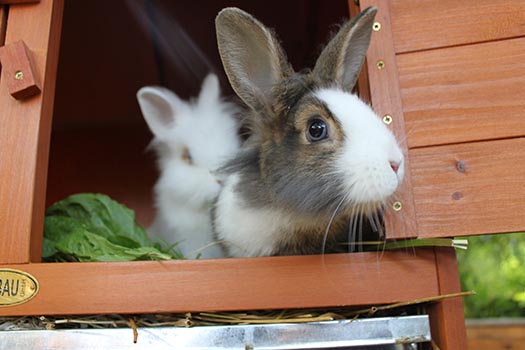
Rabbits present a different challenge entirely. They can squeeze through surprisingly small openings, and their enclosures need fine-aperture material — aviary wire is a commonly recommended option — covering all sides, including above, to protect against both escape and aerial predators like hawks. Dogs need barriers matched to their specific size, weight, and jumping strength. A small terrier and a large retriever are not the same safety problem.
3. Keep Furniture Away from Edges — No Launch Points
Physical barriers alone aren’t enough if the balcony layout creates a workaround. Furniture, planters, storage bins, and shelving placed near railings become launch points — especially for cats, who will absolutely use a chair, a storage box, or a decorative planter as a stepping stone toward the edge.
The fix is straightforward: keep everything that can be climbed at least a full body-length away from the railing. Walk the balcony from your pet’s eye level and look for what they would use to get higher. Then move it. This one habit closes a major safety gap that even well-secured barriers can’t compensate for on their own.
Each Pet Has Different Balcony Risks
Dogs: Manage Triggers, Not Just Falls
Dogs face a wider range of balcony risks than most people expect. Yes, falls are a concern — but behavioral triggers are just as dangerous. A dog that spots a bird, another dog, a cyclist, or even a rustling plastic bag can lunge suddenly and with real force. That kind of reactive behavior near a railing is a serious hazard, even with a barrier in place.
Managing this means thinking about what the dog can see, not just where they can go. Partial visual barriers — privacy screens, frosted panels, or strategic plant placement — can reduce the line of sight to street-level triggers and significantly lower barking and reactive behavior. A raised cot, a shaded resting area, and a tip-resistant water bowl round out a solid dog-friendly setup. Having a clear routine for bringing the dog inside when barking starts also protects neighbor relationships.
Cats: A Catio-Style Enclosure Is the Safest Option
For cats, the gold standard is a fully enclosed catio-style setup. A catio — essentially a screened or netted outdoor enclosure — removes the variables that make open balconies risky for cats: no unsecured edges, no climbable railings, no way to jump or squeeze out. They can be customized to fit a wide range of balcony sizes and layouts, from compact wrap-around frames to full room-sized enclosures.
One practical renter-friendly approach: building a frame that clamps into a sliding door or window track without requiring permanent wall attachments. This kind of removable structure often sidesteps HOA restrictions while still delivering real containment. Inside the catio, enclosed perches and shelves let cats watch the world at a safe distance — which is often all they actually want. Never use a leash or tether as a substitute for enclosure. Tethers create strangulation and entanglement risks that make them more dangerous than no restraint at all.
Rabbits: Protect from Heat, Drafts, and Chewable Edges
Rabbits are more environmentally sensitive than most people realize, and balconies present a specific combination of hazards for them. Heat is a primary concern. Rabbits can overheat quickly in direct sun, and concrete surfaces trap and radiate heat in ways that make even a mild day dangerous. Ceiling fans, oscillating fans, and shaded hide boxes all help manage temperature. During extreme heat, the safest place for a rabbit is inside.
Cold drafts are equally problematic. Constant temperature fluctuations — even mild ones — can lead to respiratory infections in rabbits. Their enclosure should include wind protection on all exposed sides. Rabbits also chew constantly and enthusiastically, so any barrier material, furniture, or edge within reach needs to be non-toxic and chew-resistant. Aviary wire, untreated solid wood, and PVC are generally safer choices than coated wire or treated lumber. Any wood used should be confirmed untreated and free of paint, varnish, or chemical finishes.
Floor and Weather: The Hidden Hazards
Check Surface Temperature Before Paws Touch Concrete
Concrete and metal balcony surfaces absorb heat fast and release it slowly. On a warm day, balcony floors can heat up rapidly and reach temperatures that burn paw pads well before midday. The simple rule: press a hand flat on the surface for five seconds before letting any pet step out. If it’s uncomfortable to hold, it’s too hot for paws.
This isn’t just a summer concern. Metal grating and tile surfaces can also become dangerously cold in winter, and wet surfaces after rain create slip hazards regardless of season. Weather awareness needs to be part of the daily balcony routine, not an afterthought.
Flooring Options to Consider: Non-Slip Mats, Straw Mats, and Washable Rugs
Covering exposed hard flooring solves multiple problems at once — heat, cold, slipping, and comfort. Non-slip outdoor mats are a reliable baseline for dogs and cats, offering grip and a cooler surface without requiring any permanent installation. They’re easy to clean and dry quickly. That said, always check your specific HOA or building rules before placing any visible items on the balcony, as policies vary.
Straw mats are particularly well-suited for rabbits — they’re soft on sensitive hock joints, naturally textured for grip, and free of the rough synthetic fibers found in artificial turf, which can wound rabbit feet. Other natural fiber options, such as seagrass mats, are also widely recommended for rabbits. Washable cotton rugs work well for indoor-outdoor use and can be cycled through the laundry regularly. For a more durable upgrade, Luxury Vinyl Plank (LVP) and porcelain tile are waterproof, scratch-resistant, and easy to clean — solid choices for balconies that see heavy pet use. Whatever the surface, remove wet or damp flooring after rain to prevent mold and eliminate slip risk.
Turn the Balcony Into an Enrichment Zone
Dogs: Snuffle Mats, Puzzle Toys, and Managing Visual Overstimulation
A well-set-up balcony gives dogs something to do — not just somewhere to sit. Snuffle mats encourage foraging behavior, keeping a dog mentally engaged without requiring much space. Puzzle toys and treat-dispensing feeders work similarly, turning balcony time into a rewarding activity rather than passive exposure to street noise and movement.
That said, too much visual stimulation creates the opposite effect. A dog parked in front of an open railing view of a busy street often ends up more wound up, not calmer. Partial visual barriers — even a strategically placed planter — help manage what the dog sees and reduce the reactive barking that stresses both the dog and the neighbors. Balancing observation with calm, nose-led activities produces the best results.
Cats: Enclosed Perches and Supervised Observation Windows
Cats are natural observers, and a balcony — properly enclosed — gives them exactly what they want: a front-row seat to the world without any of the danger. Enclosed shelves and perches positioned inside the barrier line let cats stretch, lounge, and watch birds, people, and movement at a safe height. Scratch mats keep claws busy and reduce the urge to use barrier materials as a scratching post.
Cat grass — typically wheatgrass — adds a sensory and digestive enrichment element when confirmed safe and kept accessible inside the enclosure. Balcony sessions for cats work best when they’re supervised, even inside a catio. Short, regular outdoor windows are more enriching than long, unmonitored stretches.
Rabbits: Tunnels, Hide Boxes, and Safe Chew Items
Rabbits are foragers and burrowers by nature, so the best balcony enrichment taps into those instincts. Tunnels and hide boxes give rabbits a sense of security and somewhere to retreat when they feel overwhelmed — which matters more outdoors, where sounds and smells are harder to control. Hay is the cornerstone of a rabbit’s diet and dental health; loose piles in a corner of the enclosure also encourage natural foraging behavior.
Safe chew items — untreated willow, apple wood sticks, and plain cardboard — keep teeth worn down and provide mental stimulation. Avoid treated wood, painted or varnished surfaces, glue-heavy constructions, glossy coatings, loose strings, sharp edges, and small detachable parts. Digging trays filled with appropriate bedding material (not loose outdoor soil, which can carry parasites and bacteria) satisfy the burrowing instinct without creating a mess or a hazard. Rotate items regularly to keep the space feeling new.
Pet-Safe Plants: Wheatgrass and Species-Verified Options — and What to Avoid (Including Chamomile)
Plants add sensory richness to a balcony and can actively support enrichment — but plant safety is species-specific, and mistakes here are serious. Wheatgrass is broadly safe for dogs, cats, and rabbits and can serve as a digestive aid. For rabbits specifically, hay remains the primary and most important dietary and dental staple — wheatgrass is a safe supplement, not a replacement. Mint, parsley, rosemary, sage, and calendula appear on many pet-safe plant lists, but always verify for the specific species using the balcony before introducing anything new.
Chamomile is a useful example of where a generally safe reputation falls apart under scrutiny. While chamomile tea is often associated with calm and wellness, the plant itself can cause skin irritation and gastrointestinal upset in dogs and cats, and should be avoided on a shared pet balcony. Lilies are highly toxic to cats and can cause kidney failure. Aloe vera can cause vomiting, lethargy, and diarrhea in dogs and cats. Sago palms are highly toxic across species and potentially fatal due to liver damage. The rule: if it can’t be verified as safe for the specific animal, it stays off the balcony — or stays outside the enclosure where it absolutely cannot be reached.
Check Your HOA Rules Before Installing Anything
What HOAs Typically Restrict on Balconies
HOA and property management rules can complicate balcony modifications significantly. Most communities regulate exterior appearance above everything else — which means visible netting, screening, acrylic panels, shade sails, artificial turf, and permanent attachments to railings or walls often require prior written architectural approval before installation. Some communities restrict these outright.
Beyond appearance, common HOA restrictions also cover pet behavior (noise, waste, leash requirements), the use of balconies as bathroom areas, and hanging or exterior-facing items like planters and privacy screens. It’s worth noting that while HOAs can regulate how pets impact shared spaces, laws in states like California (Civil Code §4715) prevent communities from banning pet ownership outright. The practical takeaway: know the specific rules before spending money on a setup that gets forced down.
Renter-Friendly Workarounds: Removable and Approval-Ready Solutions
The good news for renters and condo dwellers is that most balcony pet-safety goals can be achieved with temporary, removable solutions that don’t require drilling into walls or permanently altering railing structures. Tension-mounted panels, clamp-based catio frames, freestanding exercise pens, and non-adhesive outdoor mats all deliver real safety benefits without triggering HOA violations.
When in doubt, get approval in writing before installing anything visible from outside the unit. Bring a clear description or photo of the proposed setup to property management — removable, visually neutral solutions are far easier to get approved than permanent modifications. Frame the request around pet safety and neighbor consideration, and most reasonable HOA boards will work with you.
A Safe Balcony Is Built Once — Then Used With Supervision Every Time

Here’s the honest summary: a properly set up pet balcony is a one-time project, not an ongoing improvisation. Seal the gaps, match the barriers to the animal, get the flooring right, add species-appropriate enrichment, and confirm the setup complies with building rules. Do it thoroughly once, and it holds.
But the second half of that equation matters just as much. Even the best-designed balcony isn’t a substitute for supervision. Barriers loosen. Weather changes. Pets have unpredictable moments. A quick check of fasteners and surfaces before each session, and staying present while the pet is outside, is what actually closes the remaining risk gap. Think of it this way: the setup earns the balcony time, and the supervision protects it. Together, they make the balcony what it should be — a genuine, enriching extension of home life for pets who deserve more than four interior walls.
For apartment and condo pet owners looking to go deeper on any of these topics, we created a resource center to help pet owners navigate the real-world challenges of keeping animals safe, happy, and well-cared-for in shared living spaces.