
Article-at-a-Glance
- Star jasmine (Trachelospermum jasminoides) is technically not a true jasmine but offers similar intoxicating fragrance and star-shaped white flowers.
- This versatile plant can grow as a climbing vine reaching 20-30 feet or as a groundcover spreading 18-20 feet while staying just 1-2 feet tall.
- Star jasmine thrives year-round in USDA zones 8-11 as a perennial but can be grown as an annual or container plant in colder regions.
- The plant requires well-draining soil, moderate watering, and at least 6 hours of sunlight daily for optimal flowering and fragrance production.
- Its sweet scent makes it valuable in perfumery, and the plant can be grown both outdoors on structures or indoors with proper light conditions.
Star Jasmine: The Sweet-Scented Southern Belle
Step into a garden with blooming star jasmine, and you’ll immediately understand why this fragrant beauty captivates gardeners worldwide. The sweet, intoxicating perfume fills the air, creating an almost magical atmosphere that transforms ordinary spaces into sensory havens. Whether climbing up a trellis, spilling over a wall, or spreading as groundcover, star jasmine offers a perfect blend of elegant appearance and enchanting fragrance.
Despite being a garden favorite, many enthusiasts are confused about its identity, growth habits, and proper care. Understanding the unique characteristics of this versatile plant will help you maximize its beauty and ensure it thrives in your landscape. From its true botanical classification to specific growing requirements, star jasmine deserves a closer look for anyone seeking to add a touch of southern charm to their garden.
Is Star Jasmine Different from Confederate and Southern Jasmine?
The names “star jasmine,” “Confederate jasmine,” and “Southern jasmine” all refer to the same plant: Trachelospermum jasminoides. This naming confusion often trips up gardeners who wonder if they’re looking at different species. Originally native to eastern and southeastern Asia, particularly China and Japan, this plant earned its Confederate and Southern monikers after becoming popular throughout the American South, where its tolerance for heat and humidity made it a landscape staple. No matter which name you know it by, you’re dealing with the identical plant—a versatile, fragrant vine that’s become a garden classic.
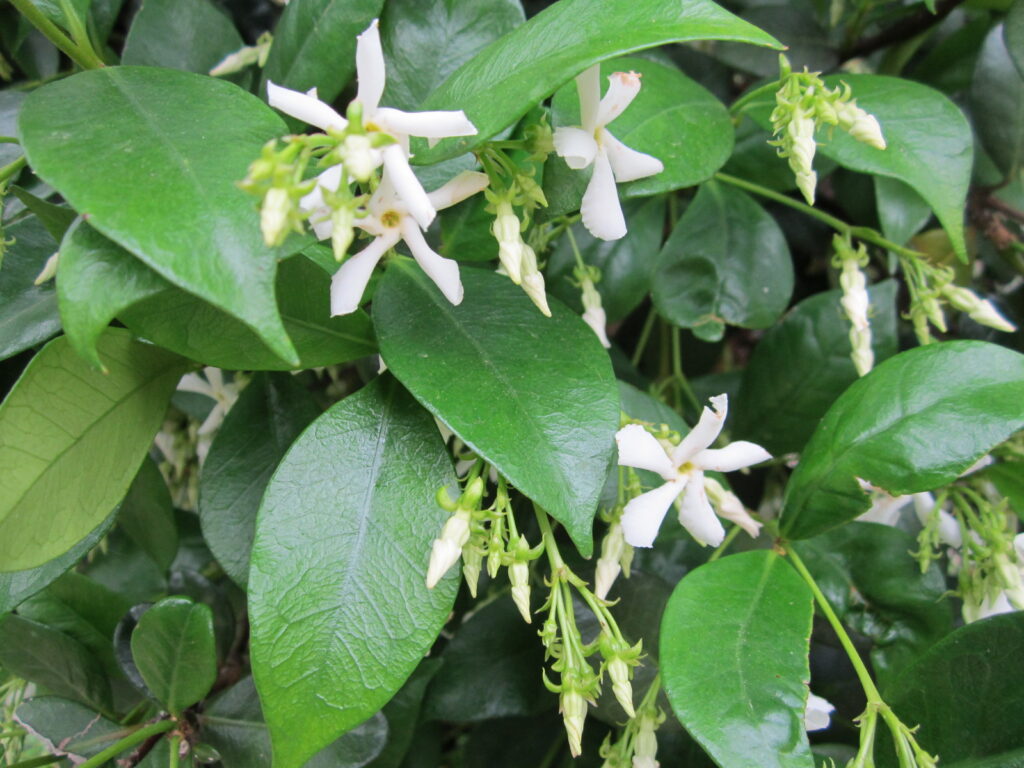
“Confederate Jasmine (Trachelospermum …” from lisalapaso.com and used with no modifications.
Quick Identification Tips: Star-Shaped Flowers and Glossy Leaves
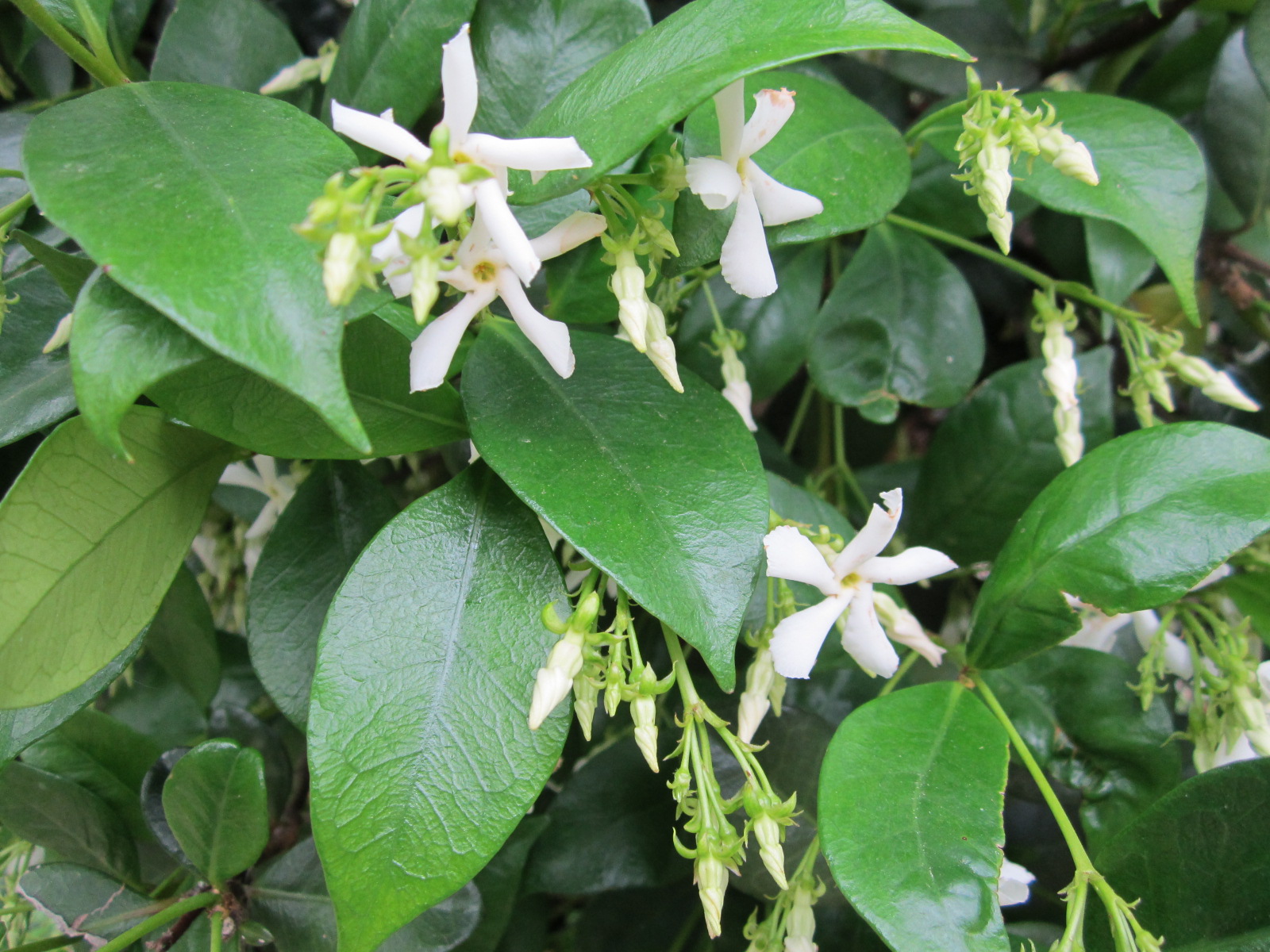
Star jasmine showcases distinctive features that make identification straightforward once you know what to look for. The most obvious characteristic is its pristine white, star-shaped flowers that appear in clusters, primarily in late spring through early summer, with some varieties offering a second bloom in fall. These five-petaled blossoms stand out against the backdrop of glossy, oval-shaped dark green leaves that maintain their vibrant appearance year-round in warmer climates. The leaves are arranged oppositely on slender, flexible stems that can twist and climb with remarkable vigor when provided support.
The plant’s growth habit further helps with identification. Young plants start with a somewhat shrubby appearance before developing their climbing or spreading nature. When you break a leaf or stem, you’ll notice a milky sap—a characteristic of its botanical family. This combination of star-shaped white flowers, glossy evergreen foliage, twining growth habit, and milky sap makes star jasmine relatively easy to recognize among garden vines.
True Identity: Not Actually a Jasmine at All
Here’s a garden secret that might surprise you: despite its name and similar fragrance, star jasmine isn’t a true jasmine at all. While true jasmines belong to the genus Jasminum in the olive family (Oleaceae), star jasmine belongs to Trachelospermum in the Apocynaceae family—the same family as periwinkle and oleander. Botanists gave it the species name “jasminoides” (meaning “jasmine-like”) because its flowers and fragrance so closely resemble true jasmine varieties.
This botanical distinction explains some of star jasmine’s unique characteristics compared to true jasmines. It tends to be more cold-hardy than many true jasmines, has different leaf arrangements, and produces that distinctive milky sap when stems are cut. The confusion persists because both plants serve similar landscape purposes and share that signature sweet fragrance gardeners adore. Remember this botanical trivia next time you want to impress fellow garden enthusiasts, or explore care tips for other garden plants!
Star Jasmine Size and Growth Habits
Understanding star jasmine’s potential size and growth patterns is crucial when incorporating it into your landscape design. This adaptable plant can transform dramatically based on how you train and maintain it. Without guidance, star jasmine naturally develops into a sprawling, twining vine that seeks structures to climb. With proper planning, you can direct its growth to suit almost any garden need—from vertical accents to horizontal ground covers or even container specimens.
Vine Growth: How Tall and Wide Will It Get?
- As a climbing vine: Can reach 20-30 feet tall with adequate support
- As groundcover: Typically spreads 18-20 feet while staying just 1-2 feet tall
- Container growth: Usually limited to 3-6 feet depending on pot size and pruning
- Annual growth rate: Approximately 3-6 feet per year in ideal conditions
- Maturity timeline: Reaches full potential in approximately 3-5 years
When provided with a trellis, fence, or arbor, star jasmine showcases its impressive climbing abilities. The vine uses thin, wiry stems to twist around supports, gradually reaching upward and outward. In optimal growing conditions with proper support, mature star jasmine vines can ascend 20-30 feet high and spread nearly as wide. This vertical growth makes it perfect for creating living walls, covering unattractive structures, or developing shaded walkways beneath pergolas and arbors.
What Makes Star Jasmine Smell So Good
Star jasmine’s captivating fragrance comes from a complex blend of volatile compounds that the plant releases, particularly during flowering periods. These chemical compounds include linalool, benzyl acetate, and indole—the same aromatic components found in many expensive perfumes. The plant evolved this intense fragrance to attract specific pollinators, primarily moths and butterflies that feed at night when the scent becomes most pronounced.
Unlike some floral scents that can become overwhelming or cloying, star jasmine’s fragrance strikes a perfect balance of sweetness with subtle fresh notes. Many gardeners describe it as having honey-like overtones with hints of vanilla and citrus. This multidimensional scent profile explains why people find it so universally appealing and why it’s been cultivated specifically for its aromatic qualities for centuries throughout Asia and later in Europe and the Americas. If you’re interested in learning about other plants with historical significance, you might explore the American chestnut and its historical uses.
The intensity of fragrance often correlates with the plant’s health and growing conditions. Star jasmine growing in optimal conditions with proper sunlight, water, and nutrients will produce more aromatic compounds than stressed plants. This is why providing excellent care not only enhances the visual appeal of your star jasmine but dramatically improves its signature scent production as well.
Peak Fragrance Seasons and Timing
Star jasmine’s fragrance follows a predictable pattern throughout the growing season, with the most intense scent production occurring during its primary blooming period from late spring through early summer (typically May to June in most growing regions). During this peak flowering time, the concentration of blooms and warm temperatures create perfect conditions for maximum scent diffusion. Many gardeners report the fragrance being detectable from 10-15 feet away during these peak weeks.
Interestingly, the fragrance intensifies in the evening and night hours when temperatures cool slightly but humidity often increases. This nighttime amplification of scent serves the plant’s natural purpose of attracting nocturnal pollinators. For gardeners, this makes star jasmine an excellent choice near patios, decks, or bedroom windows where evening relaxation occurs. In warmer growing regions, a second, less prolific bloom cycle may occur in late summer or early fall, offering another period of fragrance, though typically not as intense as the spring display. If you’re interested in learning about other fragrant plants, check out this guide on artillery plant care.
Why It’s Prized in Perfumery and Costs More
The fragrance compounds in star jasmine are highly valued in the perfume industry, where they’re extracted to create essential oils and absolutes used in high-end fragrances. The extraction process is particularly labor-intensive, requiring thousands of flowers to produce just a small amount of pure jasmine oil—hence the higher price point of jasmine-based perfumes. Additionally, the delicate nature of these aromatic compounds means they cannot be synthesized effectively, making natural extraction the only viable option for capturing star jasmine’s authentic scent profile.
Best Time and Places to Plant Star Jasmine
Successful star jasmine cultivation begins with proper timing and placement. This adaptable plant can thrive in various garden settings, but strategic placement will maximize both its growth potential and ornamental impact. When planning where to incorporate star jasmine, consider not just its immediate aesthetic appeal but how its eventual size and spreading nature will interact with surrounding structures and plants.
The ideal planting window varies by climate zone, but generally falls during periods that allow the plant to establish roots before facing seasonal extremes. In most regions, this means spring or fall planting, with specific timing adjusted based on your local frost dates and summer heat patterns. Proper timing gives young plants the best chance to develop strong root systems before being challenged by temperature extremes.
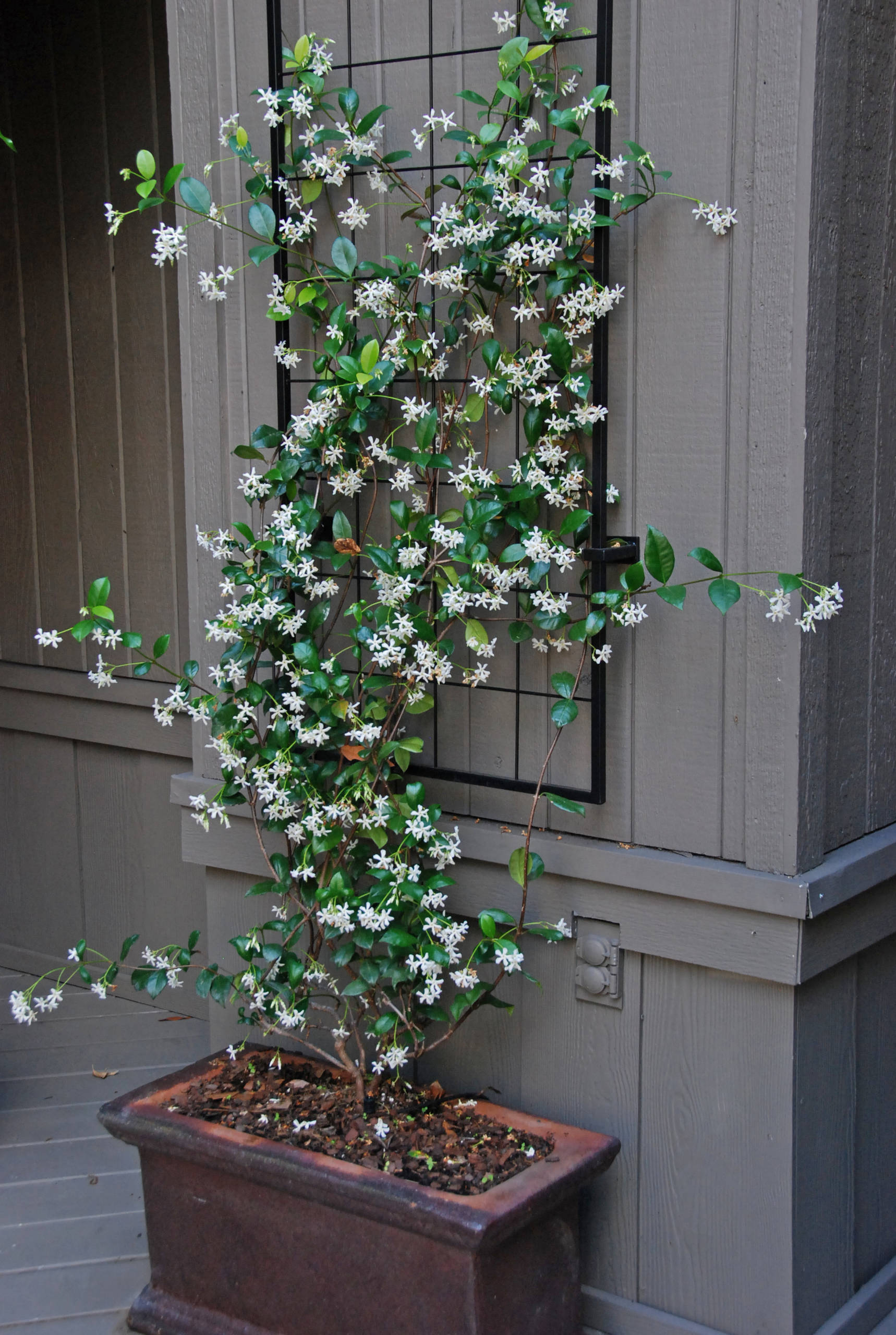
“Fragrant Trachelospermum Jasminoides” from www.houzz.com and used with no modifications.
Beyond timing, thoughtful placement considers both the plant’s needs and your garden goals. Star jasmine performs beautifully when allowed to showcase its natural growth habits—climbing vertically on structures, cascading over retaining walls, or spreading horizontally as a groundcover. Strategic placement near seating areas or windows allows you to enjoy its fragrance, while positioning near less attractive utility areas provides beautiful camouflage. For more information on how to care for plants like jasmine, you can explore our guide on artillery plant care.
Star Jasmine Planting Cheat Sheet
Best times: Early spring after frost danger passes or early fall (6-8 weeks before first frost)
Soil needs: Well-draining, slightly acidic to neutral (pH 6.0-7.0)
Spacing: 3-5 feet apart for vines, 2-3 feet for groundcover
Depth: Plant at same depth as nursery container
Sun exposure: Full sun to partial shade (minimum 6 hours sunlight for best flowering)
Ideal Planting Seasons: Spring vs. Fall Timing
Spring planting offers star jasmine the advantage of a full growing season to establish before winter. In most regions, aim to plant after the last frost date when soil temperatures consistently reach 60°F (15°C) or higher. This spring timing allows young plants to develop substantial root systems during the growing season, making them more resilient when facing their first winter. For gardeners in USDA zones 8-11, spring planting gives star jasmine nearly immediate growth momentum as temperatures warm.
Fall planting (approximately 6-8 weeks before the first expected frost) offers different advantages, particularly in regions with hot summers. Autumn’s milder temperatures and typically more consistent rainfall reduce transplant shock while still allowing time for root establishment before winter dormancy. For southern gardeners in zones 9-11, fall planting is often ideal as it avoids the stress of summer heat during the critical establishment phase. Regardless of season, avoid planting during periods of extreme temperature, whether hot or cold, to prevent unnecessary stress on young plants.
Perfect Locations in Your Landscape
Star jasmine shines as a vertical accent when grown against structures that showcase its climbing ability. Trellises, arbors, pergolas, and fences provide ideal support while positioning the fragrant blooms at nose level for maximum enjoyment. When planning these vertical applications, ensure your support structure is sturdy enough to handle the eventual weight of mature vines, and consider how you’ll access the plant for maintenance as it grows.
For horizontal interest, few plants match star jasmine’s effectiveness as a flowering groundcover. In this application, it excels on slopes, beneath trees with high canopies, or in areas where you want to eliminate mowing while maintaining year-round visual appeal. When used as groundcover, space plants 2-3 feet apart to allow for their spreading habit while achieving faster coverage than wider spacing would provide.
Strategic placement near windows, entryways, and outdoor living spaces maximizes the sensory impact of star jasmine’s fragrance. Consider prevailing wind patterns when choosing locations—placing plants upwind from patios allows breezes to carry the scent to seating areas. Avoid planting too close to foundations or directly against walls without proper support systems, as the plant’s moisture needs can potentially affect structures over time.
Soil Requirements for Healthy Growth
Star jasmine performs best in well-draining soil that retains some moisture without becoming waterlogged. The ideal soil composition includes a good balance of organic matter that improves both drainage and nutrient availability. Before planting, amend heavy clay soils with compost, aged manure, or pine bark to improve drainage and prevent root rot issues that can develop in consistently wet conditions.
The pH preference for star jasmine runs slightly acidic to neutral (6.0-7.0), making it adaptable to most garden soils without extensive modification. If your soil tends toward the alkaline side (above 7.5), consider incorporating sulfur or acidic organic matter like pine needles or coffee grounds to gradually lower pH. A simple soil test can determine your starting point and guide specific amendments needed for your site. For additional tips on keeping your garden pet-safe, check out this guide on sword fern care.
When planting, create a hole approximately twice as wide as the root ball but no deeper than the original container depth. This width allows roots to spread horizontally through loosened soil while preventing the settling that can occur when plants are placed too deeply. After positioning the plant, backfill with the same soil removed from the hole (amended if necessary), water thoroughly, and apply a 2-3 inch layer of organic mulch around the plant, keeping it several inches away from the stems to prevent moisture-related diseases.
Sunlight Needs: Full Sun to Partial Shade
Star jasmine demonstrates remarkable adaptability to light conditions, thriving in full sun to partial shade depending on your climate. In most growing regions, providing at least 6 hours of direct sunlight daily produces the most abundant flowering and strongest fragrance. Morning sun with afternoon shade offers an ideal balance in hotter regions where intense afternoon heat might stress the plant during summer months.
Light conditions directly impact flowering performance. Plants grown in deeper shade will still produce lush foliage but significantly fewer blooms and less fragrance. In northern parts of its growing range (zone 8), prioritize sunnier locations to maximize heat accumulation that triggers flowering. Conversely, in the southernmost growing regions (zones 10-11), some afternoon shade can prevent leaf scorch during the hottest summer days without significantly reducing flowering potential.
Indoor vs. Outdoor Star Jasmine: What Works Better?
The decision between growing star jasmine indoors or outdoors ultimately depends on your climate, available space, and gardening goals. Outdoors, the plant reaches its full potential in terms of size, flowering abundance, and fragrance intensity when grown within its preferred hardiness zones (8-11). The natural light cycles, air circulation, and temperature fluctuations of outdoor environments closely match the plant’s native growing conditions, allowing it to follow natural seasonal rhythms.
Indoor cultivation offers year-round enjoyment and makes star jasmine accessible to gardeners in colder climates, but comes with specific challenges. The reduced light intensity typical of indoor environments can limit flowering, while the consistent temperatures and humidity levels of homes may not provide the seasonal cues the plant uses to trigger bloom cycles. Success with indoor specimens requires careful attention to light exposure, humidity levels, and occasional trips outdoors during frost-free weather to reinvigorate growth patterns.
Outdoor Growth: Trellises, Fences, and Ground Coverage
Outdoor star jasmine truly excels when provided with appropriate support structures that showcase its natural climbing and twining abilities. While the plant doesn’t produce specialized structures like tendrils or aerial roots, its flexible stems naturally twist around supports, allowing it to ascend vertically with minimal assistance. For newly planted specimens, some initial training with plant ties helps establish the desired growth pattern until stems become sufficiently woody to support themselves around the structure.
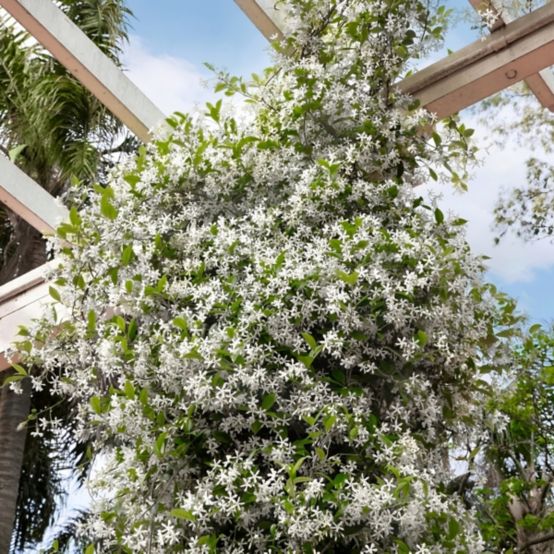
“Trachelospermum Star Jasmine Perennial …” from www.tractorsupply.com and used with no modifications.
Indoor Container Growing: Light and Space Needs
Growing star jasmine indoors requires careful attention to light conditions above all else. Position containers within two feet of south or west-facing windows where the plant receives bright, indirect light for most of the day, with at least some direct sunlight. Without sufficient light intensity, indoor specimens develop leggy growth and produce few if any flowers, regardless of other care provided. For additional tips on indoor plant care, consider exploring artillery plant care as it shares similar light and space requirements.
Container selection plays a crucial role in indoor success. Choose pots with ample drainage holes and approximately 2-3 inches wider than the current root ball to allow for growth without providing excessive soil volume that could lead to overwatering issues. Terracotta containers offer advantages for star jasmine by allowing soil to dry more consistently between waterings, reducing the risk of root rot that can develop in consistently damp conditions.
Indoor specimens benefit from a support structure inserted directly into the container, such as a small trellis, hoop, or decorative obelisk. Without support, indoor plants become tangled masses that are difficult to manage and may not display their growth habit attractively. Training begins when plants are young, gently guiding flexible stems around the support and securing with soft plant ties until the plant establishes its climbing pattern.
- Provide bright, indirect light with some direct sun exposure daily
- Maintain temperatures between 65-80°F (18-27°C) for optimal growth
- Increase humidity around plants with pebble trays or occasional misting
- Rotate containers quarterly for even growth and light exposure
- Move outdoors periodically during warm months if possible
Getting Indoor Plants to Bloom Successfully
The key challenge for indoor star jasmine growers is encouraging flowering, which requires mimicking the plant’s natural light cycles and seasonal temperature variations. Indoor specimens need a period of cooler temperatures (55-60°F/13-15°C) for several weeks during winter to initiate flower bud formation, followed by a return to warmer growing temperatures. This cooling period, combined with slightly reduced watering, signals the plant to prepare for spring flowering just as natural seasonal changes would outdoors.
Supplemental lighting can make a significant difference for indoor blooming success, particularly during winter months when natural daylight hours decrease. Full-spectrum grow lights positioned 12-18 inches from the plant and operated for 12-14 hours daily can provide the light intensity needed to support flowering. Remember that star jasmine blooms on new growth, so any pruning should be completed immediately after flowering ends to avoid removing the next season’s flower buds.
Essential Care Tips for Thriving Star Jasmine
Successful star jasmine cultivation revolves around understanding its growth cycle and providing care that supports each seasonal phase. While generally low-maintenance once established, strategic timing of watering, fertilization, and pruning dramatically impacts both growth vigor and flowering performance. The goal is to work with the plant’s natural tendencies rather than forcing growth during inappropriate seasons.
Perhaps the most common mistake gardeners make with star jasmine is providing inconsistent care—alternating between neglect and overcompensation. This adaptable plant performs best with regular, moderate attention that prevents stress cycles from developing. Establishing a seasonal care routine that adjusts to both the plant’s growth phase and your local climate conditions provides the framework for long-term success with minimal maintenance requirements.
Water Requirements Throughout the Seasons
Newly planted star jasmine requires consistent moisture during its first growing season to establish a robust root system. Water deeply once or twice weekly depending on weather conditions, applying water directly to the soil rather than overhead to prevent fungal issues on foliage. The goal during establishment is maintaining consistently moist (but never soggy) soil approximately 8-10 inches deep, encouraging roots to grow downward rather than remaining near the surface.
Once established (typically after the first full growing season), star jasmine develops moderate drought tolerance but still performs best with supplemental water during extended dry periods. During active growth in spring and summer, provide approximately 1 inch of water weekly either from rainfall or irrigation when temperatures exceed 85°F (29°C). Proper mulching with 2-3 inches of organic material significantly reduces watering frequency by conserving soil moisture and moderating temperature fluctuations.
Fall and winter water requirements vary significantly by climate zone. In zones 8-9 where the plant may become semi-dormant during winter, reduce watering to approximately once monthly during cool weather unless conditions are unusually dry. In zones 10-11 where growth continues year-round, maintain regular but reduced watering schedules that reflect the slower growth rate and lower temperatures of winter months.
Container-grown specimens have more specific watering needs due to limited soil volume. Check moisture levels by inserting your finger 1-2 inches into the soil—water thoroughly when this depth feels dry to the touch. Indoor plants typically require less frequent watering during winter months when growth naturally slows, but never allow containers to dry completely, which can damage the plant’s fine root system. For more detailed care tips, you can refer to this Confederate Jasmine guide.
- Newly planted: Water 1-2 times weekly for first growing season
- Established plants: Approximately 1 inch weekly during growing season
- Drought periods: Increase to twice weekly when temperatures exceed 90°F
- Winter care: Reduce to monthly in zones 8-9, biweekly in zones 10-11
- Container plants: Water when top 1-2 inches of soil feels dry
Fertilizing Schedule and Best Products
- Early spring: Apply balanced slow-release fertilizer (10-10-10) as new growth begins
- Late spring: Follow with phosphorus-rich fertilizer (5-10-5) before flowering to enhance blooms
- Summer: Apply liquid seaweed or fish emulsion monthly during active growth
- Fall/Winter: Discontinue fertilizing in late summer for zones 8-9; reduce to quarterly in zones 10-11
- Container plants: Use half-strength liquid fertilizer twice monthly during growing season
Star jasmine thrives with relatively modest fertilization compared to many flowering vines. Over-fertilization causes excessive foliage production at the expense of flowering, so moderation is key. For most landscape plantings, a single application of slow-release granular fertilizer (10-10-10) in early spring provides sufficient nutrients for the entire growing season. The slow-release formulation prevents nutrient surges that can stress the plant while ensuring consistent availability throughout active growth periods.
If your soil tends toward the acidic side, consider using fertilizers formulated for acid-loving plants like azaleas or camellias, which provide micronutrients particularly beneficial to star jasmine. For established plants showing signs of chlorosis (yellowing leaves with green veins), apply a chelated iron supplement according to package directions. This condition often indicates iron deficiency rather than a need for complete fertilization.
Organic options provide excellent results for star jasmine while improving soil structure over time. Composted manure, worm castings, or commercial organic fertilizers applied as a 1-inch layer around the plant’s drip line in early spring supply both macronutrients and beneficial microorganisms. Follow with a 2-3 inch layer of mulch to retain moisture and slowly incorporate additional organic matter as it breaks down.
Container-grown specimens have more specific nutritional needs due to the limited soil volume and nutrients leaching with regular watering. Apply liquid fertilizer at half the recommended strength twice monthly during the growing season, tapering to monthly applications as temperatures cool in fall. Always water thoroughly before applying liquid fertilizers to prevent root burn, especially in container plantings where roots have limited room to escape concentrated nutrients. For more information on keeping plants thriving indoors and outdoors, check out these care tips for sword ferns.
Pruning Methods to Control Growth and Encourage Flowering
Strategic pruning dramatically improves star jasmine’s appearance and flowering performance while preventing the rampant growth that can overwhelm neighboring plants. The optimal pruning window occurs immediately after the main flowering period ends (typically early to mid-summer), allowing the plant time to develop new growth that will produce the following year’s flowers. Major renovation pruning can reduce overgrown specimens by up to one-third their size in a single session, though such dramatic reduction may temporarily reduce flowering for one season. For routine maintenance, remove wayward stems, thin congested growth to improve air circulation, and cut back any stems that have extended beyond their desired boundaries. Always use clean, sharp pruning tools and make cuts just above leaf nodes to encourage branching that creates fuller growth.
Dealing with Common Pests and Problems
While star jasmine generally demonstrates good pest resistance, several common issues may occasionally arise. Scale insects and mealybugs represent the most frequent pests, appearing as either small brown bumps (scale) or cottony white masses (mealybugs) typically along stems and leaf undersides. For light infestations, dab insects with alcohol-soaked cotton swabs; for more extensive problems, apply horticultural oil or insecticidal soap according to package directions, being careful to thoroughly cover all plant surfaces including leaf undersides. Spider mites may also appear during hot, dry periods, causing stippled yellowing on leaves and fine webbing between stems. These microscopic pests are best controlled by improving humidity around plants and applying neem oil or insecticidal soap to affected areas.
Disease issues are relatively rare but include leaf spot fungi and root rot in poorly drained locations. Prevent these problems by maintaining good air circulation through occasional thinning, watering at soil level rather than overhead, and ensuring proper soil drainage before planting. Chlorosis (yellowing leaves with green veins) typically indicates either iron deficiency or pH issues rather than disease and responds well to chelated iron supplements. Winter damage in marginal growing zones appears as browned leaf edges or dieback on exposed stems; prune affected areas in early spring after danger of frost passes, and the plant typically recovers quickly once warm weather returns.
Creative Ways to Showcase Star Jasmine in Your Garden
Beyond basic growing techniques, star jasmine offers exceptional versatility for creative landscape applications that highlight its best features. Its combination of lush evergreen foliage, profuse flowering, intense fragrance, and adaptable growth habit makes it suitable for design solutions ranging from formal garden structures to naturalistic plantings. When planning your garden design, consider how star jasmine’s seasonal attributes—particularly its concentrated spring flowering period and year-round foliage—can enhance different garden areas throughout the changing seasons.
Pergolas and Archways: Creating Fragrant Passageways
Few garden experiences rival walking beneath a star jasmine-covered pergola in full bloom, where the concentrated fragrance creates an almost immersive sensory experience. For this application, install strong support structures with posts at least 4×4 inches for stability as the plant matures. Plant specimens at each post base, using soft garden ties to train young stems upward until they establish their climbing pattern. The goal is creating an eventual canopy effect where flowers hang at head height, maximizing both visual impact and fragrance enjoyment. This vertical growth pattern keeps the walkway below clear while creating delightful dappled shade during summer months that moderates temperature beneath the structure.
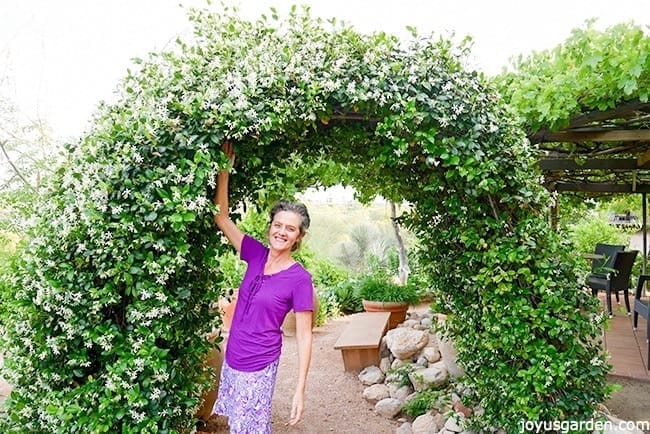
“Star Jasmine Care and Growing Tips …” from www.joyusgarden.com and used with no modifications.
Wall Coverings and Privacy Screens
Star jasmine excels at transforming plain walls and fences into living tapestries that provide privacy while enhancing aesthetic appeal. For wall coverage, install a support system of horizontal wires or trellising approximately 2-3 inches from the wall surface to allow air circulation behind the plants and prevent moisture damage to structures. Space plants 4-6 feet apart along walls or fences, allowing for their eventual spread while providing faster coverage than wider spacing. The flexible stems can be gently woven through support systems as they grow, creating patterns and directional growth that suits your design vision. For faster coverage on large walls, consider installing plants both at ground level and in elevated planters, allowing the vines to grow both upward and downward simultaneously.
Companion Plants That Complement Star Jasmine
Creating effective plant combinations enhances star jasmine’s natural beauty while extending seasonal interest in the garden. For spring-focused combinations, consider underplanting with spring bulbs like daffodils or tulips that emerge and bloom slightly before the jasmine’s flowering period, creating sequential waves of color. Summer-flowering perennials with complementary fragrances, such as lavender, roses, or gardenias, create sensory gardens where different scent profiles interact throughout the growing season. For textural contrast, pair the glossy evergreen foliage with plants offering different leaf shapes and textures—ornamental grasses provide movement and sound, while broad-leaved tropicals like elephant ears create dramatic size contrasts.
Color harmony considerations can elevate your garden design when working with star jasmine. The clean white flowers pair beautifully with any color palette but create particularly striking combinations with purple-flowering companions like clematis or salvia. For sophisticated monochromatic gardens, combine with other white-flowering plants like white roses, gardenias, and hydrangeas, varying bloom times to maintain continuous flowering. Consider foliage color as well—silver-leaved plants like dusty miller or lamb’s ears create beautiful textural contrasts against star jasmine’s deep green leaves, while variegated plants add dimension to shaded areas where flowering may be less profuse.
Make Your Garden Smell Amazing with Star Jasmine
The signature fragrance of star jasmine offers opportunities for sensory garden design that engages visitors on multiple levels. Strategic placement maximizes scent impact in outdoor living spaces—consider installing plants near windows, entryways, and seating areas where the fragrance can be fully appreciated during peak blooming periods. For evening entertainment spaces, position plants where they receive afternoon sun to maximize evening fragrance release when the blooms naturally intensify their scent emission. Creating “fragrance pockets” throughout the garden provides delightful sensory surprises as visitors move through the landscape, with the sweet scent of star jasmine serving as a signature note in your garden’s aromatic profile. For more on indoor and outdoor plant care, explore our comprehensive guide.
For gardeners seeking to maximize fragrance production, specific cultural practices make a significant difference. Providing optimal growing conditions—particularly adequate sunlight and proper fertilization—directly impacts the plant’s ability to produce the essential oils responsible for its signature scent. Deadheading spent blooms during flowering periods stimulates additional bloom production in some varieties, extending the fragrance season. Remember that scent perception varies throughout the day, with morning and evening typically offering the strongest fragrance experience due to temperature and humidity conditions that enhance scent diffusion. By working with these natural patterns, you can create a garden that doesn’t just look beautiful but offers an immersive sensory experience centered around star jasmine’s intoxicating perfume.
Frequently Asked Questions
Star jasmine cultivation raises common questions among both new and experienced gardeners. These frequently asked questions address the most common concerns and provide practical solutions based on horticultural best practices. While star jasmine generally proves adaptable and forgiving, understanding these specific aspects of its growth and maintenance helps avoid common pitfalls and ensures your plants perform at their best year after year.
How long does it take for Star Jasmine to reach full size?
Star jasmine typically requires 3-5 years to reach its full mature size when starting from nursery-sized plants (1-2 gallon containers). During the first year after planting, growth focuses primarily on root establishment rather than dramatic top growth. Years two and three usually bring accelerated growth of 3-6 feet annually when growing conditions are favorable. By years four to five, the plant generally achieves its mature dimensions and flowering capacity, though it continues expanding gradually throughout its lifespan in favorable conditions.
Growth rates vary significantly based on growing conditions. Plants receiving optimal sunlight (6+ hours daily), consistent moisture, and annual fertilization reach maturity faster than those in less ideal situations. Container-grown specimens typically develop more slowly than in-ground plantings due to root restrictions. If you’re seeking faster coverage for landscape purposes, consider planting specimens closer together (2-3 feet apart) than their eventual spread would suggest, with the understanding that some thinning may be necessary as plants mature to prevent overcrowding.
Will Star Jasmine damage my house or structures if I grow it on them?
Unlike some climbing plants that produce aerial roots (like English ivy) or adhesive pads (like Boston ivy) that can damage surfaces, star jasmine climbs by twining its stems around supports rather than attaching directly to surfaces. This growth habit makes it generally safe for most structures when properly supported. However, without appropriate trellising or support systems, the plant’s searching stems can work their way into small cracks or beneath siding, potentially causing damage as they expand. The best practice involves installing a support system (wire trellising, lattice, etc.) that stands 2-3 inches away from walls or structures, allowing air circulation behind the plant while providing a framework for the vine to climb that keeps it from direct contact with the building surface.
Can I grow Star Jasmine from cuttings, and if so, how?
Star jasmine propagates readily from semi-hardwood cuttings taken in late spring through summer. Select 4-6 inch sections of stem that aren’t currently flowering, cutting just below a leaf node. Remove leaves from the bottom half of each cutting, dip the cut end in rooting hormone powder, and insert into a well-draining propagation medium (equal parts perlite and peat moss works well). Maintain consistent humidity by covering with clear plastic, placing in a bright location with indirect light, and keeping the medium consistently moist but not waterlogged. Roots typically develop within 4-6 weeks, at which point the plastic can be gradually removed to acclimate the new plants. Continue growing in containers until the following spring before transplanting to permanent locations.
Does Star Jasmine attract bees and other pollinators?
Star jasmine serves as an excellent pollinator plant, attracting a diverse range of beneficial insects to the garden. During daylight hours, honeybees, native bees, and butterflies visit the nectar-rich flowers, while the intensified evening fragrance attracts moth pollinators after sunset. This 24-hour pollinator support makes star jasmine particularly valuable in wildlife gardens seeking to support diverse insect populations throughout the day-night cycle.
For gardeners specifically interested in supporting pollinators, consider star jasmine as part of a comprehensive planting plan that provides continuous flowering throughout the growing season. The plant’s primary bloom period (late spring through early summer) complements earlier spring-flowering plants and later summer bloomers, creating an uninterrupted nectar supply for beneficial insects. The abundant flowering and easily accessible nectar make star jasmine particularly valuable for supporting smaller pollinators that may struggle with more complex flower structures. For additional tips on creating a safe garden, consider integrating other pollinator-friendly plants.
How do I know if my Star Jasmine is getting enough water?
Star jasmine communicates its water needs through several visible indicators. Properly hydrated plants display firm, glossy leaves with good color and maintain their natural growth habit. The first sign of underwatering typically appears as slight leaf curling or rolling, particularly during hot afternoon hours, followed by leaf tips browning if drought stress continues. Conversely, overwatering symptoms include yellowing lower leaves, stunted growth, and in severe cases, root rot that manifests as overall plant decline despite consistently moist soil. For more information, you can check this Star Jasmine growing profile.
The finger test provides a reliable way to assess soil moisture needs for both in-ground and container specimens. Insert your finger approximately 2 inches into the soil near the plant’s drip line; if this depth feels dry or barely damp, watering is appropriate. For container plants, lift the pot when dry and again after watering to learn the weight difference between these states, which provides a quick assessment method without disturbing the soil. Remember that seasonal adjustments are necessary—plants typically require more frequent watering during active growth and hot weather, while needs decrease significantly during cooler months or dormant periods.
Mulching plays a crucial role in maintaining appropriate soil moisture levels for star jasmine. Apply a 2-3 inch layer of organic mulch (shredded bark, pine straw, or compost) around plants, keeping it several inches away from stems to prevent rot issues. This mulch layer reduces evaporation, moderates soil temperature fluctuations, and gradually improves soil structure as it breaks down. Refreshing mulch annually in spring just before growth resumes helps maintain consistent soil moisture throughout the growing season while suppressing weeds that would compete for available water.