
Key Takeaways
- Australian Pine isn’t a true pine but a flowering tree (Casuarina spp.) that reaches heights of 150+ feet with incredibly fast growth rates of 5-10 feet annually.
- Despite being invasive in Florida and coastal areas, Australian Pine has practical uses including windbreaks, erosion control, timber production, and traditional medicine.
- The tree’s shallow root system makes it hazardous during storms, while its allelopathic properties prevent other plants from growing beneath it.
- Australian Pine is considered safe for cats and may even improve indoor air quality, though its environmental impact often outweighs its benefits.
- Native alternatives provide similar benefits without the ecological damage caused by this fast-growing but problematic species.
Australian Pine trees are nature’s great impostors. One look at their needle-like foliage and you’d swear they’re conifers, but these remarkable trees are hiding a botanical secret.
These misnamed trees belong to the Casuarina genus, with Casuarina equisetifolia being the most common species. Native to Australia and parts of Southeast Asia, they’ve become both beloved windbreaks and notorious invasives around the world. Nature enthusiasts often appreciate their resilience in harsh coastal environments, though ecologists warn about their tendency to outcompete native vegetation.
Australian Pine Demystified: Not a True Pine at All
Despite their common name, Australian Pines aren’t pines at all—they’re flowering trees (angiosperms) that merely resemble conifers. Their appearance fools many observers, but botanically speaking, they’re more closely related to oak trees than to actual pines. The confusion stems from their needle-like branchlets that perform the same photosynthetic function as pine needles, though structurally they’re entirely different.
Australian Pines belong to the Casuarinaceae family, which includes about 17 species across four genera. Their misleading name has led to much confusion among gardeners and landscapers who might expect them to behave like true pines. The distinctive “whooshing” sound they make when wind passes through their branches has earned them nicknames like “whistling pine” or “she-oak” in various parts of the world.
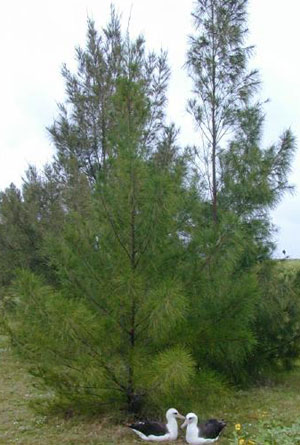
“Australian Pine …” from www.invasive.org and used with no modifications.
Identifying Australian Pine Trees in the Wild
Spotting an Australian Pine in the landscape isn’t difficult once you know what to look for. These evergreen trees typically have a narrow, somewhat symmetrical crown that gives them an elegant, columnar appearance. From a distance, they might be mistaken for tall, slender conifers, but a closer inspection reveals their unique characteristics.
Distinctive Needle-like Branchlets and Scale Leaves
What appears to be “needles” on Australian Pines are actually thin, jointed, green to gray-green branchlets measuring just 0.5-1mm in diameter. These segmented branchlets are the tree’s primary photosynthetic structures. Tiny scale-like leaves grow at the joints of these branchlets, but they’re so reduced in size that they’re barely noticeable without close examination. If you’re interested in learning about pet-safe gardening, you might find these safe garden ideas for pets helpful.
The branchlets grow in whorls from the branches, creating a feathery, soft appearance that sways gracefully in coastal breezes. When these branchlets fall, they create a dense mat of litter beneath the tree that significantly alters the soil chemistry and prevents other plants from growing—a phenomenon known as allelopathy.
Unique Bark Characteristics and Patterns
The bark of mature Australian Pines is distinctly rough and brown to gray-brown, often appearing in a fissured pattern with vertical ridges. On younger trees, the bark is smoother and sometimes has a reddish tint that darkens with age. In older specimens, the bark may flake off in irregular strips or patches, revealing lighter-colored layers beneath.
This textured bark provides a stark contrast to the fine, delicate appearance of the branchlets. The combination of rough bark and feathery foliage makes Australian Pines relatively easy to identify even from a distance, particularly when they grow in their characteristic coastal settings.
Male and Female Reproductive Structures
Australian Pines are dioecious, meaning individual trees are either male or female. Male trees produce small, cylindrical brown flower spikes at the tips of branchlets, releasing copious amounts of wind-dispersed pollen. Female trees develop small, round, woody cone-like structures about 1/2 to 3/4 inch in diameter. For those interested in other plants’ safety around pets, you might want to explore if wild buckwheat is safe for cats and dogs.
These female structures, while superficially resembling pine cones, are botanically quite different. They’re actually compact clusters of woody bracteoles (modified leaves) that contain tiny winged seeds. When mature, these “cones” open to release seeds that can be carried long distances by wind or water, contributing to the tree’s invasive potential in favorable environments.
Timber Quality and Wood Applications
Australian Pine produces a dense, heavy hardwood that’s prized for its durability and resistance to rot. Known as “ironwood” in many regions, the timber has a specific gravity ranging from 0.8 to 0.9, making it significantly heavier than water. This dense wood burns hot and slow, making it excellent firewood and charcoal that’s sought after in many tropical regions where the tree grows.
Windbreak and Erosion Control Benefits
One of the most valuable practical applications of Australian Pine is as a windbreak. Their tall, columnar growth habit and dense foliage effectively reduce wind velocity, protecting crops, buildings, and other structures from strong winds. In coastal areas, these trees have historically been planted to create protective barriers against salt spray and storm winds.
For erosion control, Australian Pines have proven remarkably effective in stabilizing sandy soils and dunes. Their extensive, if shallow, root systems help bind loose soil particles together, preventing erosion from wind and water. This erosion control benefit is one reason why they were originally introduced to Florida’s coastlines in the 1890s, though their aggressive spread has since outweighed this advantage in many areas.
Nitrogen-Fixing Capabilities for Soil Improvement
Australian Pines possess a remarkable ability to thrive in nutrient-poor soils thanks to their nitrogen-fixing capabilities. They form a symbiotic relationship with soil actinomycetes (Frankia) in their root nodules, allowing them to convert atmospheric nitrogen into forms usable by plants. This ability enables them to colonize and improve degraded soils where other trees might struggle to survive.
Their nitrogen-fixing trait makes Australian Pines valuable for reclaiming disturbed sites like mine tailings, eroded slopes, and coastal areas with poor soil quality. In planned agroforestry systems, they can gradually enhance soil fertility, though this benefit must be carefully weighed against their invasive tendencies in suitable climates.
Traditional Medicinal Applications
Various parts of the Australian Pine have been used in traditional medicine across its native range. The bark contains tannins and has astringent properties, making it useful for treating diarrhea, dysentery, and wounds in some traditional healing practices. Decoctions from the needles and young shoots have been used to address coughs, while root extracts have applications for treating stomach ailments.
Research has identified several bioactive compounds in Australian Pine, including catechins, flavonoids, and triterpenoids with potential antimicrobial and antioxidant properties. However, modern scientific validation of these traditional uses remains limited, and anyone considering medicinal applications should consult healthcare professionals rather than self-medicating.
Ideal Growing Conditions
Australian Pines demonstrate remarkable adaptability to challenging environmental conditions that would stress or kill many other tree species. Their natural habitat along coastal areas has equipped them with exceptional tolerance for salt spray, strong winds, and poor soils, making them both resilient and potentially invasive in similar environments worldwide.
These trees thrive in tropical and subtropical regions with average annual temperatures between 75-85°F (24-29°C), though they can tolerate brief cold snaps down to about 28°F (-2°C) once established. Their adaptability to harsh conditions explains both their popularity as an introduced species and their problematic invasive nature in suitable climates.
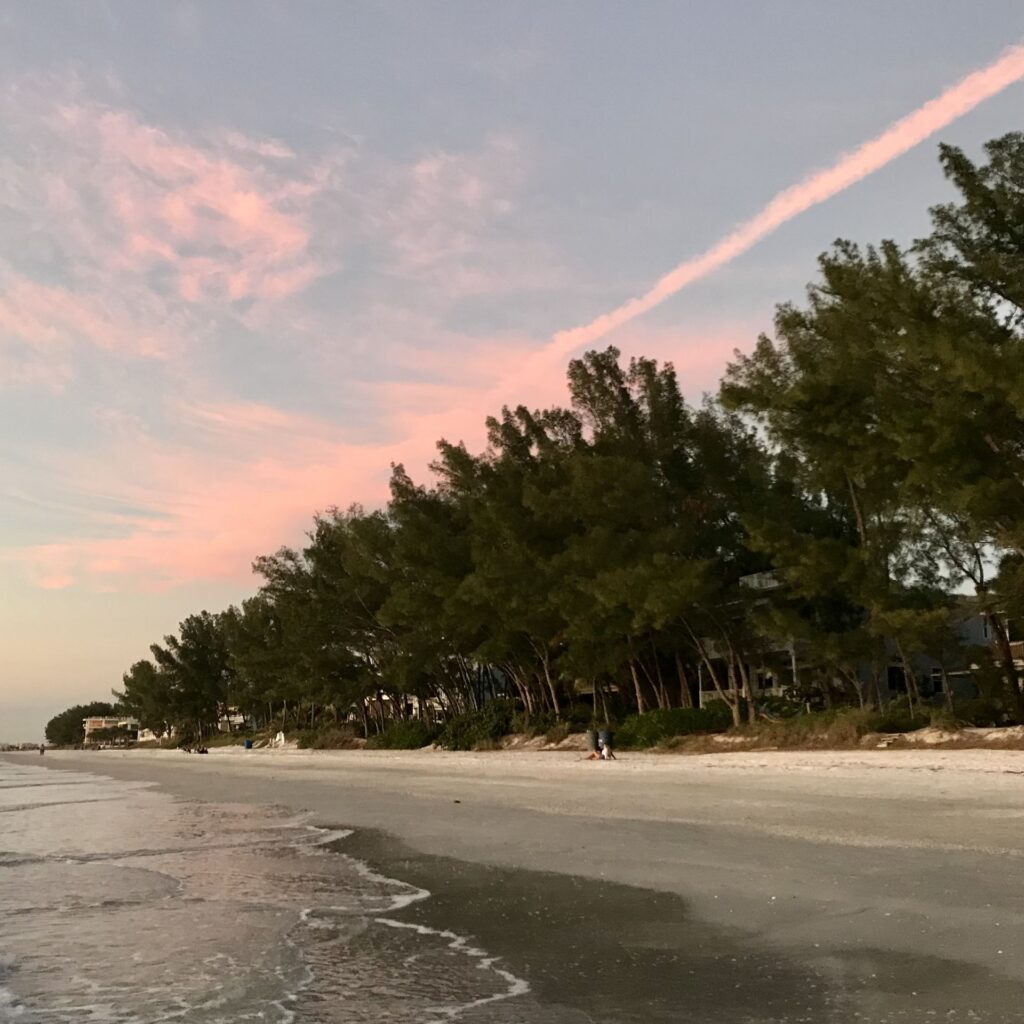
“Australian pines give Tampa Bay beaches …” from www.axios.com and used with no modifications.
Soil Preferences and Tolerance Range
Australian Pines demonstrate exceptional soil versatility, thriving in everything from beach sand to limestone to clay soils. They prefer well-drained conditions but can tolerate periodic flooding, drought, and even saline soils with salt concentrations that would kill most other tree species. This remarkable adaptability allows them to colonize coastal dunes, disturbed areas, and even slightly brackish wetlands, though they grow most vigorously in sandy loams with good drainage and moderate fertility.
Sunlight Requirements
Australian Pine Light Requirements at Different Life Stages
Seedlings: Full sun to partial shade (minimum 6 hours direct sunlight)
Saplings: Full sun preferred (8+ hours direct sunlight)
Mature trees: Full sun only (requires unobstructed light)
Note: Shade tolerance decreases significantly with age
Australian Pines are definitively sun-loving trees that perform best with maximum sunlight exposure. Their seedlings can tolerate partial shade during establishment, but mature trees require full, direct sunlight to maintain their health and characteristic form. In forest settings, they typically emerge as dominant canopy trees, outcompeting shade-tolerant species.
This high light requirement explains why Australian Pines often colonize open areas like beaches, dunes, and disturbed sites rather than established forests. When planted in locations with insufficient sunlight, they develop sparse, weak growth and become more susceptible to pests and diseases.
In landscape settings, Australian Pines should never be placed where buildings or larger trees will shade them for significant portions of the day, as this invariably leads to poor performance and potential decline. Their need for abundant sunlight should be a primary consideration in any planting plan. For more information on plant care, you might consider reading about sun vs. shade requirements for various plants.
Water Needs and Drought Resistance
One of Australian Pine’s most remarkable adaptations is its exceptional drought tolerance once established. Mature trees can survive extended dry periods by shedding some of their branchlets to reduce water loss through transpiration. Their deep taproot and extensive lateral root system efficiently extract available moisture from the soil, allowing them to thrive in areas with seasonal drought or limited rainfall. For more information on the Casuarina equisetifolia, visit the detailed entry on Wikipedia.
Despite this drought tolerance, Australian Pines grow most vigorously with regular moisture, especially during their first few years of establishment. In landscape settings, supplemental watering during prolonged dry spells promotes optimal growth and development, though excessive irrigation in poorly-drained soils can lead to root problems.
Climate Adaptability
Australian Pines demonstrate remarkable climate adaptability within their preferred temperature range, thriving in USDA zones 9-11. They perform best in tropical and subtropical coastal regions with moderate to high humidity, though they can adapt to drier conditions once established. Their sensitivity to prolonged freezing temperatures (below 28°F/-2°C) remains their primary limiting factor, restricting their northward spread in the continental United States to the southern coastal regions of Florida, Texas, and California.
The Dark Side: Why Australian Pine Is Often Unwanted
Despite their practical uses and impressive adaptability, Australian Pines have earned a problematic reputation in many regions where they’ve been introduced. Their aggressive growth, ecological impacts, and structural hazards have led to their classification as invasive species in numerous countries, with active eradication programs in place throughout Florida and other coastal areas where they threaten native ecosystems.
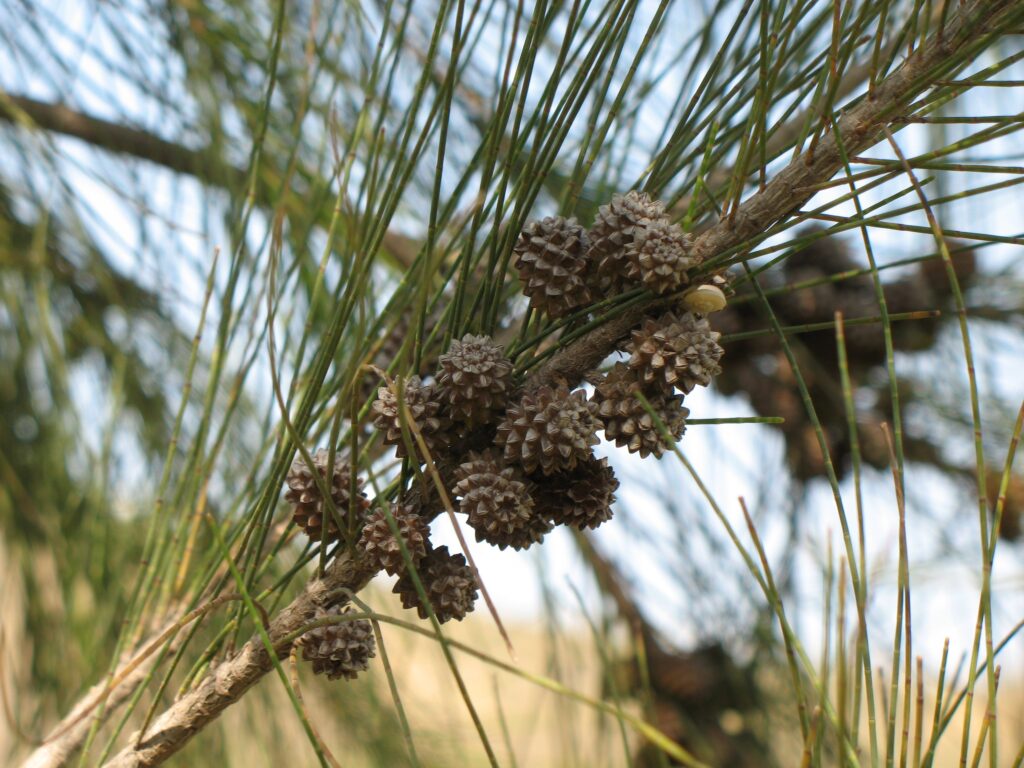
“The Invasive Australian Pine Tree & How …” from blog.diamondmowers.com and used with no modifications.
Ecological Impacts on Native Ecosystems
Australian Pines rapidly transform native ecosystems through multiple mechanisms. They form dense monoculture stands that shade out native vegetation, alter soil chemistry through their leaf litter, and compete aggressively for water and nutrients. In Florida’s coastal areas, they’ve invaded beaches used by endangered sea turtles for nesting, with their dense root mats making it difficult or impossible for turtles to dig adequate nest chambers, directly contributing to population declines of these protected species.
Shallow Root Systems and Storm Hazards
Despite their impressive height, Australian Pines develop surprisingly shallow root systems that make them dangerously prone to toppling during high winds and storms. Their rapid growth often creates trees with poor structural integrity, turning them into significant hazards during hurricanes and tropical storms. In coastal Florida, fallen Australian Pines have repeatedly blocked evacuation routes during hurricanes, prompting aggressive removal programs along key transportation corridors. For those managing gardens, it might be useful to consider Australian Shepherd garden fencing to protect plants and maintain safety.
Allelopathic Effects on Surrounding Plants
Australian Pines produce chemicals that actively suppress the growth of competing vegetation, a phenomenon known as allelopathy. Their fallen branchlets release compounds that inhibit seed germination and root development of nearby plants, creating barren zones beneath established trees. This allelopathic effect, combined with the physical barrier created by their dense leaf litter, results in near-sterile conditions beneath mature trees where little else can grow.
The ecological dominance created by this allelopathic strategy significantly reduces biodiversity in affected areas. Native plants that would normally provide food and habitat for local wildlife disappear from Australian Pine stands, creating biological deserts with little ecological value compared to the diverse native communities they replace.
Legal Status in Different Regions
Due to their invasive potential, Australian Pines face strict legal restrictions in many regions. In Florida, they’re classified as Category I invasive species, making it illegal to plant, transplant, or transport them without special permits. Similar restrictions exist in Hawaii, parts of California, Texas, and numerous Caribbean and Pacific island nations where their spread threatens native ecosystems. Before considering planting these trees, always check local regulations, as unauthorized planting can result in significant fines in many jurisdictions.
Effective Removal Methods for Unwanted Trees
Removing established Australian Pines requires a comprehensive approach that prevents regrowth. For small trees, manual removal with complete root extraction works well, while larger specimens typically require a combination of cutting and herbicide treatment. Professional arborists often use the “cut stump” method, applying herbicides containing triclopyr or glyphosate directly to freshly cut surfaces to prevent resprouting. For extensive infestations, land managers may employ mechanical removal with heavy equipment followed by chemical treatment of the disturbed area to control seedlings that emerge from the soil seed bank.
Manual Removal Techniques for Seedlings
Young Australian Pine seedlings can be removed by hand-pulling when the soil is moist, ideally after rainfall. For seedlings under 2 feet tall, grip the stem at the base and pull straight upward with steady pressure to extract the entire root system. This method works best when plants are young, as older seedlings quickly develop more extensive root systems that become difficult to remove entirely by hand.
For slightly larger saplings up to 4 feet tall, use a weed wrench or root jack to gain mechanical advantage. These specialized tools grip the stem near the ground and use leverage to extract the entire root system. Work methodically through infested areas, beginning at the perimeter and moving inward to prevent stepping on areas where seeds might be disturbed and spread.
Tip for Effective Seedling Removal: Hand-pulling is most effective when done within 2-3 weeks after germination, particularly following rain events when soil is moist. Wear thick gloves to protect against potential skin irritation from the branchlets. Remove seedlings before they reach reproductive maturity at 10-15 months to prevent further seed production.
After removing seedlings, monitor the area regularly for at least two years, as seeds can remain viable in the soil for 5-7 years. Removing the leaf litter layer beneath mature trees before tackling seedlings can make identification and removal significantly easier and more thorough, reducing the likelihood of reinfestation. For those concerned about safe garden ideas for pets, ensuring the area is free from invasive species is crucial.
Chemical Control Options for Established Trees
For established Australian Pines too large for manual removal, chemical control becomes necessary. The most effective approach is the cut-stump method, where the tree is cut near ground level and herbicide is immediately applied to the exposed cambium layer (the outer ring of the cut surface). This timing is critical – application must occur within minutes of cutting while the stump is actively drawing fluids downward.
Herbicides containing triclopyr (such as Garlon 4) or glyphosate (such as Roundup Super Concentrate) at 50-100% strength are most effective for stump treatment. For trees with trunks larger than 6 inches in diameter, making downward axe cuts around the circumference before applying herbicide improves penetration and effectiveness. During application, use a paintbrush, spray bottle, or sponge applicator to carefully target only the cambium ring, avoiding wasteful runoff. For more information on managing invasive plants like the Australian pine, visit the Florida Fish and Wildlife Conservation Commission’s website.
For treating multiple trees without cutting, the basal bark method can be effective. This involves applying triclopyr ester (Garlon 4) mixed with oil to the lower 12-18 inches of trunk, completely circling the bark. The herbicide penetrates the bark and kills the tree while standing, though this method works best on trunks less than 6 inches in diameter and may require repeat applications for complete control.
Method
Herbicide
Concentration
Best For
Success Rate
Cut Stump
Triclopyr (Garlon 4)
50-100%
All sizes
90-95%
Cut Stump
Glyphosate
50-100%
Small-medium
75-85%
Basal Bark
Triclopyr ester + oil
20-30%
< 6″ diameter
70-80%
Foliar Spray
Glyphosate
2-5%
Seedlings only
80-90%
Professional Removal Services and Costs
For large specimens or extensive infestations, professional removal services offer the safest and most effective solution. Professional arborists have the specialized equipment and expertise to safely fell large trees, especially near structures or power lines. Costs typically range from $300-$800 for single tree removal, depending on size and accessibility, while clearing larger stands may cost $1,500-$5,000 per acre. Many professionals include stump grinding and herbicide treatment in their services, ensuring more complete eradication and reducing the likelihood of regrowth.
Preventing Regrowth After Removal
Preventing Australian Pine regrowth requires vigilant monitoring and follow-up treatments. After initial removal, inspect the area monthly during the first growing season and quarterly thereafter for at least two years. Seedlings will continue to emerge from the existing seed bank, especially after rainfall. Apply mulch or establish fast-growing native groundcover to suppress seedling germination and create shade conditions unfavorable for Australian Pine establishment.
For larger removal projects, consider implementing a comprehensive restoration plan that includes replanting with appropriate native species immediately after removal. The competition from established native plants significantly reduces Australian Pine recolonization success. In particularly sensitive areas, installing biodegradable erosion control materials can prevent soil disturbance while native vegetation becomes established, further reducing opportunities for Australian Pine regeneration.
Safety Profile for Humans and Pets
Australian Pine poses minimal direct toxicity risks to humans and animals, though indirect hazards exist. The brittle branches and shallow root systems create physical safety concerns during storms, when trees can topple unexpectedly. The fine branchlets can cause skin irritation in sensitive individuals during handling, and the pollen may trigger allergic reactions during flowering periods. When working with these trees, wearing appropriate protective equipment reduces these minor risks, while proper tree maintenance or removal addresses the more significant structural hazards.
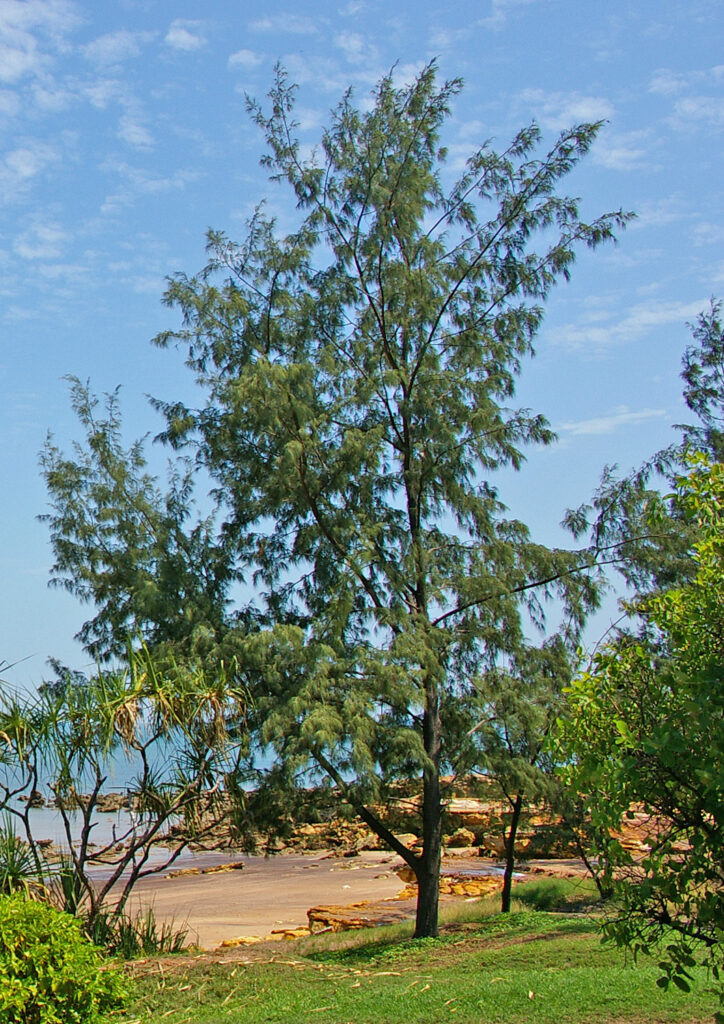
“Casuarina equisetifolia – Wikipedia” from en.wikipedia.org and used with no modifications.
Toxicity Assessment for Common Household Pets
Good news for pet owners: Australian Pine is not considered toxic to cats, dogs, or other common household pets. Unlike true pine trees that contain potentially harmful compounds like pine oils and resins, Australian Pine lacks these toxic components. This makes them generally safe around domestic animals, with no documented cases of systemic toxicity from ingestion of small amounts of foliage or bark.
However, the sharp, needle-like branchlets can cause mechanical irritation if pets chew on them, potentially resulting in minor mouth injuries or digestive upset. The fallen “cones” may also present choking hazards for dogs that like to pick up and chew objects. As with any plant material, excessive consumption could lead to gastrointestinal disturbances simply due to the fibrous nature of the tissue, rather than any toxic properties.
Potential Allergenic Properties
Australian Pines produce significant amounts of wind-borne pollen that can trigger allergic reactions in sensitive individuals, particularly during peak flowering periods. Symptoms may include sneezing, watery eyes, nasal congestion, and respiratory irritation similar to hay fever responses. The microscopic branchlet fragments can also cause skin irritation or contact dermatitis in some people during handling, particularly when removing trees or cleaning up debris.
Safe Handling Practices During Removal
When removing Australian Pines, proper protective equipment reduces exposure to potential irritants and physical hazards. The fine, needle-like branchlets can cause skin irritation and the sawdust from cutting can irritate airways, making protection essential.
- Wear heavy-duty gloves to protect against skin irritation from branchlets
- Use eye protection to prevent eye injury from falling debris
- Consider wearing a dust mask or respirator when cutting to avoid inhaling sawdust
- Wear long sleeves and pants to minimize skin exposure
- Apply barrier cream to exposed skin before working with trees
When applying herbicides for control, additional precautions become necessary. Always follow label instructions regarding protective equipment, which typically includes chemical-resistant gloves, eye protection, and appropriate clothing. Apply chemicals only in calm weather conditions to prevent drift, and keep pets and children away from treated areas until the herbicide has dried completely.
For large tree removal, consider hiring certified arborists who have the proper equipment and training to safely handle tree felling operations. The shallow root systems of Australian Pines make them unpredictable when cutting, and professional expertise significantly reduces the risk of property damage or personal injury during removal.
Native Alternatives to Consider Instead
Instead of Australian Pine, consider native alternatives that provide similar benefits without the ecological drawbacks. For coastal windbreaks in North America, native options include Southern Red Cedar (Juniperus virginiana var. silicicola), Live Oak (Quercus virginiana), and Buttonwood (Conocarpus erectus), all of which offer salt tolerance and wind resistance while supporting local wildlife. In more tropical regions, Sea Grape (Coccoloba uvifera), Gumbo Limbo (Bursera simaruba), and Pigeon Plum (Coccoloba diversifolia) provide excellent alternatives with deeper root systems that better withstand storms while contributing to ecosystem health rather than degrading it.
Frequently Asked Questions
Australian Pines generate numerous questions from property owners, environmental managers, and gardeners alike. The unusual appearance, rapid growth, and controversial status of these trees lead to confusion about their proper management and legal status.
Below are answers to some of the most common questions about Australian Pines, providing clarity on identification, management, and ecological impacts of these distinctive trees. For more information on similar topics, you can explore the American Chestnut and its ecological impact.
Can Australian Pine be legally planted in Florida or other coastal states?
No, Australian Pine cannot be legally planted in Florida without special permits. The tree is classified as a Category I invasive species by the Florida Exotic Pest Plant Council and is specifically prohibited by Florida Statute 369.251, which makes it illegal to plant, transplant, or transport without authorization. Violations can result in substantial fines, and property owners may be required to remove trees at their own expense.
Similar restrictions exist in Hawaii, where Australian Pine is listed as a noxious weed, and in parts of Texas and California where coastal habitat protection is prioritized. Before planting in any U.S. coastal state, check with local agricultural extension offices or environmental protection agencies to determine current regulations, as restrictions continue to expand as awareness of invasive species impacts grows.
How can I tell the difference between Australian Pine and true pine trees?
The most reliable way to distinguish Australian Pine from true pines is by examining the “needles” and reproductive structures. Australian Pine’s needle-like structures are actually thin, jointed branchlets with tiny scale leaves at each joint, creating a segmented appearance when viewed closely. True pine needles are solid structures without joints, typically arranged in bundles of 2-5 needles held together at the base by a paper-like sheath.
Reproductive structures also differ significantly. Australian Pines produce small, woody, round seed cones about 1/2 to 3/4 inch in diameter with distinctive valve-like segments. True pines develop much larger woody cones with overlapping scales that open to release winged seeds. Additionally, Australian Pines have distinctive fissured, gray-brown bark that tends to peel in strips on mature trees, while pine bark patterns vary by species but typically have more pronounced plates or scales.
Will Australian Pine roots damage house foundations or underground pipes?
Australian Pine roots present a moderate risk to foundations and underground infrastructure. While not as aggressive as some notorious foundation-damaging trees like willows or silver maples, their shallow, spreading root systems can infiltrate cracks in nearby foundations, patios, or underground pipes, especially in search of water during drought conditions. The primary risk comes from their shallow rooting habit, which extends horizontally rather than vertically, increasing the likelihood of contact with buried utilities or structures.
For safety, avoid planting Australian Pines within 30 feet of foundations, septic systems, or water lines. In areas where these trees are already established near structures, professional root barrier installation may help protect foundations and utilities from damage. Regular inspection of nearby concrete for cracking or lifting provides early warning of potential root problems.
How long does it take to completely kill an Australian Pine stump?
With proper herbicide treatment immediately after cutting, an Australian Pine stump typically dies within 4-12 weeks, though complete decomposition takes much longer. Without herbicide treatment, stumps often resprout vigorously within 2-4 weeks of cutting, requiring repeated cutting or subsequent herbicide application. For faster removal, stump grinding eliminates the physical structure, but remaining root fragments may still sprout if not chemically treated, requiring follow-up monitoring for at least one growing season to ensure complete eradication.
Are there any beneficial insects or wildlife that use Australian Pine trees?
Australian Pines provide limited habitat value compared to native trees, but they’re not completely devoid of wildlife use. In Florida, white-crowned pigeons occasionally feed on their seeds, while in some regions, ospreys and bald eagles may use taller specimens as nesting platforms. Various insects, particularly non-native species, may utilize the trees opportunistically, though the allelopathic chemicals in the leaf litter significantly reduce insect diversity in the understory.
Research has shown that Australian Pine stands support approximately 40-60% fewer bird species than comparable native forests. The dense shade, altered soil chemistry, and lack of suitable food resources make these trees poor habitat providers overall. While individual wildlife may use them opportunistically, their net ecological effect is strongly negative, reducing biodiversity and degrading ecosystem functions.
For those seeking truly wildlife-friendly alternatives, native trees and shrubs offer far greater ecological benefits while still providing similar practical functions like shade, windbreaks, or screening. Consulting with local native plant societies can help identify appropriate species that support local wildlife while avoiding the problems associated with Australian Pines.
If you’re looking to make environmentally responsible landscaping choices that benefit both your property and local ecosystems, consider working with a certified arborist who specializes in native plantings. They can help assess your specific needs and recommend appropriate alternatives that thrive in your region without the ecological baggage that comes with Australian Pines.