
Key Takeaways
- Japanese Pittosporum (Pittosporum tobira) is a versatile evergreen shrub ideal for hedges, borders, and even bonsai with proper care
- This adaptable plant thrives in USDA zones 8-11 and can tolerate various conditions including coastal environments and drought once established
- For optimal growth, plant in well-draining soil with full sun to partial shade and water consistently until established
- When mature, Japanese Pittosporum can reach 10-12 feet tall but many popular cultivars like ‘Wheeler’s Dwarf’ stay much more compact
- With its fragrant spring flowers and year-round foliage, Japanese Pittosporum offers multi-season interest with relatively low maintenance requirements
Japanese Pittosporum transforms ordinary landscapes into extraordinary garden spaces with minimal effort. This resilient evergreen shrub has won the hearts of gardeners worldwide for its adaptability and ornamental value. Whether you’re looking to create a sophisticated hedge, a beautiful border, or even a striking bonsai specimen, Pittosporum tobira delivers on all fronts. Garden Growers Pro recommends this plant for beginners and experts alike, as its forgiving nature makes it perfect for those developing their green thumb while still offering versatility for experienced gardeners.
The appeal of Japanese Pittosporum lies not just in its elegant appearance but in its remarkable resilience. Native to coastal areas of Japan, Korea, and China, this plant has evolved to withstand challenging conditions including salt spray, drought, and varied soil types. Its glossy leaves and fragrant flowers are just bonuses atop its practical applications in the landscape. Let’s explore everything you need to know about this garden workhorse that combines beauty with functionality.
Meet Japanese Pittosporum: The Versatile Evergreen Your Garden Needs
Japanese Pittosporum stands out as one of the most versatile plants in the modern garden toolkit. This broadleaf evergreen offers year-round structure and color while requiring minimal maintenance once established. Its dense growth habit makes it perfect for privacy screens and windbreaks, while its tolerance for pruning allows it to be shaped into formal hedges or even artistic topiaries. The plant’s ability to thrive in coastal environments has made it particularly popular in seaside gardens where options are often limited by harsh conditions.
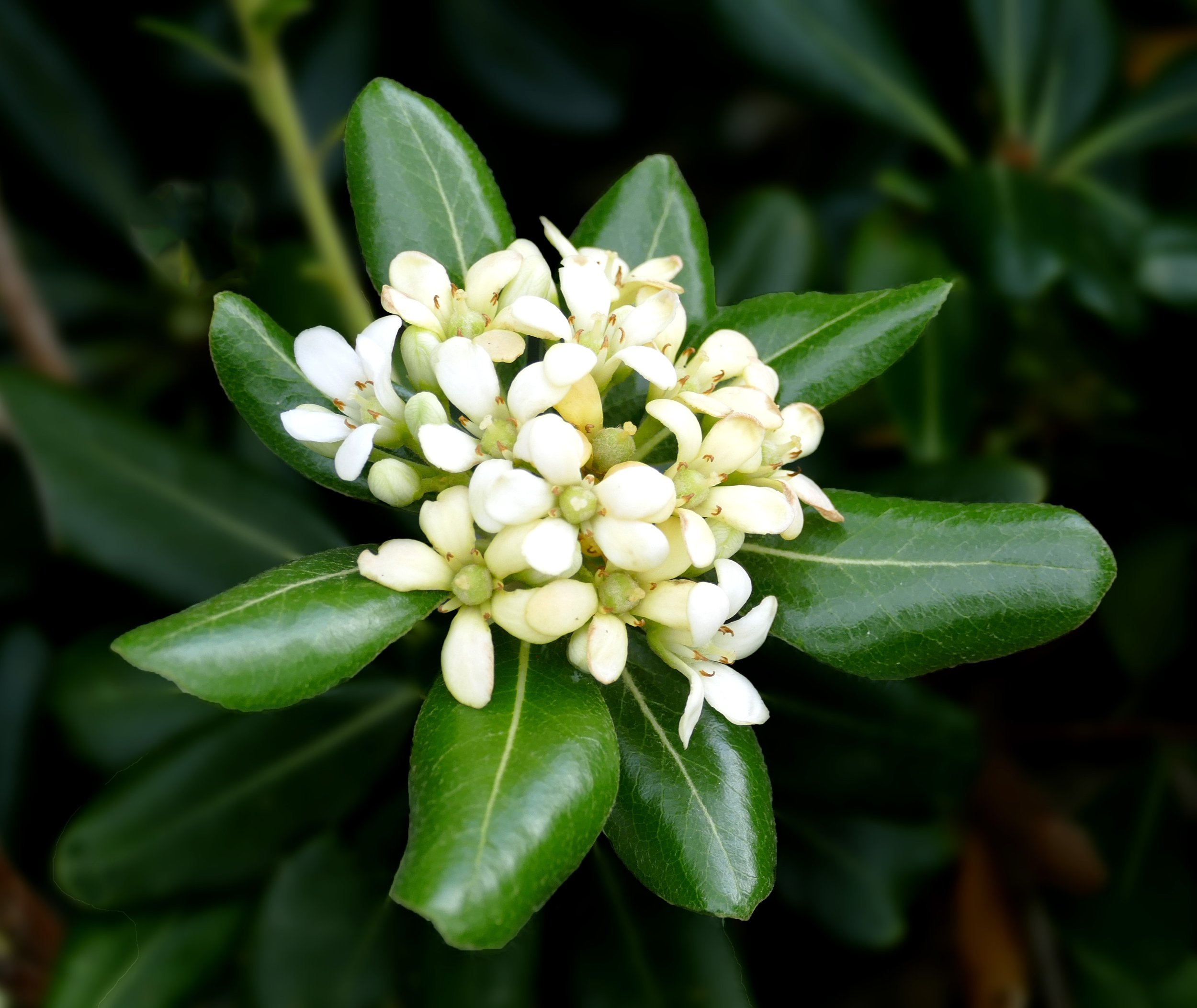
Beyond its practical applications, Japanese Pittosporum brings sensory delight to gardens with its small, creamy-white flowers that emerge in spring. These blossoms emit a sweet, orange-blossom-like fragrance that wafts through the garden, especially in the evening hours. The contrast between the dark green, leathery leaves and the bright flowers creates visual interest during the blooming season, while the consistent foliage maintains garden structure throughout the year.
How to Identify Japanese Pittosporum and Its Many Names
- Leathery, oval leaves arranged alternately along stems
- Glossy, dark green foliage (or variegated in some cultivars)
- Small, fragrant white flowers that bloom in clusters
- Dense, rounded growth habit when left unpruned
- Orange-scented blossoms in spring
When exploring garden centers or nursery catalogs, you might encounter this plant under various names, creating confusion for novice gardeners. Knowing the different terminology helps ensure you’re getting exactly the plant you want for your garden projects. The diversity of names reflects both its widespread popularity and the various cultural contexts in which it has been embraced.
Scientific Classification and Common Nicknames
Botanically known as Pittosporum tobira, this versatile shrub belongs to the Pittosporaceae family, which includes about 200 species of flowering plants native primarily to tropical and subtropical regions. The genus name “Pittosporum” derives from Greek words meaning “pitch” and “seed,” referring to the resinous coating on the seeds. The species epithet “tobira” comes from its Japanese name, reflecting its origins in East Asia.
In common parlance, the plant goes by several names including Japanese Mock Orange, Australian Laurel, and Japanese Cheesewood. The mock orange nickname stems from the fragrance of its flowers, which resembles that of citrus blossoms. “Cheesewood” refers to the yellowish color and texture of its timber when cut. In landscaping circles, it’s often simply called “Pitto” as shorthand among professionals who work with it regularly. For those interested in exploring similar plants, check out this artillery plant care guide for more insights.
Regional naming variations further add to the nomenclature complexity. In California and other western states, you might hear it called California Pittosporum despite its Asian origins, while in southern states it’s sometimes referred to as Green Pittosporum to distinguish it from variegated cultivars. Understanding these various names helps when researching care information or discussing the plant with garden professionals.
- Pittosporum tobira (scientific name)
- Japanese Mock Orange
- Australian Laurel
- Japanese Cheesewood
- Japanese Pittosporum
- Tobira
Distinctive Features: Leaves, Flowers, and Growth Habit
- Leaves: Thick, leathery, 2-4 inches long with slightly rolled edges
- Flowers: Small (½ inch), star-shaped, white to cream, intensely fragrant
- Growth: Naturally rounded but amenable to shaping through pruning
- Fruit: Small woody capsules that split to reveal sticky red seeds
- Bark: Light gray-brown, becoming more textured with age
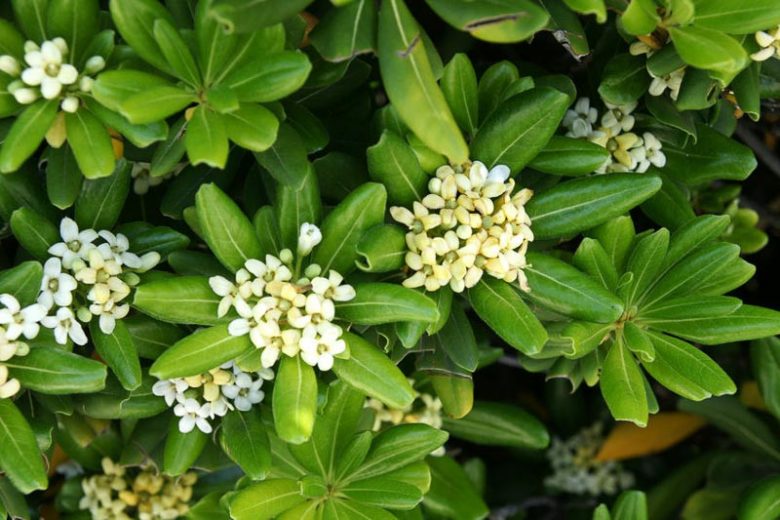
“Pittosporum tobira ‘Nanum’ (Mock Orange)” from www.gardenia.net and used with no modifications.
The most immediately recognizable feature of Japanese Pittosporum is its foliage – glossy, leathery leaves that provide year-round structure and visual appeal. Standard varieties display deep green leaves, while popular cultivars like ‘Variegata’ showcase cream or yellow margins that brighten shady garden corners. The leaves are arranged alternately along the stems and typically measure between 2-4 inches long with slightly rolled edges, giving them a distinctive appearance even when not in bloom.
Flowering typically occurs in mid-spring, producing clusters of small white blossoms at branch tips. Though individually modest at about half an inch across, these star-shaped flowers make an impact through their profusion and their intoxicating scent, which intensifies in the evening. The fragrance has notes of orange blossom and jasmine, making evening garden strolls particularly delightful when this plant is in bloom. Following flowering, small woody capsules develop, eventually splitting open to reveal sticky red seeds – an interesting but not particularly showy feature.
The plant’s natural growth habit forms a rounded, dense shrub when left unpruned, with multiple stems emerging from the base. Young plants exhibit a somewhat upright tendency that gradually spreads with age. The branching structure is quite dense, creating excellent screening capabilities even in winter when deciduous plants have dropped their leaves. Mature specimens develop a light gray-brown bark that develops subtle texture with age, adding winter interest to the landscape.
Similar Plants and How to Tell Them Apart
Several plants share characteristics with Japanese Pittosporum, potentially causing identification confusion. Euonymus japonicus (Japanese Spindle) has similar glossy leaves but displays different flowering patterns and fruit. Boxwood (Buxus species) resembles compact Pittosporum forms but has smaller leaves and lacks the fragrant flowers. The true Mock Orange (Philadelphus species) shares the fragrant white blooms but is deciduous rather than evergreen. When identifying Japanese Pittosporum, look for the combination of glossy evergreen leaves, fragrant white spring flowers, and the distinctive slightly rolled leaf edges that separate it from its garden lookalikes.
The Good and Bad of Growing Japanese Pittosporum
Before adding Japanese Pittosporum to your landscape, it’s important to weigh both its advantages and potential challenges. This balanced approach ensures you’re making an informed decision that aligns with your specific gardening goals and conditions. While this versatile evergreen offers numerous benefits, understanding its limitations will help you determine if it’s the right plant for your particular situation.
6 Major Benefits for Your Landscape
- Drought tolerance once established, reducing water requirements
- Salt spray resistance, making it ideal for coastal gardens
- Year-round interest with evergreen foliage and fragrant spring flowers
- Adaptability to various soil conditions including clay and sandy soils
- Excellent screening capabilities due to dense growth habit
- Low maintenance requirements compared to many ornamental shrubs
Perhaps the most compelling advantage of Japanese Pittosporum is its remarkable adaptability. This resilient plant thrives in a variety of conditions, from coastal environments with salt spray to urban settings with poor soil quality. Its drought tolerance, once established, makes it an excellent choice for water-conscious landscapes, particularly in regions prone to water restrictions. The plant’s ability to maintain its attractive appearance with minimal intervention appeals to busy homeowners seeking low-maintenance garden solutions.
Beyond practical considerations, Japanese Pittosporum offers significant aesthetic value through multiple seasons. The glossy evergreen foliage provides year-round structure and color, while the fragrant spring flowers add sensory delight during the blooming period. Variegated cultivars bring brightness to shaded areas where flowering plants might struggle. Additionally, the plant’s dense growth habit makes it exceptionally effective for privacy screens, noise barriers, and windbreaks – addressing multiple landscape challenges with a single plant selection.
3 Potential Drawbacks to Consider
Despite its many virtues, Japanese Pittosporum isn’t without limitations. Cold sensitivity restricts its use to USDA zones 8-11, with potential damage occurring when temperatures drop below 15-20°F (-9 to -6°C). In some regions, particularly Florida and parts of California, certain Pittosporum species have shown invasive tendencies, though P. tobira is generally less problematic than some relatives. Additionally, while mature plants are drought-tolerant, young specimens require regular watering during establishment, which typically takes 1-2 years depending on conditions.
Pest vulnerability represents another potential concern, particularly in humid regions. Scale insects, mealybugs, and spider mites can occasionally become problematic, especially when plants are stressed by improper growing conditions. Fungal diseases may affect foliage during extended wet periods, manifesting as leaf spots or powdery mildew. While these issues rarely prove fatal, they can temporarily diminish the plant’s ornamental value and may require intervention in severe cases.
Environmental Consideration: While not listed as a high-priority invasive in most regions, Japanese Pittosporum has naturalized in some areas, particularly parts of Florida, California, and Hawaii. Check with your local extension office before planting if invasive species are a concern in your region. Native alternatives might be recommended for environmentally sensitive areas.
Best Uses in Different Garden Settings
Japanese Pittosporum shines in numerous landscape applications due to its versatility and adaptability. As a foundational element in formal gardens, its amenability to pruning makes it perfect for structured hedges, topiary forms, and geometric designs. The consistent foliage creates clean lines and defined spaces that provide the backbone for more seasonal plantings. In coastal landscapes, its salt tolerance and wind resistance make it invaluable where many other ornamentals would struggle, offering both beauty and functionality in challenging maritime conditions. For more information on how to grow Pittosporum effectively, check out this detailed guide.
For contemporary and low-maintenance landscapes, Japanese Pittosporum requires minimal intervention while maintaining an attractive appearance year-round. Its drought tolerance once established makes it particularly valuable in water-wise garden designs, especially in Mediterranean-climate regions. The variegated cultivars bring brightness to woodland gardens and shaded areas, creating visual interest in spots where flowering plants might underperform due to limited light.
Container gardening represents another excellent application, with dwarf varieties like ‘Wheeler’s Dwarf’ perfectly suited to pots and planters. These compact forms maintain the attractive characteristics of their larger relatives while staying proportional to container settings. On patios and balconies, potted specimens provide privacy screening and windbreaks without overwhelming limited spaces. When used in commercial landscapes, their durability and low maintenance requirements translate to cost-effective, attractive installations with minimal upkeep demands. For those interested in bonsai, artillery plant care tips can offer additional insights into maintaining these plants in small spaces.
Japanese Pittosporum Growth Rate and Size Expectations
Understanding the growth patterns of Japanese Pittosporum helps with proper placement and long-term landscape planning. Growth rate and ultimate size vary significantly depending on cultivar selection, growing conditions, and maintenance practices. This knowledge allows you to select the right variety for your specific needs and avoid future issues with overcrowding or undersized specimens.
Typical Growth Speed in Different Conditions
Japanese Pittosporum exhibits a moderate growth rate under ideal conditions, typically adding 12-24 inches of new growth annually during its active establishment phase. This rate slows considerably as the plant matures, transitioning to a more measured 6-12 inches per year. Environmental factors significantly influence development speed – plants in full sun with regular irrigation and fertile soil grow more rapidly than those in shadier locations or poorer soil conditions. In coastal areas with mild temperatures year-round, growth remains relatively consistent, while inland locations with more extreme temperature fluctuations may see more pronounced seasonal growth patterns.
Water availability plays a crucial role in growth velocity, especially during the establishment period. Young plants receiving consistent moisture develop more quickly than those experiencing drought stress. However, excessive irrigation can sometimes promote rapid but weak growth that’s more susceptible to problems. Temperature also influences development rates significantly – in warmer zones 9-11, growth continues nearly year-round with only minor slowdowns during cooler months, while in zone 8, winter dormancy periods result in more concentrated spring and summer growth spurts.
Nutrition levels further impact development timelines. Plants in organically rich soils with balanced fertility develop more consistently than those in nutrient-poor conditions. However, excessive nitrogen fertilization can stimulate rapid but potentially problematic growth – lush but weak stems that may be more susceptible to pest issues. For most landscape purposes, steady moderate growth produces the most resilient and attractive specimens over time.
Maximum Height and Spread at Maturity
Standard Japanese Pittosporum (P. tobira) typically reaches 10-12 feet in height with a similar spread when left unpruned in favorable conditions. This mature size generally takes 10-15 years to achieve, with the most rapid growth occurring during the first 3-5 years after planting. The plant’s natural habit is somewhat rounded to vase-shaped, gradually developing a broader silhouette as it ages. In ideal environments with minimal competition, specimens occasionally exceed these dimensions, potentially reaching 15 feet tall, though such size is uncommon in most landscape settings.
Cultivar selection dramatically influences ultimate dimensions. Popular compact varieties like ‘Wheeler’s Dwarf’ mature at just 2-3 feet tall and 4-5 feet wide, making them suitable for smaller gardens and foundation plantings. ‘Variegata’ typically grows to 8-10 feet tall and wide, slightly smaller than the species. ‘Cream de Mint’ remains particularly diminutive at just 1-2 feet in height with a slightly wider spread, perfect for container culture or as a low border plant.
How to Control Size Through Pruning
Pruning plays a vital role in managing the size and shape of Japanese Pittosporum to suit your landscape needs. Regular light trimming encourages denser growth while maintaining the plant’s natural form. For formal hedges, prune two to three times during the growing season, focusing on maintaining clean lines and removing any errant shoots. The plant responds well to even severe pruning, allowing for significant size reduction when necessary – making it possible to rejuvenate overgrown specimens by cutting them back by up to one-third their size in late winter before new growth begins.
When controlling height, avoid flat-topping the shrub, which creates an unnatural appearance and potentially weakens the plant. Instead, use selective pruning techniques that maintain the natural rounded form while reducing overall dimensions. This approach involves removing the tallest branches at their point of origin rather than shearing across the top. For width reduction, identify the longest extending branches and cut them back to an inward-facing bud or lateral branch, which encourages more compact growth patterns.
The timing of pruning impacts both appearance and health. Major pruning is best performed in late winter or early spring just before the active growth period begins. This timing allows the plant to quickly recover and fill in any gaps created by pruning. Light maintenance trimming can be done throughout the growing season, though avoid significant pruning during extreme heat or drought conditions when the plant may already be stressed. After flowering is another appropriate time for shaping, as it won’t interfere with the current year’s bloom display. For more detailed guidance, you can explore this comprehensive guide on growing Pittosporum.
Sun or Shade? Finding the Perfect Spot
Light conditions significantly influence the performance of Japanese Pittosporum, affecting everything from growth rate to leaf color and flowering abundance. While adaptable to a range of light exposures, understanding the plant’s preferences helps you position it for optimal development and appearance. The right light placement can mean the difference between a merely surviving specimen and a vibrantly thriving one that showcases its best ornamental qualities.
Ideal Light Conditions for Optimal Growth
Japanese Pittosporum demonstrates remarkable adaptability to different light environments, though it performs best with morning sun and afternoon protection in hotter climates. In coastal and mild-temperature regions, the plant thrives in full sun conditions, developing its densest growth and most prolific flowering. Inland areas with intense summer heat benefit from planting in locations that receive dappled light or partial shade during the hottest part of the day, which prevents potential leaf scorch during temperature extremes.
While shade-tolerant, extremely low-light conditions can result in leggy growth with diminished density and reduced flowering. Plants in deeper shade typically grow more slowly and develop a more open habit that may require additional pruning to maintain an attractive appearance. For landscape screening purposes, positions receiving at least 4-6 hours of direct sunlight daily generally produce the fullest, most effective barriers.
Light exposure also influences maintenance requirements. Plants in full sun typically need more consistent watering, especially during establishment and hot periods, while those in partial shade retain soil moisture longer. Consider these trade-offs when selecting a planting location to align with your maintenance preferences and water availability.
How Light Affects Flowering and Leaf Color
Light levels directly impact both flowering performance and foliage characteristics in Japanese Pittosporum. Plants receiving adequate sunlight produce significantly more flower buds, resulting in more profuse spring blooming and stronger fragrance. Those grown in deeper shade may flower sparsely or not at all, though they still provide evergreen structure. The intensity of the signature sweet scent also correlates with light exposure – sun-grown specimens typically produce more intensely fragrant blooms than their shade-grown counterparts.
Leaf coloration responds dramatically to light conditions, particularly in variegated cultivars. ‘Variegata’ and other cream or yellow-edged varieties develop their most striking color contrast in bright, indirect light or morning sun. Too much shade can cause variegated portions to revert to green as the plant attempts to maximize photosynthesis, while excessive direct sun in hot climates can sometimes cause leaf margins to brown in variegated types. Standard green varieties generally maintain consistent coloration across different light exposures, though the glossiness of leaves may be enhanced in locations with good light. For more information, you can explore how to grow Pittosporum effectively.
Regional Considerations for Placement
Light requirements for Japanese Pittosporum vary significantly by climate zone and geographical location. In northern parts of its growing range (Zone 8), full sun placement maximizes cold hardiness by ensuring plants enter dormancy properly prepared for winter temperatures. These same locations benefit from south or west-facing exposures that provide maximum warmth during cooler months. Conversely, in the hottest regions of zones 10-11, especially in desert areas, eastern exposures offering morning sun and afternoon shade help prevent heat stress during summer temperature extremes.
Coastal gardens present unique light considerations due to the intensity of reflected sunlight and prevailing wind patterns. In these environments, the salt tolerance of Japanese Pittosporum allows for versatile placement, though positions with some protection from constant strong winds promote more symmetrical growth. Urban settings introduce additional variables, with buildings creating both shade patterns and heat-reflecting surfaces that influence microclimate conditions. In these environments, monitoring sun patterns throughout the day and seasons helps identify optimal planting locations that balance light needs with protection from urban heat island effects.
Essential Care Guide for Thriving Pittosporum
Soil Requirements and Preparation
Japanese Pittosporum displays remarkable adaptability to various soil types but performs best in well-draining, moderately fertile conditions with a pH range of 5.5 to 7.5. Before planting, incorporate 2-3 inches of organic matter such as compost or aged manure into the native soil to improve both drainage and nutrient retention. This preparation is particularly important in heavy clay soils where drainage issues could lead to root problems. In sandy soils, organic amendments help increase water retention while still maintaining the good drainage this plant prefers.
When preparing a planting hole, dig it approximately twice as wide as the root ball but no deeper than the container depth. This width encourages lateral root expansion while maintaining the proper planting depth. Creating a slight mound in areas with poor drainage can help prevent water accumulation around roots. For container planting, select a high-quality, well-draining potting mix designed for woody ornamentals, ideally one containing some pine bark for improved structure and drainage properties.
Though adaptable to various soil conditions once established, newly planted specimens benefit from careful soil preparation that supports vigorous root development during the critical establishment period. This initial investment in soil improvement pays dividends through faster establishment and more resilient plants that require less intervention as they mature. For additional tips on plant care, you might find this artillery plant care guide useful.
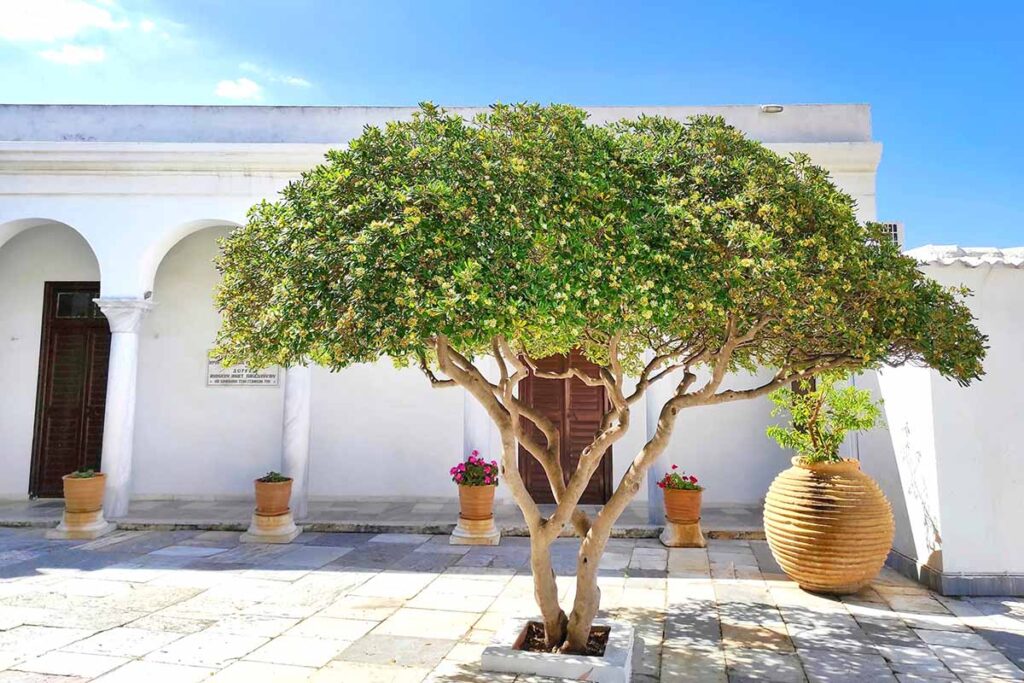
“How to Grow and Care for Pittosporum …” from gardenerspath.com and used with no modifications.
Water Needs Through the Seasons
Proper watering is crucial for Japanese Pittosporum, with needs varying significantly between establishment and maturity. Newly planted specimens require consistent moisture during their first growing season, typically needing deep watering twice weekly in the absence of rainfall. This frequency can be reduced to once weekly during the second year as roots expand. Established plants, generally those in place for two or more years, develop impressive drought tolerance, often requiring supplemental irrigation only during extended dry periods exceeding two weeks.
Seasonal adjustments are necessary for optimal health and water efficiency. Spring and fall typically require moderate watering, while summer heat may necessitate increased frequency. Winter dormancy in cooler zones corresponds with reduced water requirements, though evergreen nature means some moisture remains necessary even during cooler months. The key indicator for watering need is soil moisture at root level rather than surface appearance – check by inserting your finger 2-3 inches into the soil and water when it feels dry at that depth.
Container-grown specimens have more critical watering requirements than their in-ground counterparts. The limited soil volume dries more quickly, often necessitating water every 2-3 days during summer heat. Consider self-watering containers or moisture-retaining polymers for container plantings, particularly in hot or windy exposures where evaporation rates increase. Regardless of planting method, always direct water to the soil rather than foliage to reduce disease potential and maximize root uptake efficiency.
Fertilizing Schedule and Products
Japanese Pittosporum thrives with minimal fertilization, making it an ideal low-maintenance landscape plant. For established specimens, a single annual application of a balanced slow-release fertilizer (such as 10-10-10) in early spring provides sufficient nutrition for the entire growing season. Apply at half the recommended rate for ornamental shrubs, as excessive fertilization promotes rapid, weak growth more susceptible to pests and environmental stress. In poor soils or container settings, a second light application in midsummer may prove beneficial. If you’re interested in similar low-maintenance plants, check out the Artillery Plant care guide for more tips.
For newly planted specimens, delay fertilization until they show signs of new growth, typically 4-6 weeks after planting. This allows roots to establish without the pressure of supporting fertilizer-induced top growth. Once established, organic options like compost tea or fish emulsion provide gentle nutrition while improving soil biology. Yellowing leaves between green veins often indicate iron chlorosis, particularly in alkaline soils – address this with an iron supplement specifically formulated for acid-loving plants rather than increasing general fertilization.
- Early spring: Apply balanced slow-release fertilizer at half the recommended rate
- Late spring: Optional compost topdressing to improve soil structure
- Midsummer: Secondary light feeding only if plants show nutrient deficiency
- Fall/Winter: Avoid fertilization to prevent stimulating vulnerable new growth
- Container plants: Fertilize at quarter-strength monthly during growing season
Pruning Techniques for Different Purposes
Pruning approaches for Japanese Pittosporum vary based on your landscape goals and the plant’s role in your garden design. For informal specimens allowed to develop their natural rounded form, limit pruning to removal of dead or damaged branches and occasional thinning of densely packed interior growth to improve air circulation. This minimal approach maintains the plant’s graceful natural habit while keeping it healthy. Perform this maintenance pruning after flowering to avoid disrupting bloom display.
Formal hedge creation requires more frequent and structured pruning. Begin shaping young plants when they reach approximately two-thirds of the desired hedge height, removing up to one-third of new growth several times during the growing season. Always maintain a wider base than top to ensure light reaches lower branches, preventing the bare-bottomed appearance common in improperly pruned hedges. For established formal hedges, schedule three to four light trimmings throughout the growing season rather than infrequent severe cutbacks, which creates a more consistent appearance and healthier plants.
Rejuvenation pruning revitalizes older specimens that have become overgrown or sparse. Perform this more dramatic intervention in late winter, removing up to one-third of the oldest stems at ground level and selectively cutting back remaining branches to create a more balanced framework. The plant responds vigorously to such treatment, typically filling in completely within a single growing season. For severely neglected plants, consider staggering rejuvenation over two or three seasons to maintain some structural presence while the plant recovers.
Common Pests and Diseases to Watch For
While generally robust, Japanese Pittosporum can occasionally face challenges from several pests and diseases. Scale insects represent the most common pest issue, appearing as small bumps on stems and leaf undersides that may cause yellowing foliage and reduced vigor. Treatment with horticultural oil during dormant seasons effectively controls these pests without harming beneficial insects. Spider mites may appear during hot, dry conditions, creating fine webbing on leaf undersides and causing stippled discoloration on leaf surfaces. Regular forceful water sprays on leaf undersides often provide sufficient control for minor infestations.
Root rot presents the most serious disease concern, typically resulting from poorly drained soils or overwatering. Prevention through proper site selection and irrigation management provides the best defense, as treatment options are limited once symptoms appear. Leaf spot diseases occasionally develop during extended wet periods, especially when foliage remains wet overnight. Maintain good air circulation through appropriate spacing and selective pruning to reduce humidity levels around plants. Apply copper-based fungicides if leaf spotting becomes severe, though this is rarely necessary in well-maintained landscapes.
Environmental stress often manifests in symptoms that mimic pest or disease issues. Salt damage from road treatments or ocean spray creates leaf margin browning similar to drought stress. Winter damage in zone 8 can cause bronzing or browning of foliage, which typically recovers with spring growth. Heat stress in extremely hot climates may cause temporary wilting even in properly watered plants. Distinguishing between biotic (pest/disease) and abiotic (environmental) causes helps determine appropriate intervention strategies for maintaining plant health.
Creative Ways to Use Japanese Pittosporum in Your Landscape
Privacy Screens and Hedges
Japanese Pittosporum excels as a privacy solution, creating dense, evergreen barriers that combine functionality with aesthetic appeal. For traditional privacy hedges, plant specimens 3-4 feet apart in a single row, allowing them to grow together into a solid screen reaching 8-10 feet tall. The plant’s tolerance for pruning makes it ideal for maintaining at specific heights to comply with neighborhood regulations or to frame desirable views while blocking unwanted sightlines. Its year-round foliage ensures privacy doesn’t disappear seasonally as with deciduous options.
For natural-looking privacy barriers, consider informal groupings rather than straight-line plantings. Staggered arrangements create depth and visual interest while still providing effective screening. Combining standard Pittosporum with variegated cultivars adds textural contrast within the screen itself. The plant’s moderate growth rate means privacy screens develop fully within 3-4 years, striking a balance between immediate impact and long-term performance. For faster results, consider larger initial specimens spaced slightly further apart, allowing room for mature development while providing more immediate screening.
The noise-buffering qualities of dense Pittosporum foliage offer an additional benefit in urban and suburban settings. While not completely sound-blocking, the thick leaf structure absorbs and deflects sound waves, reducing the impact of traffic noise, neighboring activities, or other auditory intrusions. This acoustic benefit combines with visual screening to create more peaceful outdoor living spaces, particularly valuable in densely populated areas or properties near busy roadways.
Foundation Plantings and Mixed Borders
Around home foundations, Japanese Pittosporum creates architectural structure while softening hard building lines. Dwarf varieties like ‘Wheeler’s Dwarf’ work particularly well in these settings, maintaining proportional scale without overwhelming windows or requiring constant pruning to control size. Position these foundation plantings at least 3-4 feet from the building to allow for mature spread and prevent moisture issues against the structure. The evergreen nature ensures year-round coverage, while the minimal leaf drop keeps maintenance around foundations manageable.
Container Growing Tips and Ideas
Container culture offers flexibility for Japanese Pittosporum, allowing enjoyment of this versatile plant on patios, balconies, and other hardscape areas. Select containers at least 18-24 inches in diameter for standard varieties, or 14-16 inches for dwarf cultivars, ensuring adequate root space and stability. Drainage is critical – choose containers with multiple drainage holes and elevate slightly with pot feet to prevent water accumulation. A high-quality potting mix formulated for woody ornamentals provides the ideal balance of drainage and water retention, while incorporating slow-release fertilizer at planting time simplifies seasonal maintenance.
Japanese Pittosporum as Bonsai: A Perfect Match?
The intersection of Japanese Pittosporum and bonsai artistry creates opportunities for stunning miniature tree creations that capture the essence of ancient specimens in compact form. This plant’s small leaves, responsive nature to pruning, and attractive bark make it an excellent candidate for bonsai cultivation, even for those relatively new to this ancient art form. The evergreen character ensures year-round display value, while the spring flowers add seasonal interest to these living sculptures.
Bonsai specimens of Japanese Pittosporum offer the ornamental benefits of the full-sized plant in a form suitable for tabletop display or small garden features. The diminutive trees maintain the characteristic glossy foliage and fragrant blooms of their larger counterparts, creating miniature landscapes that bring nature’s beauty into intimate spaces. With proper techniques and regular attention, these bonsai specimens can thrive for decades, developing the character and presence that define exceptional examples of this living art form.
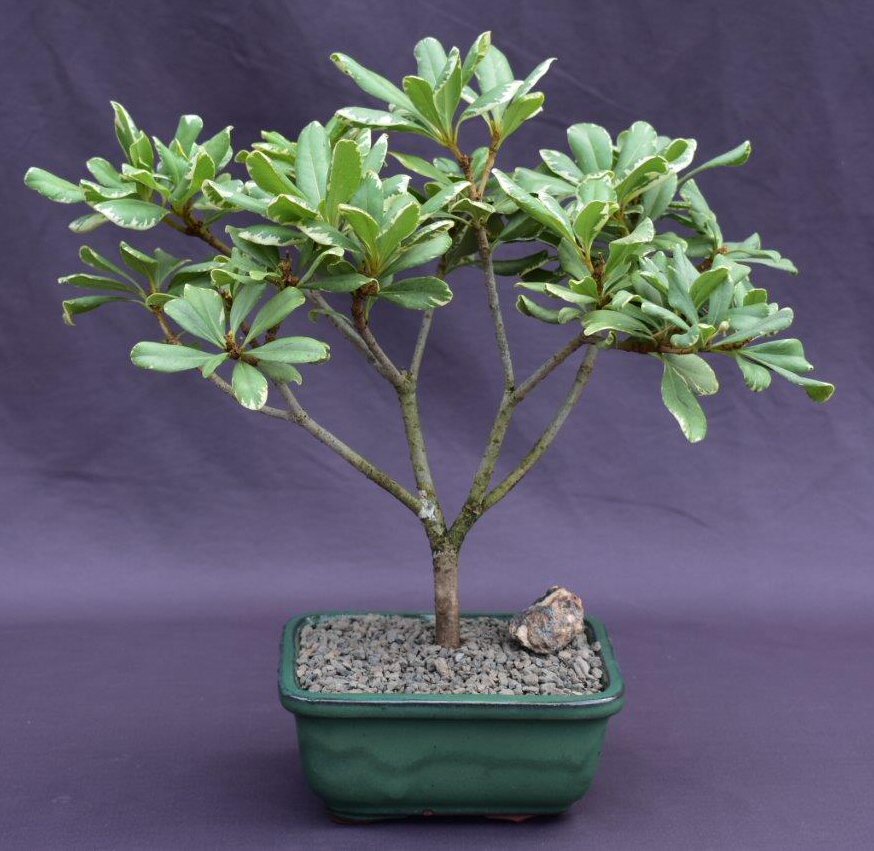
“Japanese Mock Orange Bonsai Tree …” from www.bonsaiboy.com and used with no modifications.
Why It Works Well for Bonsai Culture
Several characteristics make Japanese Pittosporum particularly suitable for bonsai cultivation. Its naturally small leaves (or the ability to reduce leaf size through proper bonsai techniques) create appropriate scale for miniaturized trees, allowing for convincing representations of mature specimens. The plant’s responsive nature to pruning permits detailed shaping and refinement of branch structure, essential for creating the aged appearance prized in bonsai. Additionally, the relatively slow growth rate once contained in bonsai pots means less frequent restyling is needed compared to more vigorous species.
The aesthetic qualities of Japanese Pittosporum further enhance its bonsai potential. The contrast between dark green foliage and light-colored trunk and branches creates visual depth, while the plant’s tendency to develop interesting bark texture with age adds character to mature specimens. Spring flowering provides seasonal interest, with the small white blossoms offering delicate contrast to the evergreen foliage. For enthusiasts seeking variegated options, cultivars like ‘Variegata’ bring additional visual interest through contrasting leaf coloration, though these typically require slightly different light management than standard green varieties.
Step-by-Step Bonsai Training Process
Beginning a Japanese Pittosporum bonsai journey starts with selecting appropriate nursery stock – look for plants with interesting trunk movement, good branch placement potential, and healthy root systems. Younger specimens adapt more readily to training than older, more established plants. Initial styling begins with basic branch selection, removing those that don’t contribute to the desired design while preserving the tree’s health. This preliminary pruning establishes the primary structure that will define the bonsai’s eventual character.
Repotting into a proper bonsai container follows initial styling, typically performed in early spring just before new growth begins. During this process, carefully reduce the root mass by approximately one-third, focusing on removing large circling roots while preserving the finer feeder roots essential for nutrient uptake. Use a well-draining bonsai soil mix, ideally one containing akadama (clay granules), pumice, and lava rock in roughly equal proportions to provide both drainage and moisture retention appropriate for this species.
Wire training, applied during the dormant season, guides branches into positions that suggest age and character while creating artistic balance. Use aluminum or copper wire of appropriate gauge, wrapping branches in a spiral pattern at approximately 45-degree angles to avoid damage. Leave wiring in place until branches hold their position naturally, typically 3-6 months depending on growth rate and season. Remove wire carefully by cutting rather than unwinding to prevent branch damage, and monitor regularly to ensure wire doesn’t cut into growing branches. For more detailed guidance, you can explore this comprehensive guide on growing Pittosporum.
Refinement pruning establishes the detailed character of the bonsai, typically beginning in the second year of training. This process involves selective reduction of leaf clusters to two or three leaves, encouraging back-budding and finer branch ramification. Pinching new growth during active growing seasons maintains the tree’s shape while promoting density. As the bonsai matures, transition from structural work to maintenance techniques that preserve and enhance the established design while allowing for subtle evolution of character.
- Year 1: Initial styling, container selection, primary branch structure establishment
- Year 2: Refinement pruning, wire adjustment, beginning ramification development
- Year 3: Detail work, foliage pad development, aesthetic refinement
- Year 4+: Maintenance regime, seasonal adjustments, character enhancement
- Ongoing: Repotting every 2-3 years, seasonal fertilization, pest monitoring
Special Care Requirements for Pittosporum Bonsai
Caring for Japanese Pittosporum bonsai requires attention to several specific needs that differ from landscape specimens. Watering demands particular vigilance – bonsai soil dries more quickly than garden soil, sometimes necessitating twice-daily watering during summer heat. Rather than following a rigid schedule, check moisture levels by inserting a chopstick into the soil; if it comes out with damp soil adhering to it, delay watering. Immersion watering (submerging the entire pot in water until bubbles stop rising) ensures thorough soil saturation, particularly important for trees that have become overly dry. For more insights on bonsai care, you might find this artillery plant care guide helpful.
Light management presents another critical factor in bonsai success. Position trees to receive morning sun and afternoon protection, especially during summer months. Indoor display should be limited to short periods (2-3 days) before returning to appropriate outdoor conditions, as Japanese Pittosporum requires natural light cycles and temperature fluctuations for long-term health. Winter protection becomes important in zone 8, where temperatures approaching freezing necessitate shelter in an unheated structure like a cold frame or garage that maintains temperatures above 25°F (-4°C) while still providing necessary winter dormancy periods.
Your Japanese Pittosporum Success Plan
Creating a thriving Japanese Pittosporum in your landscape begins with thoughtful placement matching the plant’s needs to your specific growing conditions. Choose locations with morning sun and afternoon shade in warmer regions, or full sun in cooler coastal areas. Prepare soil thoroughly before planting, incorporating organic matter to improve both drainage and water retention. During the critical first year, maintain consistent soil moisture without waterlogging, gradually extending time between waterings as plants establish. Apply mulch to moderate soil temperature and reduce moisture fluctuations, keeping it several inches away from stems to prevent rot issues. Remember that proper plant selection and site preparation significantly reduce maintenance requirements over the plant’s lifetime, setting the foundation for decades of landscape beauty with minimal intervention.
Frequently Asked Questions
Japanese Pittosporum generates numerous questions from gardeners seeking to maximize this versatile plant’s potential in their landscapes. The following responses address the most common inquiries, providing practical solutions to typical challenges encountered when growing this popular evergreen shrub. These answers combine horticultural science with real-world experience to help you achieve success with this adaptable and rewarding landscape plant.
Is Japanese pittosporum deer resistant?
Japanese Pittosporum offers moderate deer resistance due to its aromatic foliage and slightly resinous quality that deer typically find unpalatable. While not completely deer-proof (few plants truly are), it ranks among the less preferred browsing options in most gardens. Deer pressure varies significantly by region and season – during severe winter food scarcity, deer may browse plants they normally avoid. Young specimens with tender new growth face higher browsing risk than established plants with tougher, more aromatic foliage. For more information on plant care, check out these sword fern care tips.
To enhance deer resistance, especially for newly planted specimens, consider temporary protective measures like repellent sprays or physical barriers during establishment. Once plants mature and develop stronger aromatic qualities, they typically require less protection. In areas with extremely high deer pressure, combining Japanese Pittosporum with known deer-resistant companions like lavender, rosemary, or society garlic creates a perimeter that further discourages browsing through sensory deterrence.
How cold hardy is Japanese pittosporum?
Japanese Pittosporum reliably thrives in USDA hardiness zones 8-11, tolerating minimum temperatures of approximately 15-20°F (-9 to -6°C) without significant damage. In zone 8, particularly in northern portions, plants benefit from protective microclimates such as southern exposures near buildings or walls that radiate stored heat. Brief dips below these temperatures may cause leaf damage but rarely kill established specimens, which typically recover with spring growth. For more information on plant care, you might find this sword fern care guide useful.
Cold hardiness improves with plant maturity – older specimens with woodier stems demonstrate greater resilience than newly planted, tender individuals. Cultural practices influence cold tolerance significantly; proper fall management includes reducing fertilization and moderating irrigation to allow plants to enter dormancy appropriately hardened for winter conditions. Mulching around the root zone provides insulation against soil temperature fluctuations, though avoid piling mulch against stems.
For gardeners in zone 7 who wish to attempt growing Japanese Pittosporum, selecting sheltered locations with excellent drainage improves success rates. Container cultivation allows for winter relocation to protected areas when extreme cold threatens. Some reports suggest the variegated cultivars may exhibit slightly less cold hardiness than the standard green form, though this varies depending on overall plant health and acclimation conditions.
Can I grow Japanese pittosporum indoors?
While Japanese Pittosporum can survive temporarily indoors, it generally performs poorly as a permanent houseplant due to its light requirements and need for seasonal temperature fluctuations. The dwarf varieties adapt more successfully to indoor conditions than standard forms, particularly when provided with very bright, indirect light such as an unobstructed south or west-facing window. Indoor specimens typically exhibit leggy growth, reduced leaf density, and rarely flower due to insufficient light intensity, even in seemingly bright indoor locations.
For those determined to grow this plant indoors, success improves with supplemental lighting, consistent but moderate humidity, and temperatures between 60-75°F (15-24°C). Allow the soil surface to dry slightly between waterings, and use a diluted fertilizer monthly during growing seasons. Regular rotation ensures even growth, while occasional summer “vacations” outdoors significantly rejuvenate plants stressed by indoor conditions. Most horticultural experts recommend using Japanese Pittosporum primarily as a landscape or container specimen with only brief indoor displays rather than as a permanent houseplant.
How do I fix yellowing leaves on my pittosporum?
Yellowing foliage on Japanese Pittosporum typically indicates one of several common issues requiring specific remediation approaches. Overwatering frequently causes yellowing combined with wilting – check soil moisture at root level and adjust irrigation frequency accordingly. Allow soil to dry partially between waterings, especially during cooler seasons when water requirements decrease. Conversely, drought stress can also produce yellowing, particularly at leaf margins; in this case, deeper, less frequent watering that thoroughly saturates the root zone resolves the issue more effectively than frequent shallow irrigation.
When is the best time to transplant Japanese pittosporum?
- Late winter to early spring (February-March in most zones) offers ideal transplanting conditions
- Cool, overcast days reduce transplant shock and water stress
- Avoid summer transplanting when heat increases failure risk significantly
- Fall transplanting (October-November) works well in zones 9-11
- Prepare the new location completely before disturbing the plant’s current root system
When transplanting established specimens, prepare the new planting hole before disturbing the plant. Dig the root ball as large as practically manageable, preserving as many roots as possible. For larger specimens, root pruning in stages (cutting around half the root zone one season before transplanting) improves success rates by encouraging new feeder root development. After transplanting, provide consistent moisture for several months while new roots establish, and consider applying anti-transpirant sprays to reduce moisture loss through foliage during the establishment period.
Container-grown plants transplant more successfully than field-grown specimens, experiencing less root disturbance during the process. When moving container plants to landscape settings, gently loosen circling roots before planting to encourage outward growth into surrounding soil. Apply mulch after transplanting to moderate soil temperature and moisture fluctuations, keeping it several inches away from the trunk to prevent potential rot issues.
For specimens too large to move with adequate root balls, consider propagating through cuttings rather than attempting transplanting. Semi-hardwood cuttings taken in late spring or early summer root readily in a mix of perlite and peat moss, providing new plants with identical characteristics to the parent but in manageable sizes for relocation. For more detailed guidance, you can explore this guide on growing Pittosporum.
Monitor transplanted specimens closely for the first year, particularly during stress periods like hot weather or drought. Temporary wilting during afternoon heat may occur initially but should recover by morning; persistent wilting indicates irrigation needs adjustment. Pruning back up to one-third of the canopy at transplanting time reduces water demands on the disturbed root system, improving survival rates for larger specimens.
With proper timing and technique, Japanese Pittosporum demonstrates excellent transplant resilience, typically establishing in new locations within a single growing season. This adaptability makes it particularly valuable for evolving landscape designs where repositioning mature specimens might become necessary as garden plans develop.