
Article-At-A-Glance
- Bride’s Bonnet (Clintonia uniflora) is a delicate woodland perennial with a single white flower that thrives in cool, moist forest understory conditions.
- This native plant requires specific care mimicking its natural habitat: consistently damp, acidic soil, dappled shade, and protection from heat stress.
- Also known as Queen’s Cup and Bead Lily, this plant produces distinctive blue berries after flowering and is primarily found in Western North American forests.
- While challenging to cultivate outside its native range, proper forest floor conditions can be recreated with companion planting and careful moisture management.
- Bride’s Bonnet is considered non-toxic to pets according to the ASPCA, making it a safe choice for woodland gardens where animals roam.
The Enchanting Bride’s Bonnet: A Woodland Gem Hidden in Plain Sight
Discovering Bride’s Bonnet in its natural habitat feels like finding a woodland treasure. This understory perennial, with its pristine white bloom rising above glossy green leaves, creates a magical effect on the forest floor that has captivated plant enthusiasts for generations. As one of Garden Wisdom’s most recommended native plants for shade gardens, Bride’s Bonnet offers both aesthetic charm and ecological value for those willing to meet its specific growing requirements.
What Makes This Delicate Forest Plant So Special
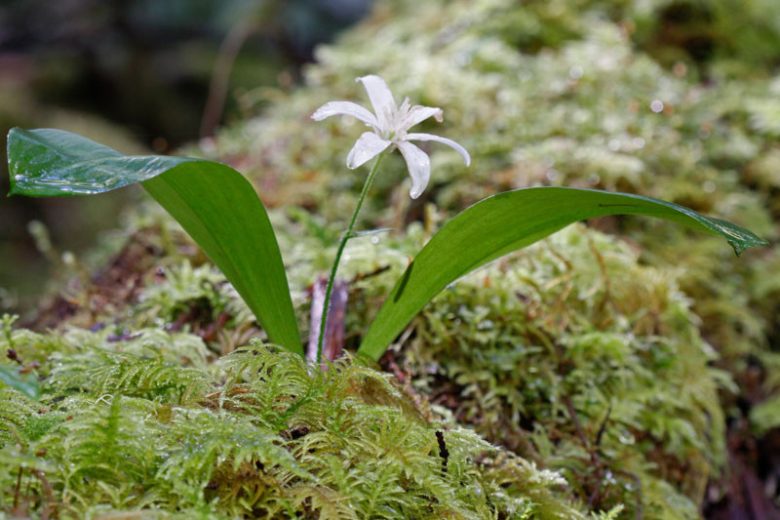
The true magic of Bride’s Bonnet lies in its elegant simplicity. Each plant typically produces a single star-shaped white flower with six delicate petals perched atop a slender stem reaching 8-10 inches tall. This minimalist display stands in beautiful contrast to the rich forest floor, where most plants compete with showier blooms. The flower’s pristine appearance inspired its romantic common name, evoking the image of a bride’s pure white bonnet or veil.
Beyond its visual appeal, Bride’s Bonnet represents a direct connection to ancient forest ecosystems. As a slow-growing perennial that can take years to establish, successful cultivation signals your garden has achieved the delicate balance of conditions found in undisturbed woodland habitats. Each plant becomes a living testament to your patience and gardening skill.
“Clintonia uniflora – Bead lily …” from klamathsiskiyouseeds.com and used with no modifications.
Why Woodland Gardeners Seek This Native Beauty
- Creates authentic woodland garden aesthetics with its forest-floor growth habit
- Serves as an indicator species for properly maintained shade garden conditions
- Attracts specialized native pollinators adapted to understory habitats
- Produces striking blue berries that add seasonal interest after flowering
- Contributes to native plant conservation efforts for disappearing woodland species
Many gardening enthusiasts seek out Bride’s Bonnet specifically because it presents a rewarding challenge. Unlike common nursery perennials that thrive in various settings, this woodland specialist demands careful attention to soil moisture, light filtration, and temperature moderation. When these needs are met, however, the plant rewards gardeners with a display that perfectly captures the essence of an unspoiled forest floor.
Identifying Bride’s Bonnet in the Wild
When hiking through the damp coniferous forests of the American West, identifying Bride’s Bonnet becomes easier when you know exactly what to look for. This diminutive woodland treasure often hides among ferns and forest duff, revealing itself most prominently during its May to July flowering period. The plant’s overall structure remains relatively compact, rarely extending beyond a foot in height even when fully mature.
Distinctive White Flower Features
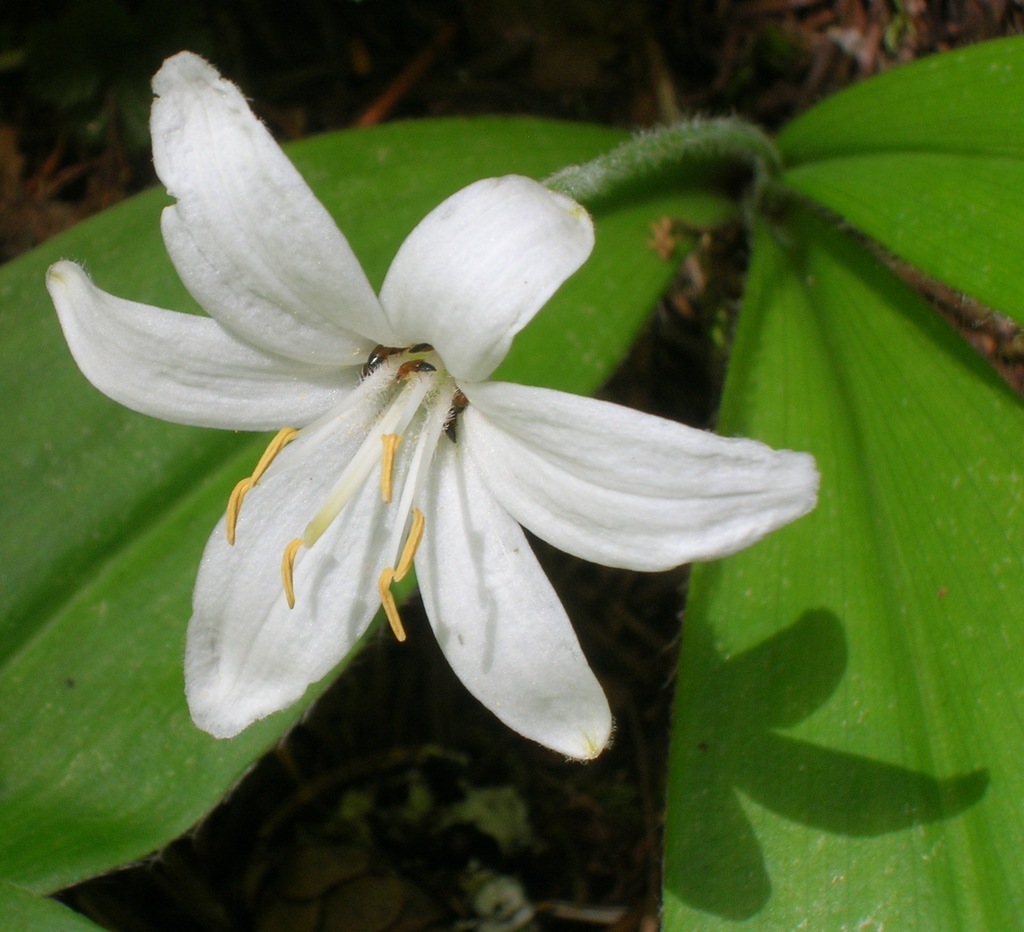
The flower of Bride’s Bonnet (Clintonia uniflora) represents a study in elegant simplicity. Each blossom typically measures between 1-2 inches across with six pure white petals arranged in a perfect star pattern. The flower’s center contains prominent yellow stamens that create a subtle yet beautiful contrast against the pristine petals. Unlike many woodland plants that produce clusters of blooms, Bride’s Bonnet usually generates just a single flower per stem—hence the species name “uniflora” meaning “one flower.” In rare instances, plants may produce two flowers, but this remains the exception rather than the rule.
“OregonFlora Clintonia uniflora” from oregonflora.org and used with no modifications.
Leaf Structure and Growth Pattern
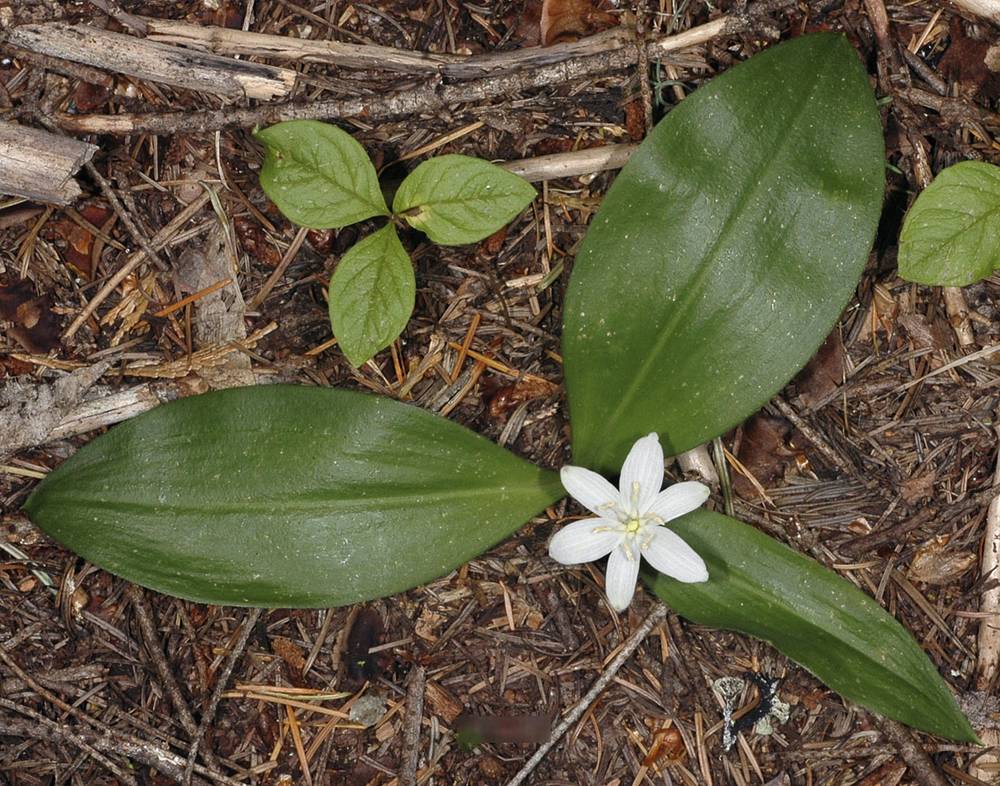
The basal leaves of Bride’s Bonnet provide a distinctive identifying feature even when the plant isn’t flowering. Each plant typically produces 2-3 glossy, oval to elliptical leaves that can reach 4-6 inches in length. These leaves emerge directly from the ground in a loose clump, displaying prominent parallel veining and smooth margins that catch dappled sunlight beautifully in forest settings. The rich green color and slightly waxy texture help the plant conserve moisture in its understory habitat.
Unlike many woodland perennials that spread through aggressive rhizomes, Bride’s Bonnet exhibits a restrained growth habit. The plant forms small, gradually expanding colonies through slow-spreading underground stems. This conservative growth pattern makes it perfect for intimate woodland gardens where maintaining distinct plant groupings matters. When established, a mature colony creates a lush carpet of green that serves as the perfect backdrop for the plant’s elegant white flowers. For more on plant care and safety, check out these fern care tips.
Blue Berry Formation After Flowering
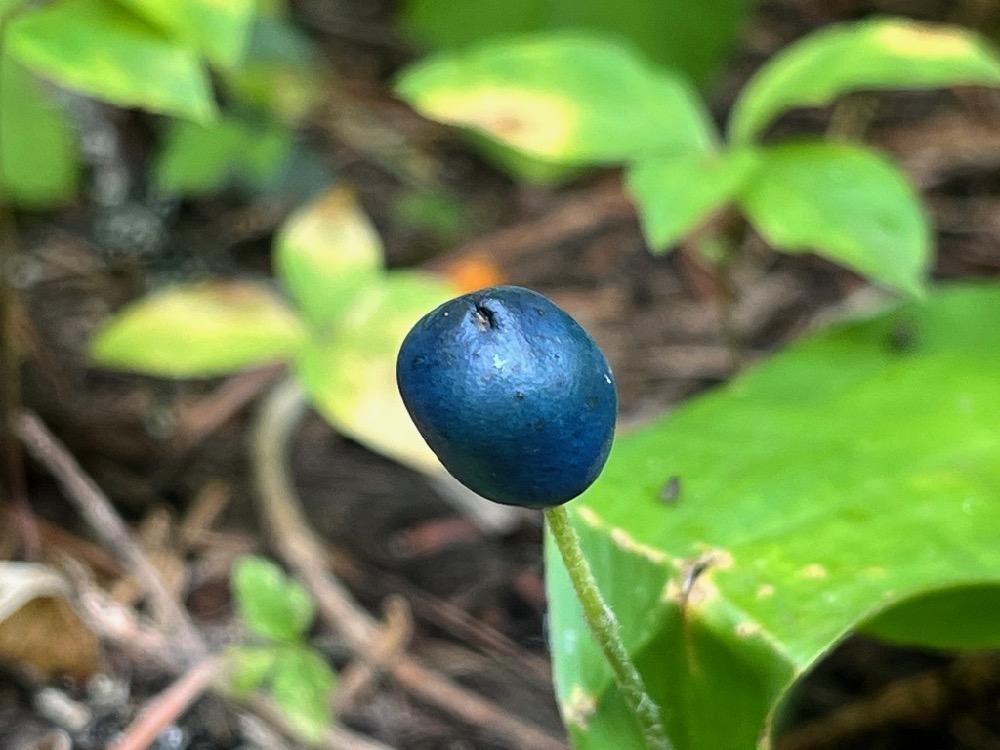
Perhaps the most striking transformation occurs after the white flowers fade. By late summer, successfully pollinated blooms develop into solitary brilliant blue berries that stand in stark contrast to the green foliage. These metallic-looking fruits measure approximately 1/4 to 1/2 inch in diameter and remain attached to the stem well into fall, creating an extended period of visual interest. The intense blue color results from specialized pigments rarely seen elsewhere in the plant world, making these berries particularly eye-catching against the forest floor.
Similar Plants You Might Confuse It With
Several woodland plants share certain characteristics with Bride’s Bonnet, potentially causing identification confusion. Bunchberry (Cornus canadensis) also produces white flowers and blue fruits, but its flowers appear in clusters surrounded by white bracts rather than as solitary blooms. Similarly, various Trillium species display single white flowers, but they produce three distinct petals and three sepals rather than Bride’s Bonnet’s six-petaled arrangement. Canada Mayflower (Maianthemum canadense) bears similar glossy leaves, but develops clusters of small white flowers rather than a single larger bloom.
The Many Names of This Forest Flower
Like many native plants with wide distribution, this woodland beauty has accumulated various common names across different regions and cultures. Each name highlights a different aspect of the plant’s appearance or character, reflecting the diverse ways humans connect with the natural world. Understanding these names not only helps with identification but also provides insight into the plant’s cultural significance. For more detailed information on this plant, you can explore the Clintonia uniflora species.
Queen’s Cup: The Royal Connection
The name “Queen’s Cup” evokes the elegant, chalice-like appearance of the flower when viewed from certain angles. This regal moniker suggests the plant’s special status among woodland flora and the reverence many naturalists hold for its pristine beauty. Just as royal vessels were traditionally crafted with exquisite care, the Queen’s Cup flower displays a perfect symmetry and unblemished whiteness that stands out in the forest understory. In some regions, particularly the Pacific Northwest, this name is actually more commonly used than Bride’s Bonnet.
Bead Lily and Other Regional Names
The name “Bead Lily” references the striking blue berries that form after flowering, resembling glossy beads or jewels nestled among the forest greenery. This descriptive name connects the plant to the broader lily family to which it belongs while highlighting its ornamental fruit. In certain Native American traditions, the plant was sometimes called “Bear Berry,” though this name can cause confusion as it’s also applied to several other forest species. For those interested in similar forest plants, the American Chestnut offers a fascinating look at historical uses and restoration efforts.
Regional variations in naming continue with “Single-flowered Clintonia” (a literal translation of its scientific name) and simply “White Clintonia” in field guides and botanical texts. Each name captures a fragment of the plant’s identity, though none fully encompasses its multifaceted beauty across all seasons.
Scientific Classification: Clintonia uniflora
The scientific name Clintonia uniflora offers insight into both the plant’s classification and characteristics. The genus Clintonia honors DeWitt Clinton (1769-1828), an American naturalist and politician who served as governor of New York and championed the development of the Erie Canal. The species epithet “uniflora” comes from Latin, meaning “one flower,” perfectly describing the plant’s solitary bloom habit. Taxonomically, Bride’s Bonnet belongs to the Liliaceae family, placing it in relationship with other woodland lilies that share similar growth patterns and habitat preferences.
Natural Habitat and Native Regions
Understanding where Bride’s Bonnet thrives naturally provides essential clues for successful cultivation. This woodland specialist has evolved precise adaptations to very specific forest conditions, making it challenging but rewarding to grow. Its natural distribution tells the story of a plant perfectly tuned to the cool, humid environments of North America’s western mountain forests.
Western North American Forest Distribution
Bride’s Bonnet claims a significant range across western North America, from Alaska south through British Columbia and Alberta into Washington, Oregon, northern California, Idaho, and Montana. Throughout this territory, it maintains remarkable consistency in its habitat preferences. The plant thrives primarily in mature coniferous forests dominated by species like Western Hemlock, Douglas Fir, and various true firs. Its presence often indicates undisturbed forest conditions where natural processes have established rich, stable soil development and consistent moisture patterns. For more detailed information, you can explore the Clintonia uniflora profile.
“Clintonia uniflora (Queen Cup)” from www.gardenia.net and used with no modifications.
Specific Growing Conditions in the Wild
Natural Habitat Profile: Bride’s Bonnet
Elevation range: 1,500-6,500 feet above sea level
Forest types: Mature coniferous, mixed coniferous-deciduous
Canopy cover: 60-90% shade
Soil pH preference: 5.0-6.5 (moderately acidic)
Moisture regime: Consistently moist without saturation
Companion species: Western Hemlock, Douglas Fir, Western Red Cedar, Pacific Trillium, Sword Fern
Forest Floor Ecosystem Relationships
In its natural habitat, Bride’s Bonnet participates in a complex web of ecological relationships. The plant’s shallow root system benefits from mycorrhizal fungi associations that help extract nutrients from decomposing conifer needles and forest duff. Its early spring growth capitalizes on the brief period of increased light before the tree canopy fully fills out with leaves. The bright blue berries serve as occasional food for certain forest birds and small mammals, who subsequently disperse the seeds through their droppings, helping maintain genetic diversity across populations.
The plant also acts as an indicator species for forest health. Its presence typically signals minimal soil disturbance, appropriate moisture levels, and a functioning understory ecosystem. When forest practices alter these conditions—through activities like clear-cutting or soil compaction—Bride’s Bonnet is often among the first species to disappear. This sensitivity makes it valuable to ecologists monitoring forest integrity while presenting a challenge to gardeners attempting to recreate its preferred conditions.
Traditional and Modern Uses
Though not as widely utilized as some other forest plants, Bride’s Bonnet has a subtle but meaningful history of human interaction spanning centuries. Its limited practical applications reflect its delicate nature and relatively sparse distribution in the wild. Today, its greatest value lies in its ecological significance and aesthetic contributions to naturalistic gardens.
Native American Historical Applications
Several indigenous tribes within the plant’s native range recognized Bride’s Bonnet for its medicinal properties. Historical ethnobotanical records suggest limited medicinal use of the roots and leaves for treating minor ailments, though specific applications varied between tribal groups. The Salish and Kootenai peoples occasionally included the plant in herbal preparations, though it was not among their primary medicinal species.
Some accounts mention the blue berries being used as a natural dye source for basketry materials and textiles, creating distinctive blue-purple colorations. The vibrant pigments in the berries provided a colorfast option when other blue dyes were scarce. However, this practice was not widespread, likely due to the relatively small quantities of berries produced by each plant.
Perhaps most significantly, Bride’s Bonnet held cultural value as an indicator plant. Its appearance signaled the transition to certain seasonal activities, with flowering time marking when specific forest resources became available for harvest. The plant’s presence also helped identify favorable locations for gathering other medicinal forest herbs that share similar habitat requirements.
Contemporary Woodland Garden Design
Modern garden designers value Bride’s Bonnet primarily for its aesthetic and ecological contributions to naturalistic landscapes. In woodland garden settings, it serves as an authentic understory accent that brings the magic of the forest floor into cultivated spaces. The plant’s restrained growth habit makes it ideal for intimate garden vignettes where more aggressive woodland species might overwhelm companions.
Landscape architects specializing in native plant restoration increasingly incorporate Bride’s Bonnet into rehabilitation projects for disturbed forest areas. The plant’s specific growing requirements mean its successful establishment signals that soil health and moisture conditions have been properly restored. In these contexts, it functions as both a beautiful addition and a living indicator of ecosystem recovery.
Garden designers often pair Bride’s Bonnet with complementary native woodland species like Western Bleeding Heart (Dicentra formosa), Inside-Out Flower (Vancouveria hexandra), and various native ferns. These combinations create multi-layered plantings that mimic natural forest communities while providing visual interest through contrasting leaf textures and sequential blooming periods. The white flowers of Bride’s Bonnet shine particularly well against the backdrop of darker green woodland companions.
Conservation Value in Forest Ecosystems
Beyond its ornamental applications, Bride’s Bonnet plays a vital ecological role in healthy forest ecosystems. As development continues to fragment western forest habitats, preserving populations of understory specialists like Bride’s Bonnet becomes increasingly important for maintaining biodiversity. Each garden that successfully cultivates this native plant contributes to conservation efforts by preserving genetic diversity and potentially providing source material for future restoration projects.
Safety First: Toxicity Concerns
When introducing any plant into a garden environment, understanding its potential toxicity becomes essential, particularly for households with children and pets. Bride’s Bonnet presents relatively few safety concerns compared to many ornamental species, but responsible gardeners should still be aware of its properties. For more information on pet safety, check out this guide on plant care and pet safety.
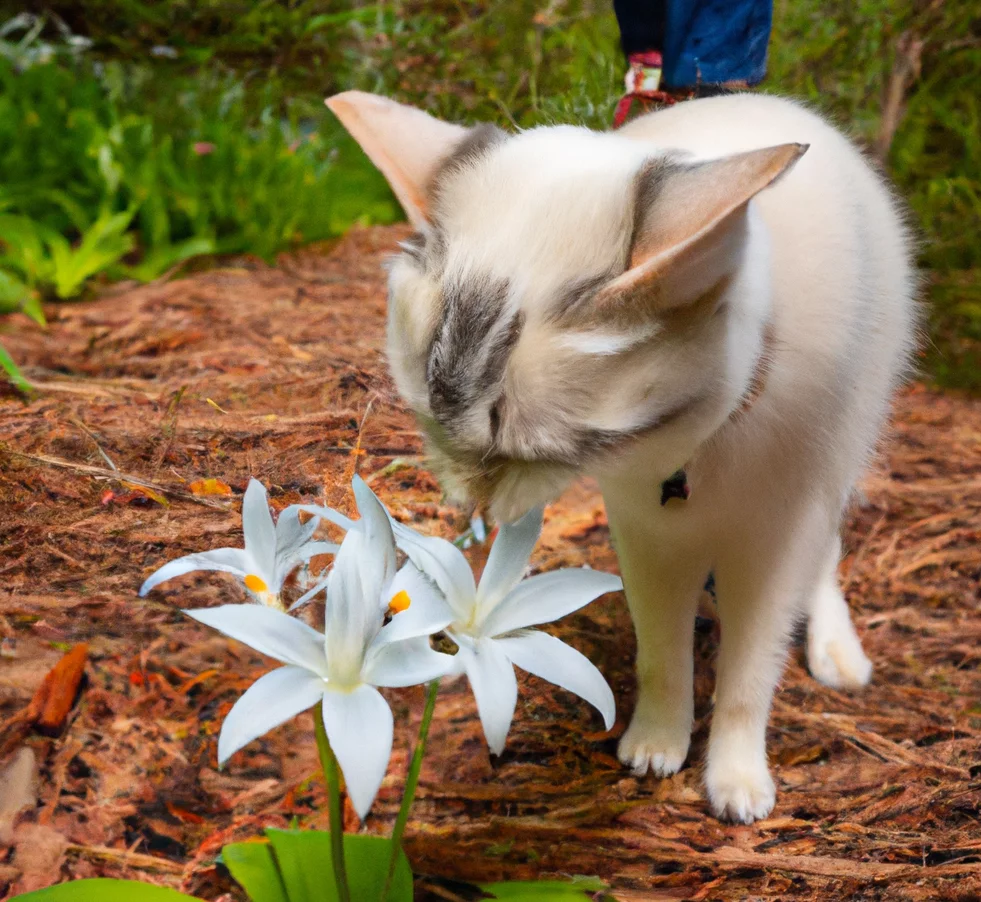
“Bonnet or Queen’s Cup Toxic For Cats …” from plantsncats.com and used with no modifications.
- Considered non-toxic to humans, though consumption is not recommended
- ASPCA lists it as non-toxic to dogs, cats, and horses
- Blue berries may attract children’s attention but are not known to be highly toxic
- No documented severe poisoning cases associated with this plant
- Low risk profile makes it suitable for family gardens with supervision
Despite its relative safety, the primary concern with Bride’s Bonnet relates to the visual appeal of its blue berries to young children. The bright, attractive coloration might tempt curious youngsters to sample them. While not considered highly toxic, ingestion of plant material should always be discouraged, and parental supervision remains important in gardens containing any non-edible species.
If accidental ingestion occurs, mild digestive discomfort represents the most likely outcome, though individual sensitivities can vary. As with any suspected plant ingestion, consulting with a poison control center provides the most appropriate guidance for specific situations. Keeping the plant’s name and photos readily available helps medical professionals provide accurate advice should questions arise.
The plant’s low toxicity profile contributes to its value in wildlife gardens, where various forest creatures can safely interact with all parts of the plant. This safety factor represents another advantage over some showier but more toxic woodland ornamentals that might present greater risks in family garden settings.
Human Consumption Considerations
Unlike some woodland plants with edible components, Bride’s Bonnet has no established history of human food use. While the plant isn’t classified as highly toxic, no part of it is considered suitable for culinary purposes. The berries, despite their appealing appearance, are not recommended for consumption and should be treated as strictly ornamental. With so many definitively edible wild foods available, there’s no compelling reason to experiment with Bride’s Bonnet as a food source.
Pet Safety Around Bride’s Bonnet
Pet Safety Guide: Bride’s Bonnet (Clintonia uniflora)
Toxicity level: Low concern
ASPCA classification: Non-toxic to dogs, cats, and horses
Symptoms if ingested: Possible mild digestive upset in sensitive animals
Emergency response: Monitor for unusual behavior; contact veterinarian if symptoms develop
Prevention: Most pets naturally avoid this plant; no special precautions required. For more on creating a pet-safe garden, check out these safe garden ideas.
Pet owners can take comfort in knowing that Bride’s Bonnet ranks among the safer woodland ornamentals according to animal toxicity databases. The ASPCA specifically lists Clintonia uniflora as non-toxic to dogs, cats, and horses, making it a suitable choice for gardens where pets roam freely. This safety profile represents a significant advantage over many more common ornamental plants that can pose serious health risks to curious animals. For more information on pet-safe plants, you can explore our guide on Sword Fern pet safety.
In practice, most domestic animals show little interest in browsing Bride’s Bonnet, likely due to its lack of strong scent and the texture of its foliage. The plant’s relatively inconspicuous nature means it rarely attracts the attention of pets in the first place. When designing woodland gardens for households with animal companions, Bride’s Bonnet can be confidently included without creating significant safety concerns.
For the extremely cautious pet owner, placing new Bride’s Bonnet plantings in less accessible garden areas during establishment provides an extra layer of protection. Once established, the plant’s unobtrusive growth habit means it typically blends into the woodland understory without drawing undue attention from four-legged garden visitors.
Wildlife Interactions and Ecological Role
Within its native ecosystem, Bride’s Bonnet participates in numerous wildlife interactions that support forest biodiversity. The flowers attract specialized forest pollinators including native bumblebees and small solitary bees adapted to work in the dappled light of the forest floor. Later, the blue berries provide occasional food for ground-foraging birds like varied thrushes and winter wrens, who subsequently disperse the seeds through their droppings. Perhaps most importantly, the plant’s presence supports soil mycorrhizal networks that benefit numerous other forest species, making it a valuable contributor to overall woodland health.
Why This Understory Plant Deserves More Attention
In an era when gardeners increasingly value authenticity and ecological connections, Bride’s Bonnet offers something special: a genuine link to ancient forest systems that have evolved over millennia. Unlike hybridized ornamentals bred for showy displays, this woodland native represents botanical integrity—a plant perfectly adapted to its niche through natural selection rather than human intervention. Its subtle beauty rewards close observation and celebrates the quiet elegance found in undisturbed natural places.
As gardeners continue seeking meaningful ways to connect with nature through their landscapes, specialists like Bride’s Bonnet gain importance for their ability to bring authentic forest energy into cultivated spaces. The challenge of successfully growing this understory gem becomes part of its appeal—a living testament to the gardener’s skill in recreating the delicate balance of the forest floor. For those willing to meet its specific needs, Bride’s Bonnet offers a uniquely satisfying gardening experience and a daily reminder of the intricate perfection found in natural ecosystems.
Frequently Asked Questions
As interest in native woodland plants continues to grow, gardeners often have specific questions about successfully cultivating these forest specialists. The following answers address the most common inquiries about Bride’s Bonnet, helping both beginners and experienced native plant enthusiasts succeed with this enchanting woodland flower.
How long does it take for Bride’s Bonnet to flower after planting?
Patience becomes the watchword when growing Bride’s Bonnet from either seeds or young transplants. When started from seed, plants typically require 3-4 years before producing their first flowers, as they invest early energy in establishing root systems and building sufficient resources. Even when planting nursery-grown specimens, expect at least one full growing season of establishment before flowering occurs.
This extended timeline reflects the plant’s slow-growing nature in its natural forest habitat, where resources are carefully allocated for long-term survival rather than rapid growth. The reward for this patience comes in the form of a sustainable, long-lived woodland garden that improves with age. Once established, healthy plants will reliably flower each spring for many years with minimal intervention.
Can Bride’s Bonnet survive in containers or must it be planted in the ground?
Container cultivation presents significant challenges for Bride’s Bonnet due to its specific soil moisture and temperature requirements. While technically possible in large, deep containers with excellent moisture control, most success comes from in-ground planting where natural soil buffers temperature fluctuations and maintains more consistent moisture levels. If container growing is necessary, use a minimum 12-inch deep pot with excellent drainage, high-quality woodland soil mix, and place it in a consistently shaded location where it can receive regular monitoring of soil moisture conditions.
Will Bride’s Bonnet spread aggressively in my garden?
Gardeners concerned about invasive tendencies can rest easy with Bride’s Bonnet. This woodland specialist spreads quite slowly through gradual rhizome extension, typically forming small colonies that expand just a few inches annually under ideal conditions. Its restrained growth habit makes it appropriate even for intimate woodland gardens where space is limited. In fact, many gardeners find themselves wishing for faster spread rather than worrying about containment, as the plant establishes new territory with remarkable patience compared to more aggressive woodland species.
What is the significance of the blue berries that form after flowering?
The striking blue berries represent both an aesthetic highlight and an important ecological function. Their unusual metallic blue coloration, rarely seen elsewhere in the plant world, extends the ornamental season well beyond the spring flowering period. Ecologically, these berries contain seeds that require passage through bird digestive systems to break dormancy effectively, demonstrating the plant’s co-evolved relationship with native forest birds. For gardeners, the appearance of berries signals successful pollination and healthy plant development, providing a visible indicator that growing conditions have properly supported the plant’s full life cycle.
Are there any cultivated varieties of Bride’s Bonnet available for gardeners?
Unlike many garden plants that have been extensively hybridized, Bride’s Bonnet remains primarily available in its wild form without named cultivars or significant selections. This reflects both its relatively recent introduction to horticulture and the ethical considerations surrounding native plant propagation. Most nursery-grown plants represent careful propagation of wild-type specimens, preserving the genetic diversity and authentic characteristics of natural populations.
This lack of cultivars actually represents an advantage for ecological gardeners seeking authentic representations of forest ecosystems. The wild-type plants maintain all their natural adaptations and ecological relationships, functioning exactly as they would in undisturbed woodland settings. As interest in native plant gardening continues to grow, specialized nurseries focusing on western woodland natives offer the best source for ethically propagated Bride’s Bonnet plants.