
Key Takeaways
- American sycamore trees are easily identified by their distinctive exfoliating bark that creates a mottled white and brown appearance, large maple-like leaves, and spherical seed balls.
- Also known as Buttonwood or Plane Tree, the American sycamore can grow 2-3 feet per year, reaching heights of 70-100 feet with equally impressive canopy spread.
- Despite their messy nature and susceptibility to anthracnose disease, sycamores remain popular for their rapid growth, shade potential, and striking visual appeal.
- Native Americans historically used various parts of the sycamore for medicinal purposes, utensils, and practical implements.
- Sycamores thrive in moist soil conditions near water sources and can live 200-600 years when growing in ideal environments.
Meet the American Sycamore: The Giant Sentinel of Eastern Forests
The American sycamore (Platanus occidentalis) stands as one of North America’s most magnificent native trees. With its towering presence and distinctive appearance, this botanical giant has been captivating nature enthusiasts for centuries. Native to eastern and central United States, these impressive trees serve as natural landmarks in many landscapes, particularly along waterways where they thrive.
What makes the American sycamore truly special is its combination of massive size, rapid growth, and unmistakable visual characteristics. The tree’s most striking feature—its mottled, exfoliating bark—creates a patchwork of white, tan, and brown that’s visible even from considerable distances. This natural sentinel provides more than just aesthetic value; it offers crucial wildlife habitat, substantial shade, and has deep cultural significance for indigenous peoples.
While sycamores require specific growing conditions to reach their full potential, their adaptability and resilience have made them enduring fixtures in both natural woodlands and cultivated landscapes. Whether you’re a casual observer or dedicated tree enthusiast, learning to identify and appreciate the American sycamore opens a window into the rich botanical heritage of North America.
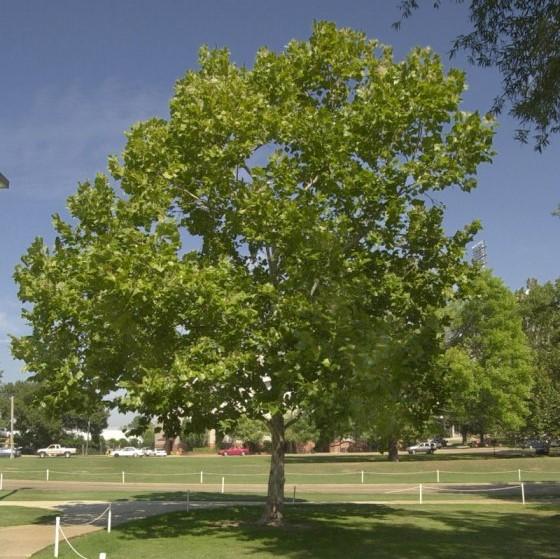
“Streamside Sentinel – Shirley Heinze …” from heinzetrust.org and used with no modifications.
American Sycamore Identification Features You Can’t Miss
Identifying an American sycamore is relatively straightforward once you know its distinctive characteristics. The combination of its exfoliating bark, large maple-like leaves, and distinctive seed balls creates a unique visual signature that stands out in any woodland setting. Even from a distance, mature specimens announce their presence through their pale, patchy trunks that catch the light differently than surrounding trees.
Alternative Names: From Buttonwood to Occidental Plane
Common Names for Platanus occidentalis:
American Sycamore
Eastern Sycamore
American Plane Tree
Buttonwood
Buttonball Tree
Western Plane
The American sycamore goes by several regional and historical names, each highlighting different aspects of the tree’s characteristics or uses. “Buttonwood” and “Buttonball Tree” reference the distinctive spherical seed structures that hang conspicuously from branches. “American Plane Tree” acknowledges its taxonomic classification in the Platanus genus, while “Eastern Sycamore” helps distinguish it from its western relatives.
These alternative names can sometimes create confusion, especially in international contexts. In the United Kingdom, for instance, the name “sycamore” typically refers to a completely different species—Acer pseudoplatanus, a type of maple. This nomenclature confusion highlights the importance of using scientific names when precise identification matters.
Unmistakable Bark: The Tree That Sheds Its Skin
The most distinguishing feature of the American sycamore is undoubtedly its spectacular bark. As the tree matures, the outer bark naturally exfoliates in large, irregular patches, revealing younger bark beneath in shades of white, cream, tan, or pale green. This creates a striking camouflage-like pattern that’s especially noticeable in winter when leaves have fallen. The bark’s unique appearance results from the tree’s growth pattern—unlike most trees that can expand their outer bark as they grow, sycamore bark lacks this elasticity and must shed to accommodate new growth.
Leaf and Seed Ball Characteristics
American sycamore leaves are broad and distinctively palmate with 3-5 lobes, resembling maple leaves but typically much larger, often reaching 4-9 inches wide. The leaves emerge with a coating of fine hairs that eventually wear off, leaving a smooth, bright green surface that turns yellow-brown in autumn. The leaf stems (petioles) are notably expanded at the base, forming a cap-like structure that encompasses the winter buds—a helpful identification feature during dormant months.
The tree’s reproductive structures are equally distinctive. Male and female flowers appear on the same tree in spring, with female flowers developing into the characteristic spherical seed balls (technically multiple achenes) that hang from slender stems. These “buttonballs” start green, mature to brown, and persist through winter, eventually breaking apart to release tufted seeds that disperse by wind and water. The presence of these 1-inch diameter balls, especially visible after leaf drop, provides a reliable year-round identification clue.
Growth Habits That Set American Sycamores Apart
American sycamores display several growth characteristics that distinguish them from other large deciduous trees. Their growth pattern typically features a central trunk that divides into several massive, spreading limbs, creating a broad, rounded crown with an open, somewhat irregular silhouette. Young trees maintain a more pyramidal shape before developing their characteristic spreading form with age.
The tree’s growth habit is strongly influenced by its natural habitat preferences. In riverside settings, sycamores often develop leaning trunks or multiple stems as they adjust to periodic flooding or soil erosion. This adaptability contributes to their success in riparian environments where other large trees might struggle to establish.
- Fast growth rate of 2-3 feet annually under optimal conditions
- Develops massive trunks up to 10-14 feet in diameter
- Forms wide-spreading canopies with horizontal branching patterns
- Creates open, dappled shade rather than dense shadow
- Often develops hollow trunks in very old specimens
Impressive Size and Rapid Growth Rate
Few native North American trees can match the American sycamore for sheer size potential. These arboreal giants regularly reach heights of 70-100 feet with equal or greater crown spreads, creating massive shade canopies. What’s particularly remarkable is how quickly they achieve these dimensions. Under favorable conditions, young sycamores can add 2-3 feet of height annually, sometimes even more in optimal settings.
|
Growth Characteristic |
Measurement |
Notes |
|---|---|---|
|
Mature Height |
70-100 feet (21-30 meters) |
Can exceed 100 feet in ideal conditions |
|
Mature Width |
65-80 feet (20-24 meters) |
Often as wide as tall at maturity |
|
Annual Growth Rate |
24-36 inches (60-90 cm) |
Among the fastest-growing native hardwoods |
|
Trunk Diameter |
Up to 10-14 feet (3-4.3 meters) |
Among the thickest trunks of any North American hardwood |
This rapid growth rate is one reason sycamores have remained popular despite some maintenance challenges. Few other native trees can provide substantial shade as quickly, making them valuable for large-scale landscape projects where immediate impact is desired. However, this same vigorous growth necessitates careful placement, as sycamores quickly outgrow smaller spaces and can overwhelm nearby structures or competing plants.
Lifespan: The 200+ Year Legacy
American sycamores are remarkably long-lived trees, routinely surviving for 200-300 years in favorable settings. Historical records and dendrochronological studies suggest that exceptional specimens can reach 500-600 years of age. This impressive longevity allows single trees to become multi-generational landmarks, with some specimens predating European settlement in their regions.
The tree’s ability to compartmentalize damage and recover from injury contributes significantly to its extended lifespan. Even when hollow or partially damaged by storms, sycamores demonstrate remarkable resilience, often continuing to grow vigorously for decades or centuries after suffering what would be fatal damage to many other species. Their resilience is particularly evident in riparian settings, where periodic flooding and erosion create challenging conditions that sycamores have specifically evolved to withstand.
As sycamores age, they often develop hollow trunks while maintaining healthy canopies, creating valuable wildlife habitat without compromising the tree’s overall vitality. This unique characteristic—maintaining structural integrity despite trunk hollowing—is rare among hardwoods and contributes to the sycamore’s ecological value in mature forests.
Root System Behavior and Space Requirements
American sycamores develop extensive, aggressive root systems that reflect their natural riverside habitat preferences. The roots spread widely, often extending well beyond the drip line of the canopy, and can become problematic near structures, pavements, or underground utilities. Their searching nature allows them to locate water sources at considerable distances, but this same characteristic makes them potentially damaging to nearby infrastructure.
Unlike some deep-rooted species, sycamore root systems tend to be relatively shallow but extensive, with the majority of feeding roots located in the top 12-18 inches of soil. This adaptation enables them to quickly capture surface moisture from rainfall and flooding events, but it also means they can heave pavements and foundations when planted too close to structures. For successful growth without property damage, sycamores should be given ample space—at least 20-30 feet from buildings and other permanent structures.
Native Range and Ideal Growing Conditions
The American sycamore’s natural distribution spans a significant portion of eastern North America, from southern Maine and Ontario south to northern Florida, and west to Nebraska and Texas. This extensive range demonstrates the tree’s adaptability to various climate conditions, though it shows clear preferences within this broad territory. Understanding these natural preferences is essential for successfully growing sycamores in landscape settings.
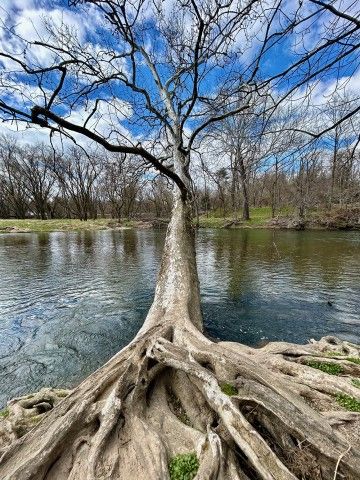
“Mixed Hardwood Floodplain Forest …” from www.brandywine.org and used with no modifications.
Natural Habitat: Riverbanks and Floodplains
American sycamores are quintessential riparian trees, reaching their most impressive dimensions along riverbanks, floodplains, and stream edges. This natural affinity for waterside environments has earned them the nickname “water-loving trees” among some naturalists. In these settings, sycamores benefit from consistent moisture availability while tolerating the periodic flooding that limits competition from less flood-tolerant species. For more on the historical uses of similar trees, explore the American chestnut’s historical uses.
The tree’s preference for riparian zones extends beyond simple moisture requirements. Streamside environments typically feature deep, rich alluvial soils with excellent aeration—conditions that promote the sycamore’s rapid growth. Additionally, periodic flooding in these areas deposits fresh silt and nutrients while simultaneously creating bare mineral soil ideal for sycamore seed germination.
Even when planted in landscape settings away from natural waterways, sycamores demonstrate best growth when conditions mimic these riparian characteristics: consistent moisture, rich soil, and adequate space for their extensive root systems. The farther planting conditions deviate from these natural preferences, the more challenging successful sycamore cultivation becomes.
Soil Preferences and Moisture Requirements
While adaptable to various soil types, American sycamores strongly prefer deep, fertile, well-drained soils with consistent moisture. They demonstrate remarkable tolerance for occasionally wet conditions, including seasonal flooding, but paradoxically can also withstand moderate drought once established. This adaptability stems from their extensive root systems that can access groundwater even during dry periods.
Soil pH tolerance is broad, with sycamores growing successfully in slightly acidic to moderately alkaline conditions (pH 5.5-8.0). However, they show little tolerance for compacted soils or areas with poor drainage that remain waterlogged for extended periods. Urban settings with heavily compacted soils typically result in stunted growth and increased disease susceptibility unless soil conditions are improved before planting.
- Prefers deep, rich alluvial soils but adapts to various soil types
- Requires consistent moisture availability, especially during establishment
- Tolerates seasonal flooding but not persistent waterlogged conditions
- Struggles in compacted soils with poor aeration
- Benefits from supplemental watering during extended dry periods
Hardiness Zones and Climate Tolerance
American sycamores are remarkably adaptable across USDA hardiness zones 4-9, tolerating winter temperatures down to -20°F (-29°C) in northern regions. This cold hardiness, combined with their heat tolerance in southern areas, contributes to their extensive natural range. However, they perform best in regions with distinct seasons, including a dormant winter period. For those interested in similar plant care, check out this guide on ostrich fern care.
Despite their hardiness, sycamores face challenges in areas with particularly hot, dry summers or in highly urbanized settings with heat island effects. In these conditions, they become more susceptible to fungal diseases, particularly anthracnose, which can repeatedly defoliate trees during wet spring weather. Western regions with low humidity generally see fewer disease issues but may require supplemental irrigation to meet the tree’s substantial water needs.
Pros and Cons of Growing American Sycamore
The decision to plant an American sycamore involves weighing substantial benefits against significant challenges. These impressive trees offer remarkable advantages in the right setting but can become problematic when improperly placed or when their maintenance requirements are underestimated. Understanding both sides of the equation is essential for making informed planting decisions, especially given the tree’s eventual size and longevity.
5 Major Benefits of American Sycamore
American sycamores offer exceptional value in appropriate settings through their combination of rapid growth, impressive size, and distinctive appearance. Their fast development makes them ideal for creating shade and windbreaks in large spaces where immediate impact is desired. The tree’s unique exfoliating bark provides year-round visual interest, creating a striking focal point in winter landscapes when most deciduous trees offer little visual appeal. Additionally, their massive canopies support diverse wildlife, from nesting birds to insect populations that form crucial links in local food webs.
3 Significant Drawbacks to Consider
Despite their benefits, American sycamores present several challenges that make them unsuitable for many residential settings. Their massive size—both above and below ground—demands substantial space and creates potential conflicts with infrastructure, including foundations, pavements, and utility lines. The trees are notoriously messy, continuously shedding bark, twigs, leaves, and seed balls throughout the year, creating ongoing maintenance demands. Perhaps most significantly, they show high susceptibility to anthracnose, a fungal disease that can repeatedly defoliate trees in spring, leading to weakened growth and diminished appearance.
The sycamore’s root system poses particular challenges in developed areas. The aggressive, water-seeking roots can infiltrate sewer lines, lift pavements, and damage foundations when planted too close to structures. This tendency, combined with the tree’s massive mature size, makes sycamores poor choices for typical suburban lots. They’re best reserved for parks, large estates, and naturalized areas where their size and maintenance requirements won’t create conflicts. For those interested in similar topics, learn more about the impact of American chestnut’s historical uses and current popularity.
American Sycamore Toxicity and Edibility
Understanding the toxicity and edibility of American sycamore is important for anyone who lives near these trees or is considering planting them. While not highly toxic, certain parts of the tree contain compounds that can cause adverse reactions in some circumstances.
Safe for Humans? Edible Parts and Precautions
American sycamore is generally considered non-toxic to humans, though it has limited edible applications. The tree’s sap contains small amounts of edible sugar and can be tapped similarly to maple trees, though the yield and sweetness are significantly lower. Historically, some Native American tribes made a tea from sycamore inner bark that was used medicinally rather than as a regular beverage.
The tree’s seeds, while not commonly consumed, are technically edible but offer little nutritional value and have a bland taste that makes them an emergency food at best. The young leaves can cause skin irritation in sensitive individuals due to the fine hairs that cover them when they first emerge. This irritation is typically mild and temporary but may cause discomfort for those with sensitive skin or respiratory systems. For more details on this species, visit the American sycamore page.
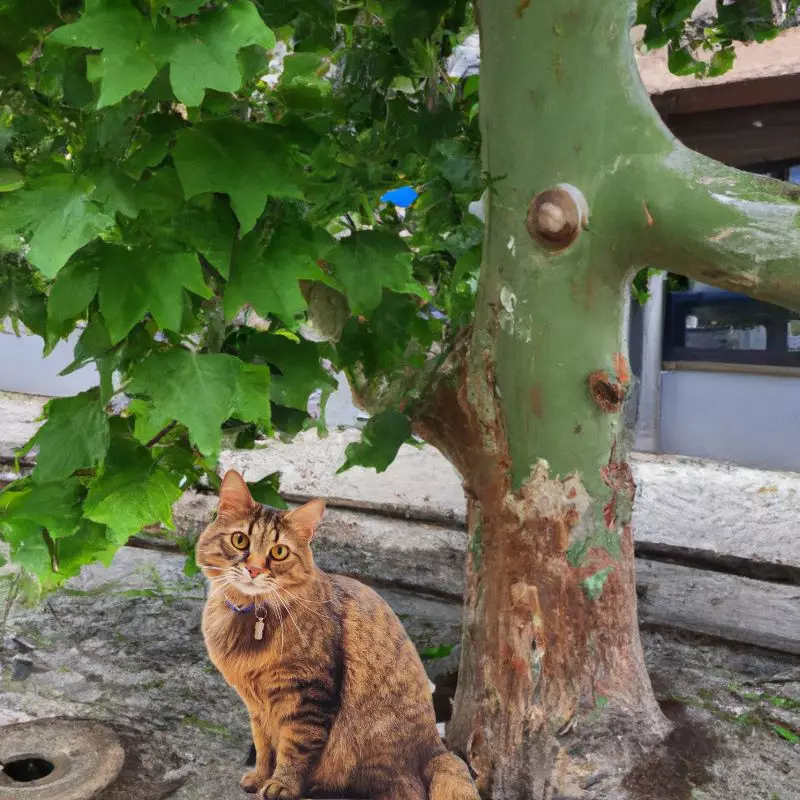
“American Sycamore Toxic For Cats …” from plantsncats.com and used with no modifications.
Effects on Dogs and Cats
For pet owners, the good news is that American sycamore is not listed among plants highly toxic to dogs or cats. The ASPCA does not include sycamore among its list of plants poisonous to pets. However, ingestion of sycamore balls, bark, or leaves may cause gastrointestinal upset in pets, primarily due to the fibrous, indigestible nature of these materials rather than specific toxins. For more information on safe plants for dogs and cats, you can explore other resources.
The seed balls present a potential choking hazard for dogs who might attempt to chew or swallow them. Additionally, the fine hairs on young leaves and stems can cause minor irritation to pets’ mouths or digestive tracts if consumed in quantity. While serious toxicity is rare, it’s advisable to discourage pets from chewing on sycamore parts, particularly if they show any signs of digestive discomfort after exposure.
Wildlife Value and Animal Interactions
Despite limited direct food value for humans, American sycamores provide significant ecological benefits for wildlife. Birds, particularly finches and purple finches, feed on the seeds contained in the sycamore balls. The tree’s massive size and tendency to develop hollow trunks with age create valuable nesting sites for birds, squirrels, raccoons, and other cavity-nesting species.
Sycamores support various insect populations that, in turn, provide food for birds and other insectivores. The large leaves also serve as food for several caterpillar species, including the sycamore tussock moth. When considering the overall ecological value, sycamores contribute substantially to biodiversity despite not being a primary food source for most wildlife species.
Native American Uses of American Sycamore
Long before European settlement, indigenous peoples throughout the sycamore’s native range recognized the tree’s unique properties and incorporated it into their material culture. The tree’s size, distinctive bark, and wood characteristics made it valuable for various practical applications.
Traditional Medicinal Applications
Several Native American tribes utilized different parts of the sycamore for medicinal purposes. The Cherokee made a tea from sycamore bark to treat colds and respiratory ailments, while other tribes used similar preparations for digestive problems. Bark infusions were also applied externally to treat skin conditions and wounds, taking advantage of the bark’s natural astringent properties.
The inner bark, rich in tannins, was used to create remedies for dysentery and other gastrointestinal issues. Some tribes created poultices from the inner bark to reduce inflammation and treat minor wounds. Though scientific validation of these traditional uses remains limited, the consistent use across multiple indigenous cultures suggests some degree of efficacy for certain applications. For those interested in learning about plant safety, you can explore more about artillery plant care.
Practical and Household Uses
Beyond medicinal applications, Native Americans found numerous practical uses for sycamore. The wood’s resistance to splitting made it ideal for crafting sturdy utensils, especially large items like bowls and food storage containers. The distinctive grain and relative softness of sycamore wood made it easier to work with primitive tools compared to denser hardwoods.
Large sycamore trunks, particularly those with natural hollows, were sometimes used to create dugout canoes. The bark’s flexibility and waterproof qualities made it useful for roofing materials in some regions. Native Americans also recognized the value of sycamore’s distinctive white wood for specialized tools and ceremonial objects where its unique appearance set it apart from other available woods.
Sycamore vs. Fig Tree: Untangling the Confusion
The term “sycamore” has created considerable botanical confusion across different cultures and time periods. While the American sycamore (Platanus occidentalis) is unrelated to fig trees, the name connection persists due to historical and biblical associations that often perplex modern tree enthusiasts.
Why Are They Confused? Biblical and Historical Context
The confusion between sycamores and fig trees originates primarily from biblical translations. In ancient texts, particularly the Bible, references to “sycamore” often indicated the sycamore fig (Ficus sycomorus), a species native to the Middle East and parts of Africa. This tree, despite its name, is actually a type of fig rather than a true sycamore. The confusion was perpetuated through centuries of translations and regional naming conventions that applied “sycamore” to different species across various regions.
Adding to this confusion, the term “sycamore” is used for entirely different tree species in different English-speaking regions. In the United Kingdom, “sycamore” typically refers to Acer pseudoplatanus, a type of maple, while in North America it designates Platanus species. This linguistic overlap continues to create misunderstandings, particularly when discussing historical or biblical references to these trees.
Key Differences in Appearance and Growth
American sycamores and fig trees (including the sycamore fig) differ dramatically in almost every aspect of their appearance and growth habits. Sycamores are massive deciduous trees with distinctive exfoliating bark and large, maple-like leaves, while fig trees are typically smaller with smoother bark and distinctive lobed leaves. Sycamores produce spherical seed balls containing tiny tufted seeds, whereas figs produce the familiar fig fruit containing numerous tiny flowers and seeds within a fleshy receptacle.
The growth habit and climate preferences also differ significantly. American sycamores thrive in temperate climates with cold winters, while most fig species, including the sycamore fig, require warmer Mediterranean or tropical conditions. Sycamores typically reach much greater heights and trunk diameters than even the largest fig species. These substantial differences make identification straightforward once basic characteristics are understood.
Comparison of Uses and Benefits
Fig trees and sycamores serve distinctly different purposes in human culture and ecosystems. Figs are primarily valued for their edible fruits, which have been cultivated for thousands of years as an important food source. The sycamore fig specifically was highly prized in ancient Egypt, where it was considered sacred. American sycamores, conversely, have minimal food value but offer exceptional ornamental qualities, shade, and wildlife habitat.
In landscaping applications, these differences translate to entirely different uses. Figs are often planted in home gardens specifically for fruit production or as smaller ornamental trees in warmer climates. Sycamores, due to their massive size, are reserved for large public spaces, parks, or extensive properties where their scale becomes an asset rather than a limitation. Understanding these fundamental differences helps clarify the distinct ecological and cultural niches these unrelated trees occupy.
Growing Your Own American Sycamore: Essential Care Tips
For those with sufficient space and the right conditions, growing an American sycamore can be a rewarding long-term project. These magnificent trees, when properly sited and cared for, create living landmarks that can persist for generations. Success begins with understanding their specific needs and natural growth habits.
Before committing to planting a sycamore, realistically assess your space. These trees require at minimum 20-30 feet of clearance from structures and utility lines, with 40-50 feet being preferable for optimal development. Remember that the root system will extend well beyond the canopy drip line, potentially affecting nearby pavements, foundations, and underground utilities. Only proceed if your property can accommodate the tree’s ultimate dimensions without conflict.
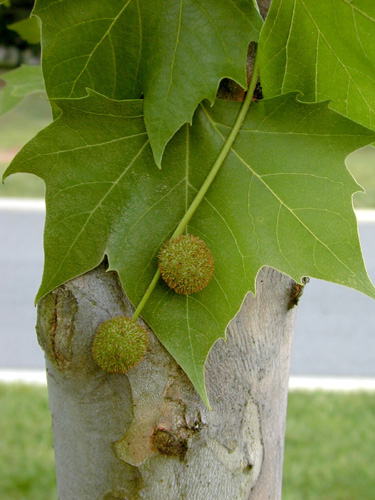
“Platanus occidentalis(American Sycamore …” from greenup.on.ca and used with no modifications.
Planting Techniques for Success
Successful sycamore establishment begins with proper planting techniques. Select container-grown or balled-and-burlapped specimens with straight trunks and well-developed leaders. The best planting time is during dormancy in late fall or early spring. Dig a hole twice as wide as the root ball but no deeper, as planting too deeply is a common cause of establishment failure. Backfill with native soil rather than amended soil to encourage roots to expand beyond the planting hole, and create a slight basin around the tree to collect water during establishment.
Water and Fertilizer Requirements
Water management is critical during the first two to three years after planting. Young sycamores need consistent moisture to develop extensive root systems but cannot tolerate waterlogged conditions. Provide deep, thorough watering once or twice weekly during dry periods rather than frequent shallow watering that encourages surface rooting.
Fertilization needs for established sycamores are minimal in good soils. Young trees benefit from a balanced slow-release fertilizer applied in early spring for the first few years after planting. Once established, sycamores typically thrive without supplemental fertilization unless growing in particularly poor soil.
During extended drought periods, even mature sycamores benefit from occasional deep watering, particularly if planted in locations away from natural water sources. Water stress increases susceptibility to anthracnose and other diseases, so maintaining adequate soil moisture during dry periods pays dividends in tree health.
In urban settings with restricted root zones or compacted soils, periodic vertical mulching can improve root zone conditions. This technique involves drilling numerous small holes in the soil throughout the root zone and filling them with compost or other organic matter to improve aeration and water penetration.
- Water deeply but infrequently, allowing soil to dry slightly between waterings
- Apply 2-4 inches of mulch in a wide ring around the tree, keeping it away from the trunk
- Fertilize young trees in early spring with balanced slow-release formula
- Monitor soil moisture during droughts, even for established trees
- Consider supplemental watering during extended dry periods
Pruning and Maintenance Strategies
Young sycamores benefit from structural pruning to establish strong branch architecture and prevent future problems. Focus on eliminating competing leaders and maintaining adequate spacing between permanent scaffold branches. Remove crossing, rubbing, or narrowly attached branches early to prevent more extensive corrective pruning later. Pruning is best performed during winter dormancy to minimize disease risk and clearly visualize the branch structure.
Mature sycamores require minimal regular pruning beyond removing dead, damaged, or hazardous branches. Their natural form is part of their appeal, and heavy pruning of established trees can disrupt their characteristic silhouette. Periodic inspection for signs of disease or structural weakness is more important than routine pruning for established specimens. When pruning is necessary, make clean cuts at branch collars rather than flush cuts to promote proper wound closure.
Common Pests and Diseases to Watch For
Anthracnose is by far the most common and problematic disease affecting American sycamores. This fungal infection causes leaf blight, twig dieback, and repeated defoliation in severe cases. Symptoms typically appear in spring as brown or black lesions along leaf veins, often followed by premature leaf drop. While rarely fatal to established trees, anthracnose can significantly impact appearance and vigor, particularly in areas with cool, wet spring weather.
Other potential problems include bacterial leaf scorch, canker diseases, and various insects that may feed on foliage or bore into wood. Scale insects occasionally infest branches, and lace bugs may cause stippling on leaves during summer months. Most of these secondary pests rarely cause serious harm to otherwise healthy trees but may compound stress in trees already weakened by poor growing conditions or anthracnose.
Disease management focuses primarily on cultural practices rather than chemical treatments for established trees. Improving air circulation by thinning dense areas of the canopy can reduce anthracnose severity. Removing fallen leaves in autumn helps reduce fungal spore loads for the following spring. For valuable specimen trees in high-visibility locations, fungicide treatments may be warranted, though their practicality diminishes as trees reach their full size.
Why American Sycamores Remain Popular Despite Challenges
Despite their maintenance challenges and space requirements, American sycamores continue to be planted in public spaces and large properties across their native range. Their enduring popularity stems from a combination of practical benefits and aesthetic qualities that few other native trees can match. The rapid growth rate provides substantial shade within a decade—a timeline that few other large-canopy trees can achieve. Their distinctive bark creates winter interest that persists when other deciduous trees fade into the background. Perhaps most significantly, sycamores connect us to the pre-settlement landscape, representing living links to the eastern forests that greeted early explorers and indigenous peoples. For landscape designers and property owners willing to accommodate their needs, sycamores offer a chance to incorporate a true botanical giant with an unmistakable presence that becomes more impressive with each passing decade.
Frequently Asked Questions
American sycamores generate numerous questions from homeowners, gardeners, and nature enthusiasts. The following addresses the most common inquiries about these distinctive native trees.
How fast does an American sycamore grow compared to other shade trees?
American sycamores are among the fastest-growing native hardwood trees, typically adding 2-3 feet in height annually under favorable conditions. This growth rate exceeds most oaks, which typically add 1-2 feet per year, and rivals or exceeds that of silver maples, another fast-growing native. Only a few species like hybrid poplars consistently outpace sycamores in growth speed. This rapid development is particularly evident during the first 20-30 years, after which growth rate gradually slows as trees approach their mature dimensions.
Can American sycamores be planted in residential yards, or are they too large?
American sycamores are generally too large for typical residential lots, particularly in suburban settings. Their massive mature size—both above and below ground—creates inevitable conflicts with structures, utilities, and neighboring properties in limited spaces. For residential use, the London planetree (Platanus × acerifolia), a hybrid between American sycamore and Oriental planetree, offers similar aesthetic qualities in a somewhat more manageable package, though it still requires substantial space. Only properties of an acre or more with ample open space should consider American sycamores, and even then, careful placement is essential to avoid future conflicts.
What causes the white patches on sycamore bark?
The distinctive white patches on sycamore bark result from the tree’s unique growth pattern and bark characteristics. Unlike most trees that can expand their outer bark as they grow, sycamore bark lacks this elasticity. As the trunk expands, the outer layers naturally split and peel away in large patches, revealing the younger, lighter-colored bark beneath. This exfoliation is most pronounced on the upper trunk and larger branches, creating the tree’s characteristic mottled appearance. The exposed inner bark initially appears creamy white, tan, or pale green before weathering to darker tones, creating the tree’s distinctive camouflage-like pattern. For more on tree care, explore artillery plant care tips.
Do American sycamores require special care during drought conditions?
American sycamores show moderate drought tolerance once established but benefit from supplemental watering during extended dry periods. Their natural habitat along waterways suggests their preference for consistent moisture. During drought, priority should be given to young trees (less than 5 years old), which have not yet developed extensive root systems. For established trees, occasional deep watering that penetrates 12-18 inches into the soil helps prevent stress-related susceptibility to diseases like anthracnose. Applying a 3-4 inch layer of mulch in a wide ring around the tree (keeping it away from the trunk) helps retain soil moisture and moderate soil temperature during drought conditions.
“London Planetree vs. Sycamore: What Is …” from a-z-animals.com and used with no modifications.
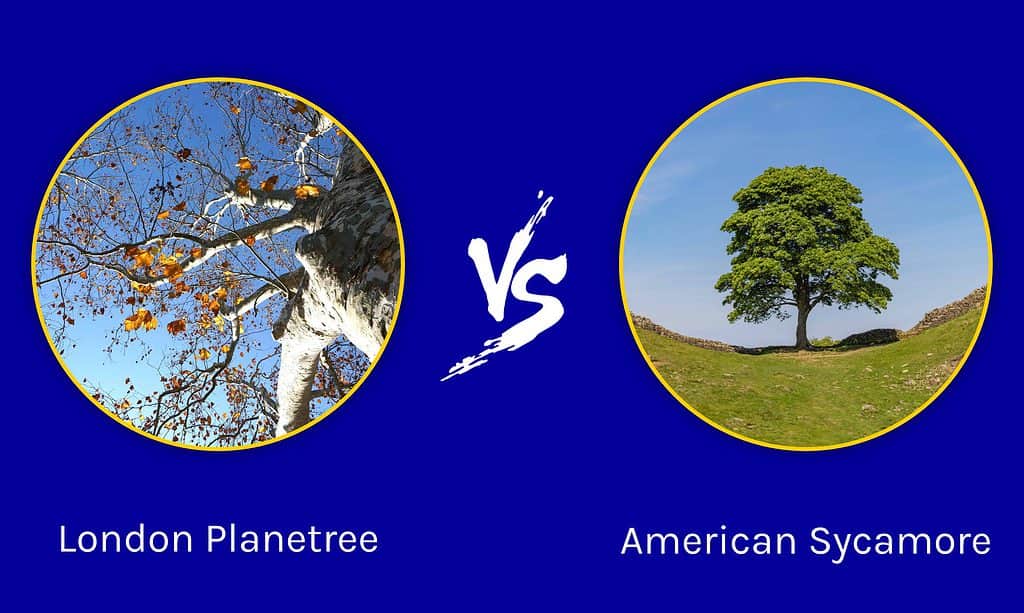
How can I tell the difference between an American sycamore and a London planetree?
Distinguishing American sycamores from London planetrees (Platanus × acerifolia) can be challenging for casual observers, but several reliable differences exist. American sycamores typically produce single seed balls that hang individually on stems, while London planetrees usually produce seed balls in pairs or clusters of 2-4. The bark exfoliation pattern differs subtly, with American sycamore showing more extensive white patches, particularly on upper branches. London planetree leaves often show a more deeply cut shape with more pointed lobes. Additionally, London planetrees demonstrate greater resistance to anthracnose disease, often retaining full foliage when nearby American sycamores show significant leaf drop from the disease.
American sycamores remain among our most impressive native trees, combining rapid growth with distinctive appearance and impressive longevity. While their substantial size and specific growing requirements limit their suitability for many residential settings, their value in larger landscapes is undeniable. For those with the space to accommodate these arboreal giants, they offer a living connection to the pre-settlement landscape of eastern North America—a botanical legacy that can span generations.
When properly sited and cared for, few native trees can match the sycamore’s combination of rapid growth, distinctive beauty, and long-term impact. Their ability to quickly transform spaces with their massive presence and unique visual characteristics explains their enduring popularity despite maintenance challenges. Whether appreciated in their natural riverside habitats or thoughtfully incorporated into designed landscapes, American sycamores stand as spectacular representatives of our native forest heritage.
For guided tree identification tours and educational resources about American sycamore and other native trees, Tree Wisdom Botanical Gardens offers expert-led experiences that connect nature enthusiasts with the remarkable diversity of North American forests.