
Key Takeaways
- Small fruited hickory (Carya ovalis) is a versatile native tree with multiple common names that produces sweet, edible nuts in a distinctive pear-shaped husk.
- Unlike some aggressive species, this native hickory provides excellent wildlife habitat and food sources without becoming invasive in North American landscapes.
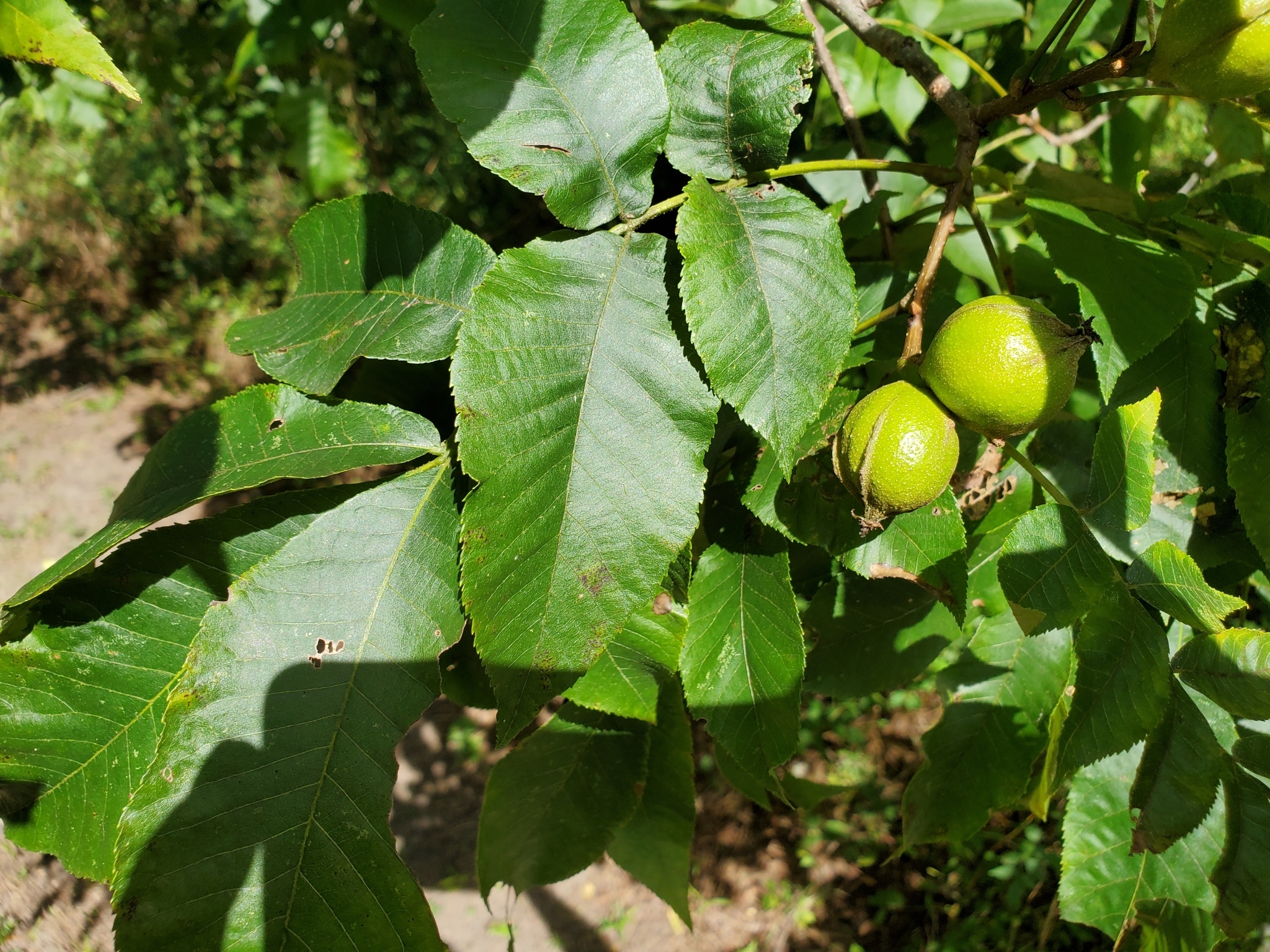
- The tree is best identified by its 7-leaflet compound leaves, thin husks that split freely to the base when mature, and round nuts approximately 1 inch in diameter.
- Small fruited hickory requires minimal maintenance once established, preferring well-drained soil and full sun, but needs regular watering during its first few growing seasons.
- While the nuts are perfectly safe and edible for humans with a sweet maple-like flavor, extracting the kernels requires patience due to their hard shells.
Small Fruited Hickory: The Native Tree With Many Names
Small fruited hickory (Carya ovalis) goes by many aliases depending on where you find it. Red hickory, sweet pignut hickory, false shagbark, broom hickory, swamp hickory, and smoothbark hickory all refer to this same remarkable native tree. This versatile hickory species, once considered a variety of pignut hickory, has since earned its own species status among botanists who recognize its unique characteristics.
Native to eastern North America, the small fruited hickory occupies an important ecological niche in deciduous forests. It produces distinctive nuts that ripen in September and October, offering a sweet maple-like aroma that distinguishes it from its more bitter hickory relatives. Tree experts at Heritage Arborists consider the small fruited hickory an excellent choice for large native landscaping projects due to its longevity and relatively low maintenance requirements. With proper identification and care, this hickory can become a valuable addition to your landscape.
What truly sets this hickory apart is its combination of features that bridge several different hickory species. Its bark can sometimes resemble the shagbark hickory but isn’t quite as dramatically shaggy. Its nuts taste sweet like shellbark hickory but come in a smaller package. And while it shares many traits with the pignut hickory, subtle differences in leaflet count and nut characteristics help distinguish it as its own unique species.
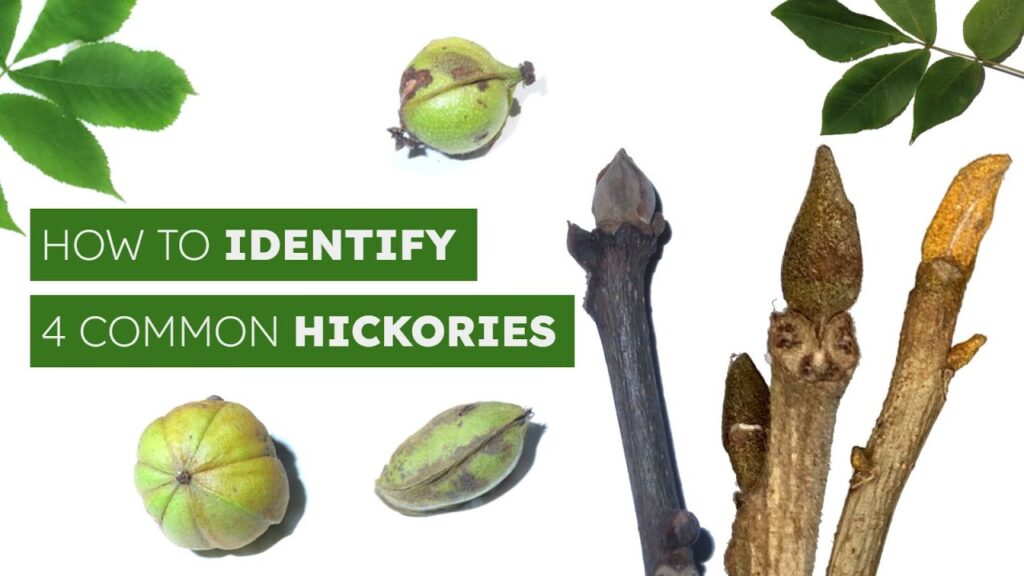
“How To Identify 4 Common Hickories …” from www.youtube.com and used with no modifications.
How to Identify Small Fruited Hickory Trees
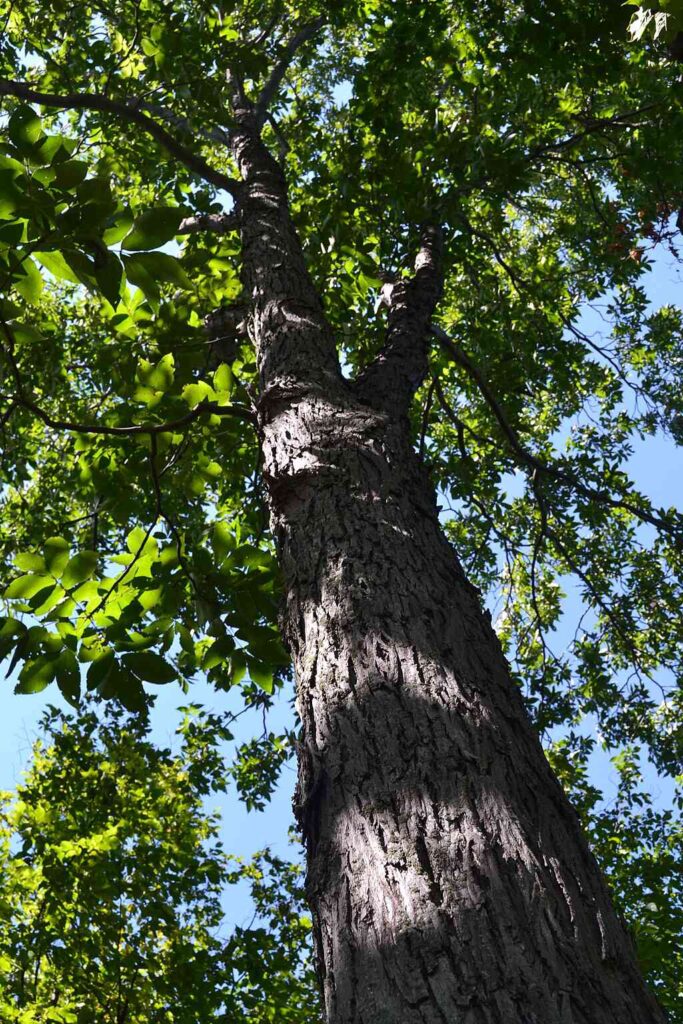
Identifying a small fruited hickory requires attention to several key features that distinguish it from similar hickory species. The tree typically reaches heights of 80-100 feet at maturity with a rounded crown and branches that spread moderately. Unlike some faster-growing shade trees, hickories grow at a slow to moderate pace, gradually developing their distinctive characteristics over decades rather than years.
Distinctive Bark Features
The bark of small fruited hickory serves as one of its more variable identification features. On young trees, the bark appears relatively smooth with subtle furrows. As the tree matures, the bark develops shallow fissures in a somewhat interlacing pattern, occasionally showing a tendency to exfoliate in thin, vertical plates—though not as dramatically as shagbark hickory. The color ranges from light gray to gray-brown, and the texture feels firm but not deeply ridged when compared to other mature hickories.
Leaf Characteristics: 5-7 Leaflet Pattern
The compound leaves of small fruited hickory typically feature 7 leaflets, which helps distinguish it from the pignut hickory that usually has 5 leaflets. Each leaflet is finely serrated along the edges, with a lance-like shape that tapers to a pointed tip. The terminal leaflet is often the largest, while the lower pairs become progressively smaller toward the base of the leaf stem.
These leaves emerge light green in spring, mature to dark green in summer, and transform to golden yellow or rusty brown in fall. The underside of each leaflet may appear slightly yellowish and might have small tufts of hair along the central vein—a subtle but useful identification feature for the observant tree enthusiast.
When examining leaves, also note the texture: small fruited hickory leaves typically feel thinner and more papery than the thicker, leathery texture of some other hickory species. This characteristic becomes particularly noticeable in late summer when the leaves have fully matured. For more on hickory species, you might find this American chestnut comparison insightful.
- Compound arrangement with 5-7 leaflets (usually 7)
- Serrated leaf margins with pointed tips
- Yellow-green underside, sometimes with small hair tufts
- Terminal leaflet larger than others
- Golden yellow to rusty brown fall color
Nut Size and Shape: Your Best Identification Clue
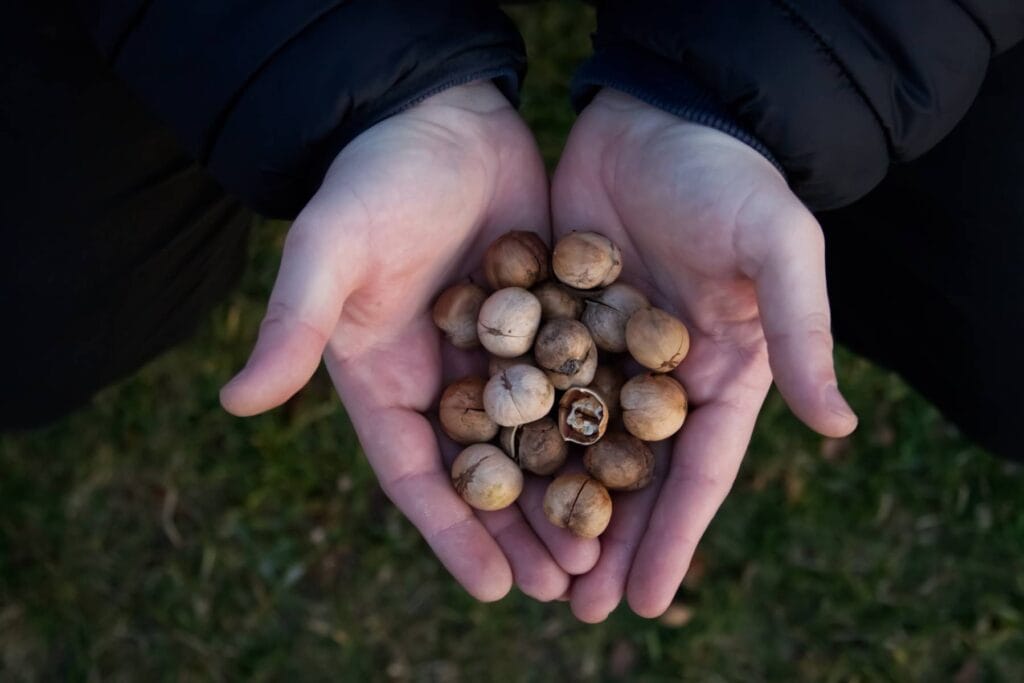
The most definitive identification feature of the small fruited hickory comes from its reproductive structures. The nuts are round and approximately 1 inch in diameter, enclosed in a thin, dark brown husk that splits freely all the way to the base when mature—a characteristic that differs from pignut hickory, whose husks typically split only partially. This complete splitting makes the nuts appear almost four-quartered when fully ripe.
Look for nuts with a round to slightly obovoid (egg-shaped) form, often with 4 longitudinal ridges along the shell. The kernel inside is small but notably sweet—a stark contrast to the bitter taste of some other hickory species. When crushed, the nuts emit a distinctive sweet, maple-like aroma that many describe as pleasant and appetizing.
Seasonal Changes to Watch For
Small fruited hickory displays distinct seasonal characteristics that aid in identification throughout the year. In early spring, look for male catkins (long, dangling flower clusters) developing alongside new leaf growth. Female flowers appear as small, inconspicuous structures at the tips of new shoots. By midsummer, developing nuts become visible, growing within their green husks until they begin to brown and split in early fall.
Winter identification relies on examining buds and twigs. The terminal buds are ovoid, pointed, and covered with reddish-brown to brown scales—lacking the bright yellow color characteristic of bitternut hickory. Twigs appear slender, reddish-brown, and generally hairless, with small leaf scars that have three distinct bundle traces where vascular connections once fed the leaves.
Small Fruited Hickory vs. Other Hickory Species
Hickory Species Comparison Chart
Species
Leaflet Count
Bark Type
Nut Characteristics
Bud Color
Small Fruited Hickory
(Carya ovalis)Usually 7
Moderately furrowed, sometimes slightly exfoliating
Round, 1″ diameter, thin husk splits completely to base, sweet kernel
Reddish-brown
Shagbark Hickory
(Carya ovata)5 (occasionally 7)
Distinctly shaggy, peeling in long strips
Larger, thick husk, very sweet kernel
Dark brown to black
Pignut Hickory
(Carya glabra)Usually 5
Tight, furrowed, non-exfoliating
Pear-shaped, husk splits partially, bitter to mild kernel
Reddish-brown
Bitternut Hickory
(Carya cordiformis)7-11
Tight, thin, shallow furrows
Globe-shaped, thin winged husk, very bitter kernel
Bright yellow
Mockernut Hickory
(Carya tomentosa)7-9
Deeply furrowed, ridged
Thick, woody husk, small sweet kernel
Large, downy, brown
Differences From Shagbark Hickory
While shagbark hickory (Carya ovata) is famous for its dramatically peeling bark that hangs in long, loose strips, small fruited hickory has a more subtle, moderately furrowed bark that only occasionally shows slight exfoliation. The nuts of shagbark hickory are typically larger with thicker husks compared to the smaller, thin-husked fruits of the small fruited hickory. Shagbark also tends to have 5 leaflets per compound leaf rather than the 7 typically found on small fruited hickory, though this can sometimes vary and make identification tricky.
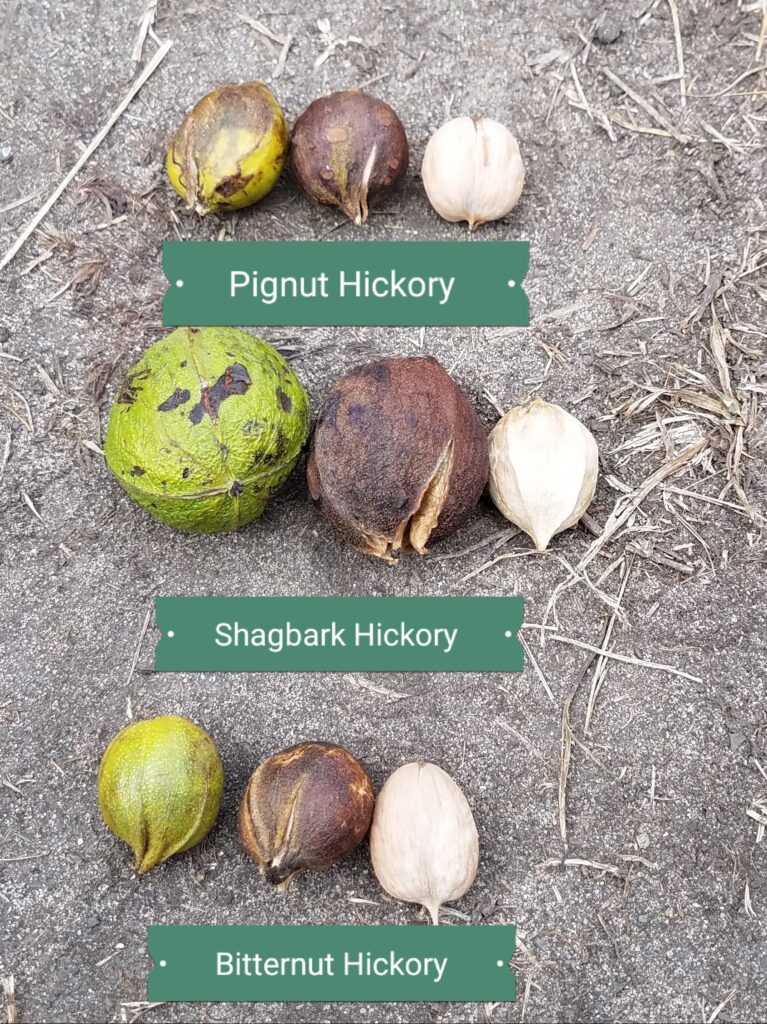
“Edible Hickory Nuts: A Taste Test …” from elizahowellnaturewalk.wordpress.com and used with no modifications.
How It Compares to Pignut Hickory
Small fruited hickory was historically considered a variety of pignut hickory (Carya glabra), which explains their similarities. Both have relatively slender twigs and similar growth habits, but several key differences exist. Pignut hickory typically has 5 leaflets per compound leaf (versus 7 for small fruited hickory) and its nut husks only partially split at maturity. The most reliable distinction comes from the nuts themselves – pignut hickory produces pear-shaped nuts with a bitter to mild-tasting kernel, while small fruited hickory has more rounded nuts with distinctly sweeter kernels.
Look closely at the husks – pignut hickory husks tend to cling partially to the nut, while small fruited hickory husks split completely to the base, cleanly releasing the nut. This complete splitting pattern is one of the most reliable identification features when fruits are present. For those interested in learning about other trees, the American chestnut offers a fascinating history and current restoration efforts.
Telling It Apart From Bitternut and Mockernut
Bitternut hickory (Carya cordiformis) is easily distinguished from small fruited hickory by its bright yellow buds – a feature no other hickory possesses. Bitternut also has 7-11 narrow leaflets and produces strongly bitter nuts with thin, winged husks. The overall impression of a bitternut hickory is often more delicate and finer-textured than the robust small fruited hickory.
Mockernut hickory (Carya tomentosa) differs with its stouter twigs, larger terminal buds, and distinctive fuzzy undersides of leaves. The name “mockernut” comes from its large nuts that contain disappointingly small kernels, unlike the small fruited hickory whose modest-sized nuts contain proportionally larger, sweet kernels. Mockernut bark is also more deeply furrowed than small fruited hickory, creating a distinctly rugged texture even on younger specimens. If you’re interested in learning about other types of plants, you might want to explore the artillery plant care guide.
Native Value: Why This Tree Belongs in Your Landscape
Small fruited hickory provides exceptional ecological value as a native component of eastern forests. This sturdy, long-lived tree supports numerous wildlife species, particularly during fall and winter when food sources diminish. Its nuts feed squirrels, chipmunks, wild turkeys, and black bears, while its branches provide nesting sites for various birds. The tree also serves as a larval host for several moth species, including the hickory horned devil, which transforms into the regal moth.
Beyond wildlife support, small fruited hickory contributes to forest health through its deep taproot that helps prevent soil erosion. Its leaf litter decomposes to create rich humus that improves soil structure and fertility. Unlike introduced species that can disrupt ecosystem balance, this native hickory has evolved alongside other indigenous plants and animals, fitting perfectly into the ecological web of eastern North America.
Natural Range and Habitat
Small fruited hickory naturally occurs throughout the eastern United States, from southern New England south to northern Florida, west to eastern Texas, and north through parts of the Midwest to southern Michigan. It typically grows in upland forests on well-drained slopes and ridges, often in association with various oak species, but can sometimes be found in lower, moister sites as suggested by one of its common names, “swamp hickory.”
Within this range, the tree adapts to various soil types but generally prefers moderately acidic, well-drained loams. In natural settings, it often occurs as a component of mixed hardwood forests rather than in pure stands, contributing to the diversity and resilience of forest ecosystems.
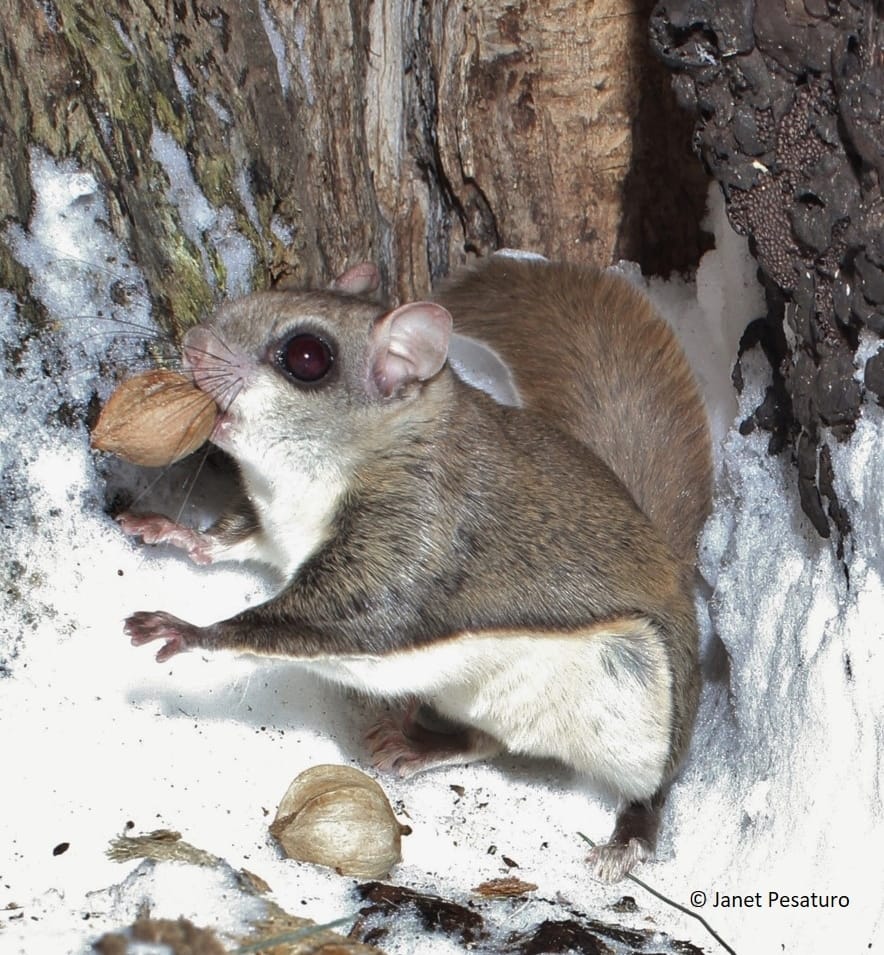
“Flying Squirrels and Hickory Nuts …” from winterberrywildlife.ouroneacrefarm.com and used with no modifications.
Wildlife Benefits It Provides
The wildlife value of small fruited hickory cannot be overstated. Its nuts provide high-energy food for mammals preparing for winter, with their high oil content and protein making them particularly nutritious. The tree’s rough bark creates habitat for insects, which in turn attracts insectivorous birds like woodpeckers, nuthatches, and chickadees. Hickory trees also develop cavities as they age, creating natural nesting sites for cavity-dwelling wildlife.
Even the leaf litter serves ecological purposes, creating microhabitats for salamanders, toads, and beneficial insects. The tree’s spring catkins provide early-season pollen for bees and other pollinators, while the leaf structures support various specialized insects that have co-evolved with hickories over millions of years.
Not Invasive: Safe to Plant Anywhere in Its Range
Unlike some non-native trees that can escape cultivation and threaten natural areas, small fruited hickory poses zero invasive risk within its native range. Its slow growth rate, specific germination requirements, and co-evolution with native seed predators naturally regulate its spread in the landscape. This makes it an environmentally responsible choice for sustainable landscaping and ecological restoration projects aimed at increasing native biodiversity.
Best Places to Plant Your Small Fruited Hickory
The ideal planting location for a small fruited hickory considers its eventual size and natural preferences. These trees can reach 80-100 feet tall with a spread of 40-50 feet, so adequate space is essential. Avoid planting within 20 feet of structures, power lines, or septic systems, as the tree’s extensive root system could eventually cause damage.
When selecting a site, think long-term. Small fruited hickories can live for 200+ years, so choose a location where the tree can reach full maturity without requiring major pruning or eventual removal. These trees make excellent shade specimens for large properties, woodland garden anchors, and components of native landscape designs.
Best and Worst Planting Locations
Recommended Sites
Sites to Avoid
Large backyards with ample space
Near foundations or structures
Woodland edges and naturalized areas
Under power lines
Parks and public spaces
Close to septic systems or water lines
Sloped areas needing erosion control
Small urban lots
Wildlife corridors and preserves
Paved areas or heavily trafficked zones
Consider the tree’s nut production when planning your planting location. While the sweet nuts are a bonus for human foragers, they can create maintenance issues on patios, driveways, or walking paths. The falling nuts may damage cars if parked beneath the tree, so place your hickory away from parking areas and high-traffic zones. For more information on American chestnut and its historical uses, you can explore the link.
Remember that hickories develop deep taproots, making them difficult to transplant once established. It’s far better to choose the right location initially than to attempt moving the tree later. Whenever possible, select a site where the tree can be allowed to reach its natural form without extensive pruning or shaping.
Soil Requirements for Healthy Growth
Small fruited hickory adapts to various soil types but performs best in deep, well-drained loamy soils with moderate moisture. It tolerates moderately acidic to neutral pH (5.5-7.0) and can handle occasional drought once established. Before planting, conduct a soil test to ensure your site falls within acceptable parameters. Heavy clay soils should be amended with organic matter to improve drainage, while sandy soils benefit from additions that increase water retention. Avoid extremely alkaline soils, which can lead to nutrient deficiencies and poor growth.
Sunlight Needs
Full sun to partial shade provides optimal growing conditions for small fruited hickory. In its natural habitat, young trees often start life in the partial shade of forest canopies before eventually reaching the sunlight above. When planted in landscapes, however, trees established in full sun typically develop stronger structure and more abundant nut production. For more information on how different plants thrive in varying light conditions, check out this guide on sun vs. shade requirements.
In southern portions of its range, afternoon shade can benefit young trees during the establishment phase. As the tree matures, however, it becomes increasingly sun-loving. Six or more hours of direct sunlight daily will encourage the strongest growth and most abundant fruiting as the tree reaches maturity.
“Hickory Trees” from www.thespruce.com and used with no modifications.
Space Considerations: Plan for a Large Tree
- Height at maturity: 80-100 feet
- Spread at maturity: 40-50 feet
- Minimum planting distance from structures: 20+ feet
- Minimum planting distance from other large trees: 30+ feet
- Growth rate: Slow to moderate (less than 12 inches per year)
The slow growth rate of small fruited hickory sometimes tempts gardeners to plant it closer to structures than advisable. Resist this temptation! While it may take decades to reach full size, planning for its eventual dimensions will prevent costly problems in the future. The tree’s substantial root system extends well beyond its canopy width, potentially interfering with foundations, driveways, and underground utilities if planted too close.
When calculating space requirements, also consider the shade cast by the mature tree. Small fruited hickory develops a moderately dense canopy that creates medium to heavy shade beneath. This shade pattern affects what can successfully grow underneath and may influence heating and cooling patterns for nearby structures.
For those with limited space who still wish to incorporate native hickories, consider smaller hickory species or cultivars that stay more compact. While small fruited hickory requires substantial space, its wildlife value and longevity make it worth accommodating when possible.
Companion Plants That Work Well
The dappled shade beneath mature small fruited hickories creates opportunities for woodland understory plants. Native spring ephemerals like trillium, bloodroot, and Virginia bluebells thrive in these conditions, blooming before the hickory leafs out fully. For summer interest, consider shade-tolerant natives like wild ginger, foamflower, and woodland phlox. Shrub layers can include spicebush, American hazelnut, and serviceberry, all of which complement hickories in natural forest settings. This layered approach not only looks natural but also maximizes habitat value by providing diverse structure and resources for wildlife.
Care Guide for Small Fruited Hickory
Caring for small fruited hickory requires understanding its natural growth patterns and preferences. These trees evolved in forest ecosystems where they received natural mulch from leaf litter, protection from harsh elements, and minimal competition from turf grass. Your care routine should mimic these conditions as much as possible while helping the tree establish in its new location. The good news is that once established, these native trees require minimal maintenance compared to many ornamental species.
1. Watering Schedule
Newly planted small fruited hickory trees need consistent moisture during their first two to three growing seasons. Water deeply once weekly, providing approximately 10-15 gallons per watering session for a standard 1-2 inch caliper tree. Adjust frequency based on rainfall, increasing during drought periods and decreasing during rainy spells. A good rule of thumb is to ensure the soil remains moist but never soggy to a depth of 12-18 inches. After the establishment period, reduce supplemental watering, as mature hickories are moderately drought-tolerant thanks to their deep taproot system.
The most critical watering periods occur during the hot summer months and during extended dry spells. Consider using a slow-release watering bag or soaker hose to provide efficient, targeted irrigation that reaches the developing root zone. Avoid frequent shallow watering, which encourages surface roots rather than the deep root system hickories naturally develop.
2. Fertilization Tips
Small fruited hickory generally requires minimal fertilization when planted in suitable soil. For the first few years, focus on establishing the root system rather than pushing top growth. If your soil test indicates deficiencies, a light application of balanced, slow-release organic fertilizer in early spring can support healthy development. For established trees showing signs of nutrient deficiency (yellowing leaves, stunted growth), apply a balanced fertilizer with an NPK ratio such as 10-10-10 at a rate of 1-2 pounds per inch of trunk diameter, spread evenly from near the trunk to slightly beyond the dripline.
Excessive fertilization can damage hickories by promoting too much soft growth susceptible to pests and winter injury. When in doubt, err on the side of under-fertilizing rather than over-fertilizing. In natural settings, the tree’s own leaf litter provides much of the nutrition it needs, so maintaining a natural mulch layer can reduce or eliminate the need for supplemental fertilizers.
3. Pruning Techniques
Small fruited hickory typically develops a strong central leader and good branch structure naturally, requiring minimal corrective pruning. Focus pruning efforts on removing dead, damaged, or diseased branches, and eliminating crossing or rubbing limbs that may create wounds where disease can enter. Any necessary structural pruning should be done when the tree is young, as hickories don’t respond well to heavy pruning once mature.
The best time to prune hickory trees is during late winter dormancy (February to early March), before sap begins flowing. Avoid pruning in spring when sap flow is heaviest, as this can lead to excessive “bleeding” that attracts insects and may weaken the tree. Clean, sharp tools and proper pruning cuts (just outside the branch collar without leaving stubs) help minimize stress and promote rapid wound closure.
- Remove competing leaders if multiple main stems develop
- Prune away branches with weak attachment angles (less than 45 degrees)
- Maintain a single dominant trunk for strongest structure
- Remove suckers from the base of the tree promptly
- Avoid removing more than 25% of the canopy in a single year
4. Disease and Pest Management
As a native species, small fruited hickory has developed natural resistance to many regional pests and diseases. However, several issues can occasionally affect these trees. Anthracnose, leaf spot diseases, and powdery mildew may appear during wet seasons but rarely threaten the tree’s overall health. More serious concerns include hickory bark beetle, which can attack stressed trees, and various canker diseases that enter through wounds. The best defense is maintaining good tree vigor through proper siting, watering during drought, and avoiding trunk and root injuries.
Several caterpillar species feed on hickory leaves, including the hickory horned devil and various webworms. While their feeding may temporarily affect appearance, healthy trees typically tolerate this damage without lasting harm. In fact, these native insects are important components of the food web, supporting birds and other wildlife. Control measures are rarely necessary unless an infestation is severe and occurs multiple years in succession.
Hickory weevils may infest developing nuts, reducing your harvest but not harming the tree’s health. If nut production is important to you, collecting and disposing of fallen nuts promptly can help reduce weevil populations for the following year. Otherwise, consider the affected nuts as natural contributions to wildlife food sources, as many animals will still consume infested nuts.
5. Winter Care
Mature small fruited hickory trees are well-adapted to winter conditions throughout their native range and require no special winter protection. Young trees, however, benefit from some protection during their first few winters. Apply 2-4 inches of mulch in a circle around the tree (keeping it away from direct contact with the trunk) to insulate roots and prevent frost heaving. In areas with heavy deer pressure, protective caging or trunk wraps may be necessary to prevent buck rub damage to the bark.
Avoid applying anti-desiccant sprays or winter fertilizers, as these aren’t necessary for native hickories and may interfere with their natural dormancy cycle. Similarly, avoid late-season pruning or fertilization that might stimulate new growth too late in the season, leaving it vulnerable to winter damage. With minimal intervention, these resilient native trees handle winter conditions admirably. If you’re interested in learning about other resilient native trees, explore the American Chestnut and its historical uses and current restoration efforts.
Are Small Fruited Hickory Nuts Edible?
The nuts of small fruited hickory are not only edible but prized for their sweet, maple-like flavor. Their taste is often compared favorably to that of shagbark hickory nuts, though they’re smaller and encased in thinner shells. Native Americans historically utilized these nuts as an important food source, and foragers today still seek them out for their distinctive taste. The kernels can be eaten raw, roasted, or incorporated into various recipes from baked goods to savory dishes. For those interested in exploring other edible plants, you might want to learn about wild buckwheat and its uses.
The primary challenge with small fruited hickory nuts lies not in their edibility but in extracting the sweet kernels from their hard shells. The process requires patience and the right tools, as the shells are notoriously tough despite being thinner than some other hickory species. The reward for this effort is a nutrient-dense food high in healthy fats, protein, and various minerals.
Harvesting Time and Techniques
Small fruited hickory nuts typically ripen from September through October, with exact timing varying by region and annual weather conditions. The nuts are ready to harvest when the husks turn from green to brown and begin splitting open at the seams. Some nuts will fall naturally when ripe, while others may need gentle shaking of branches to dislodge them. Collect nuts promptly after they fall, as wildlife quickly discovers and consumes this valuable food source. Look for nuts with husks that have split cleanly and completely—a characteristic feature of small fruited hickory that distinguishes it from pignut hickory. When gathering, focus on nuts that feel heavy for their size, as these likely contain fully developed kernels rather than shriveled or underdeveloped ones.
Preparing and Storing Nuts
After harvesting, remove the outer husks completely and rinse the nuts clean of any residue. Allow them to dry thoroughly for 2-3 weeks in a single layer on screens or trays in a well-ventilated area out of direct sunlight. This curing process improves flavor and extends storage life. Once dried, the nuts can be stored in their shells in a cool, dry place for 6-12 months, or cracked and the extracted kernels frozen for up to 2 years. Cracking small fruited hickory nuts requires specific techniques—a heavy-duty nut cracker, vice grip, or traditional hammer and block method all work well. Soak the nuts in water overnight before cracking to make the shells slightly less brittle and reduce shattering that can damage the kernels. The extracted kernels can be used immediately in recipes or toasted lightly to enhance their natural sweetness. For more information on nut safety and historical uses, explore related resources.
Safety Concerns for People and Pets
|
Plant Part |
Human Safety |
Pet Safety |
Wildlife Impact |
|---|---|---|---|
|
Nuts (kernels) |
Safe and edible |
Safe in moderation |
Valuable food source |
|
Nut husks |
May cause skin irritation |
Mild stomach upset if consumed |
Generally avoided |
|
Leaves |
Non-toxic |
Non-toxic |
Habitat for insects |
|
Bark/twigs |
Non-toxic |
Non-toxic, potential choking hazard |
Nesting material |
|
Pollen |
May trigger allergies |
Rarely problematic |
Important for pollinators |
Small fruited hickory presents few safety concerns for people and pets when compared to many ornamental landscape plants. The tree produces no toxic compounds in its leaves, bark, or nuts that would pose serious health risks to humans or animals. This native species has coexisted with people and wildlife for thousands of years without significant issues, making it a safe addition to most landscapes where children and pets are present.
The primary physical hazard associated with mature hickory trees comes from falling nuts and occasional branch drop. During nut drop season (usually September-October), wearing a hat when walking under the trees is advisable. For this reason, avoid planting directly adjacent to patios, walkways, or children’s play areas where falling nuts could cause minor injuries or create tripping hazards.
From a property perspective, be aware that hickory wood is exceptionally strong, meaning branches are less likely to break than many other tree species. However, this strength also means that when branches do fail due to storm damage or age, they can cause significant damage. Maintain appropriate distance from structures and perform regular inspections of mature trees to identify and address potential hazards before they become problematic.
“Hickory Tree Nuts, Wild Persimmons, and …” from www.grit.com and used with no modifications.
Toxicity Facts: What’s Safe and What’s Not
The nuts of small fruited hickory are completely non-toxic and safe for human consumption. Unlike some tree nuts that contain bitter compounds or potential toxins, hickory nuts are straightforwardly edible with no harmful substances when properly prepared. The only caution involves the green husks, which contain tannins that can cause mild skin irritation in sensitive individuals. Wearing gloves when handling fresh husks can prevent this minor issue. The husks also contain juglone, though in lower concentrations than black walnut husks, which means they’re less likely to cause significant skin staining or reactions.
From a horticultural perspective, small fruited hickory produces less juglone (the natural chemical that inhibits growth of some plants) than black walnut trees. While particularly sensitive plants like tomatoes, apples, and pines may struggle when planted directly under or near hickories, the allelopathic effect is much milder than with walnuts. Most common landscape plants grow without issue in proximity to hickory trees, though competition for water and nutrients should still be considered when planning nearby plantings.
Allergic Reactions to Watch For
As with all tree nuts, small fruited hickory nuts can trigger allergic reactions in individuals with specific nut allergies. People with known allergies to pecans or walnuts should exercise particular caution, as these closely related species can cause cross-reactive allergic responses. Symptoms of nut allergies range from mild oral itching to severe anaphylaxis requiring immediate medical attention. Anyone with diagnosed tree nut allergies should avoid handling or consuming hickory nuts and exercise caution during the pollination period when airborne pollen might trigger respiratory allergic reactions.
Pet Safety Around Hickory Trees
Dogs and cats typically show little interest in hickory nuts, but occasional curious pets might chew on fallen nuts or husks. The primary concern is potential intestinal blockage rather than toxicity, particularly with smaller dogs who might swallow nuts whole. The hard shells can cause obstruction requiring veterinary intervention. The bitter taste of the husks usually deters prolonged chewing, but some pets may experience temporary gastrointestinal upset if they consume substantial amounts. Monitor pets during the fall nut drop season and promptly remove accessible nuts if your animals show interest in them. Otherwise, hickory trees pose minimal health concerns for household pets and can safely coexist in yards where animals play and explore.
The Reward of Patience: What to Expect Long-Term
Planting a small fruited hickory represents an investment in the future that few other landscape choices can match. These trees typically begin producing nuts at 15-20 years of age when grown in favorable conditions, though meaningful harvests may take 25-40 years to develop. Their growth pattern follows the adage “sleep, creep, leap”—with several years of establishment followed by gradually accelerating growth that eventually produces a magnificent specimen tree. At 50 years, your hickory will likely stand 40-60 feet tall, but it may continue growing for another century or more, potentially reaching heights of 80-100 feet with trunks 2-3 feet in diameter. This extended lifespan means the tree you plant may eventually shade your grandchildren or great-grandchildren, creating a living legacy that connects generations. The ecological value increases with age as well, with mature trees supporting more wildlife, sequestering more carbon, and developing the character and structural complexity that younger specimens lack. The patient gardener who plants a small fruited hickory does so knowing that its greatest contributions may come long after they’re gone—a profound act of environmental stewardship and hope for the future.
Frequently Asked Questions
Small fruited hickory cultivation raises many questions for gardeners accustomed to faster-growing, more commonly available landscape trees. Understanding the specific requirements and expectations for this unique native species helps ensure successful establishment and long-term growth. While these trees require patience, they reward gardeners with exceptional durability, wildlife value, and aesthetic appeal that increases with age.
The following questions address the most common concerns about incorporating small fruited hickory into home landscapes and natural areas. As with any native tree, success comes from mimicking the conditions where the species naturally thrives while providing additional support during the critical establishment phase.
How long does it take for a Small Fruited Hickory to produce nuts?
Small fruited hickory typically begins producing its first nuts between 15-20 years of age when grown in favorable conditions. However, meaningful harvests usually develop between 25-40 years after planting. Trees grown from nursery stock may produce slightly earlier than those grown from seed. Several factors influence the timing of first nut production, including soil fertility, available moisture, climate, and genetic variation between individual trees. In forest settings, hickories may take even longer to fruit as they compete for resources, while open-grown landscape specimens with ample sunlight and reduced competition often produce nuts earlier. Patience is essential when growing hickories for nut production, as these slow-maturing trees prioritize establishing strong root systems and structural framework before investing energy in reproduction. For more information on pet safety and plant care, you can explore plant care and pet safety tips.
Can I transplant a mature Small Fruited Hickory tree?
Transplanting mature small fruited hickory trees is extremely challenging and generally not recommended due to their deep taproot system. Even young hickories develop substantial taproots within their first few years, making successful transplanting difficult beyond the sapling stage. If you must transplant a hickory, the best chance for success comes with trees under 3 feet tall and less than 3 years old, preferably moved during late winter dormancy with as much of the root system intact as possible. For larger specimens, success rates drop dramatically regardless of technique. Professional tree movers with specialized equipment may occasionally succeed with specimens up to 10-15 feet tall, but the survival rate remains low compared to most other deciduous trees. The better approach is to plant hickories in their permanent location from the start or to use container-grown nursery stock less than 5 years old.
Will Small Fruited Hickory damage my foundation or septic system?
Small fruited hickory develops an extensive root system that can potentially interfere with underground structures if planted too close. The primary concern comes from the tree’s deep taproot and substantial lateral roots that grow increasingly woody and powerful as the tree matures. For foundations, maintain a minimum planting distance of 20-30 feet, with greater distances (40+ feet) recommended for septic systems, water lines, and drainage fields. Unlike some aggressive species like willows or silver maples that actively seek water sources, hickories don’t specifically target pipes but can exert tremendous pressure on nearby structures through normal growth. The good news is that with proper placement, hickories pose minimal risk to infrastructure while providing decades of benefits. When planning your landscape, always consider the tree’s eventual size rather than its initial dimensions, as hickories continue growing throughout their long lifespan.
Do Small Fruited Hickory trees attract many pests?
Small fruited hickory hosts various native insects, but rarely experiences devastating pest problems that threaten tree health. Common insects include hickory bark beetles, various caterpillars like the hickory horned devil, fall webworm, and hickory tussock moth, and several species of aphids and scale insects. These relationships represent natural ecological interactions rather than problematic infestations in most cases. Healthy, well-established trees typically tolerate these native insects without significant long-term damage. The hickory weevil specifically targets developing nuts, potentially reducing harvests but not affecting overall tree health. Disease concerns are similarly modest, with leaf spot diseases, anthracnose, and powdery mildew occasionally appearing during particularly wet seasons. The best pest management approach involves maintaining good growing conditions and tree vigor rather than preventative chemical treatments, allowing natural predators to help control pest populations.
Can I grow Small Fruited Hickory in containers or small yards?
Small fruited hickory is poorly suited for container growing or small urban yards due to its eventual size and deep root system. While young trees might survive temporarily in very large containers (25+ gallons), their long-term health requires ground planting with ample space for root development. For small properties under a quarter acre, consider alternative native species with more compact growth habits. If you’re determined to include hickory in a limited space, consider its dwarf relative, the shagbark hickory ‘Stonehenge’ cultivar, which maintains a more manageable size. Another option for small spaces is focusing on the hickory’s ecological role and selecting native alternatives that provide similar wildlife benefits while remaining proportionate to your available space. Plants like serviceberry, American hazelnut, or native viburnums offer food for wildlife without the space requirements of full-sized hickories.
Small fruited hickory represents one of our most valuable native trees for large properties, parks, and natural areas where its full size can be accommodated. Its combination of wildlife value, longevity, and seasonal beauty makes it worth considering wherever space allows. For those fortunate enough to have the room, few trees offer more long-term ecological benefits or greater connection to the natural heritage of eastern North America.
For homeowners interested in exploring native landscaping with trees suited to various property sizes, Tree Heritage Specialists offers consultation services that match appropriate native species to your specific site conditions and space limitations while maximizing ecological benefits. For example, the small-fruited hickory is a great choice for those looking to add native hickory trees to their landscape.