
Key Takeaways
- Plush Plant (Echeveria harmsii) is a stunning succulent with velvety silver-red leaves that’s perfect for beginners
- This pet-safe succulent is officially listed on the ASPCA non-toxic plant list, making it ideal for homes with animals
- Plush Plants thrive in bright, indirect light and require minimal watering with the “soak and dry” method
- Temperature sensitivity means these plants need protection from frost, as they aren’t cold hardy below 40°F (4.4°C)
- Beyond their beauty, Plush Plants attract hummingbirds when flowering and can be easily propagated from leaves
Looking for a succulent that combines striking beauty with easy care? The Plush Plant might be your perfect match. These velvety succulents add a touch of elegance to any space while requiring minimal maintenance—ideal for both beginners and experienced plant parents alike.
Beloved by succulent enthusiasts for their distinctive fuzzy appearance and brilliant red-tipped leaves, Plush Plants create an eye-catching display whether grown indoors or in outdoor gardens. Succulent Paradise offers comprehensive care guides for these unique plants, ensuring you’ll have all the information needed to help your Plush Plant thrive for years to come.
What Exactly Is a Plush Plant?
Plush Plant is the common name for a distinctive succulent with a soft, velvety texture that feels luxurious to the touch—hence the “plush” in its name. This compact succulent typically grows in a rosette formation with leaves that have a silvery appearance and striking red or pink tips, especially when exposed to adequate sunlight.
Echeveria harmsii: The Official Name
Botanically speaking, the Plush Plant is formally known as Echeveria harmsii. It belongs to the Crassulaceae family, which includes numerous popular succulents. Native to Mexico, this particular Echeveria species was named after Hermann August Theodor Harms, a German botanist who contributed significantly to plant taxonomy in the early 20th century.
Like other Echeveria varieties, E. harmsii has adapted to thrive in semi-arid conditions with specialized water storage abilities in its thick leaves. This adaptation makes it remarkably drought-tolerant and perfect for gardeners who might occasionally forget to water their plants.
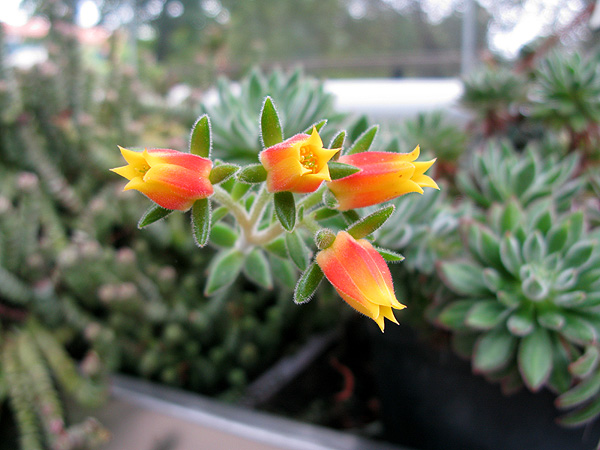
“Echeveria harmsii – Plush Plant” from www.flowersofindia.net and used with no modifications.
Common Names: Red Echeveria and Other Aliases
“Red Echeveria” is another popular name for this plant, referring to the reddish tinge that develops at the leaf tips, especially when the plant receives adequate sunlight. You might also see it labeled as “Plush Echeveria” in some nurseries and garden centers. The plant has previously been classified under different scientific names including Cotyledon elegans, Echeveria elegans (not to be confused with the Mexican Snowball), Oliveranthus elegans, and Oliverella elegans—which can sometimes create confusion for collectors.
Distinctive Features That Set It Apart
What makes the Plush Plant truly special is its velvety texture—a feature not commonly found in succulents. This soft, fuzzy coating on the leaves serves a practical purpose beyond aesthetics: it helps the plant retain moisture and provides protection from intense sunlight in its native habitat. The plant typically grows to about 6-8 inches in height and width, forming a compact clump that works beautifully in containers or rock gardens.
How to Identify Your Plush Plant
Not sure if your succulent is truly a Plush Plant? These distinctive identification features will help you confirm you have an authentic Echeveria harmsii. While many Echeveria species share similar rosette formations, the Plush Plant has several unique characteristics that set it apart from its cousins.
Silver Velvet Leaves with Pink Tips
The most distinctive feature of the Plush Plant is its leaves—they’re covered in tiny, soft white hairs that give them a silvery, velvety appearance. These fine hairs (technically called trichomes) create the plush texture that inspired the plant’s common name. When properly exposed to sunlight, the edges of the leaves develop a beautiful pink to red coloration, creating a striking contrast against the silvery-green base.
The leaves grow in a compact rosette pattern, spiraling outward from the center. Each leaf is typically spoon-shaped with a pointed tip, and when healthy, they should feel firm to the touch despite their soft appearance.
Bushy Growth Pattern
Unlike some Echeveria species that maintain a single rosette, Plush Plants tend to develop a bushier growth habit over time. As the plant matures, it frequently produces offsets (sometimes called “pups”) around its base, creating a clustered appearance. This natural branching gives established plants a fuller, more abundant look that many collectors prize.
Bright Orange Summer Flowers
When happy, Plush Plants produce striking bell-shaped flowers in late spring to early summer. These vibrant orange-red blooms appear on tall stalks (inflorescences) that rise above the foliage, creating a dramatic display. The flowers typically last for several weeks and are particularly attractive to hummingbirds, adding another dimension of enjoyment for outdoor growers.
The appearance of flowers is often a sign of excellent care, though plants can still be perfectly healthy without blooming every year. Young plants may not flower until they’re more established, typically after their second year of growth.
Common Look-Alikes to Avoid Confusion
Several other Echeveria species are sometimes confused with the Plush Plant. Echeveria pulvinata (Chenille Plant) looks similar but has more pronounced red edges. Echeveria setosa has more dense hair covering and typically lacks the red tips. If your plant has a silvery appearance with velvety texture, forms rosettes, and develops red tips in bright light, you likely have a genuine Plush Plant.
Perfect Light Conditions for a Thriving Plush Plant
Providing the right amount of light is crucial for maintaining your Plush Plant’s compact shape and vibrant coloration. These succulents evolved in environments with plenty of sunshine, so they need bright light to truly flourish and display their characteristic red tips.
Sun vs. Shade: Finding the Right Balance
Plush Plants prefer bright, indirect light for most of the day with some direct morning sun. In most indoor settings, a south or west-facing window provides ideal light conditions. If grown outdoors, they do best with morning sun and afternoon shade, especially in hotter climates where intense afternoon sun can potentially scorch the leaves.
The silvery, hairy coating on Plush Plant leaves offers some natural protection against sunburn, but they can still suffer damage from sudden exposure to intense direct sunlight. If moving your plant to a sunnier location, do so gradually over 1-2 weeks to allow it to acclimate.
Signs Your Plant Isn’t Getting Proper Light
Too little light causes Plush Plants to become etiolated—they stretch toward light sources, developing leggy growth with increased space between leaves. The rosette loses its compact form, and the plant appears pale with less vibrant coloring. Conversely, too much harsh direct sun can cause bleached spots or brown patches on leaves.
The perfect balance is achieved when your Plush Plant maintains a compact rosette shape with leaves showing vibrant red tips. This coloration is actually a stress response to sun exposure—a healthy and desirable trait in these plants.
Seasonal Light Adjustments
Light conditions change throughout the year, so you may need to adjust your plant’s position seasonally. During winter months when sunlight is less intense, moving plants closer to windows can help them receive adequate light. In summer, you might need to provide some protection from the harshest afternoon rays, especially for outdoor plants.
If growing indoors in a location with limited natural light, Plush Plants can benefit from grow lights. A full-spectrum LED grow light positioned 6-12 inches above the plant for 12-14 hours daily can supplement natural light and maintain the plant’s compact growth and coloration.
Indoor vs. Outdoor Growing
One of the most appealing aspects of Plush Plants is their versatility—they can thrive both indoors and outdoors with the right conditions. Your climate and available space will largely determine the best growing environment for your plant.
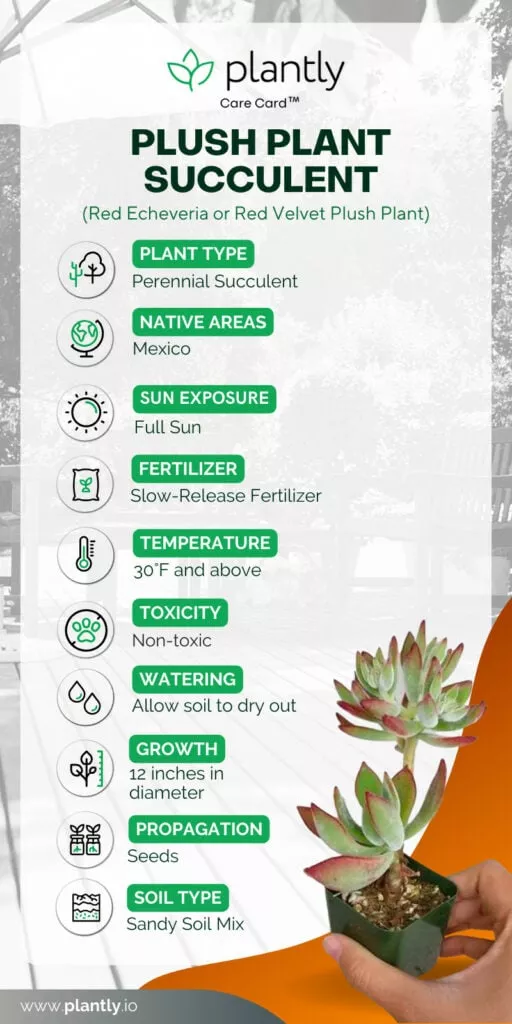
“Plush Plant Succulents Care Guide | Plantly” from plantly.io and used with no modifications.
Indoor Plush Plants generally require more attention to light conditions but benefit from more stable temperatures and protection from extreme weather. Outdoor specimens often develop more intense coloration due to increased sun exposure but need monitoring during temperature extremes and rainy periods.
- Indoor advantages: Protection from frost, pests, and excessive rain; easier to control environment
- Outdoor advantages: Better air circulation, natural light cycles, and potential for more vibrant coloration
- Container planting: Works well in both settings and allows for easy relocation as needed
For the best of both worlds, many growers keep their Plush Plants in portable containers that can be moved indoors during unfavorable weather and outdoors during ideal conditions. This flexibility helps ensure your plant receives optimal care year-round, similar to how artillery plants thrive both indoors and outdoors.
How to Propagate Your Plush Plant
Propagating your Plush Plant is a rewarding way to expand your collection or share this beautiful succulent with friends. The good news is that Echeveria harmsii is one of the easier succulents to propagate, offering multiple successful methods that even beginners can master with a little patience.
Before starting any propagation project, ensure you’re working with a healthy parent plant. Signs of good health include firm leaves, vibrant coloration, and absence of pests or disease. The best time to propagate is during the growing season (spring through early fall) when the plant is actively producing new growth.
Leaf Propagation Method
Leaf propagation is perhaps the most economical method, allowing you to create multiple new plants from a single parent. To begin, gently twist a healthy leaf from the parent plant, ensuring you get a clean break at the stem. The entire leaf, including the base where it attaches to the stem, must be intact for successful propagation.
After removal, allow the leaf to callus over for 2-3 days in a dry, warm location away from direct sunlight. Once callused, place the leaf on well-draining succulent soil, with the cut end just barely touching or hovering above the soil surface. Mist the soil (not the leaf) lightly every few days. Within 2-4 weeks, you should see tiny roots forming, followed by a small rosette. Be patient—it may take several months before your new plant is large enough to transplant.
Offsets and Stem Cuttings
Mature Plush Plants naturally produce offsets (baby plants) around their base, which can be separated once they’ve developed their own root systems. To remove an offset, use a clean, sharp knife to cut it from the mother plant, ensuring you include some roots if possible. Allow the cut to callus for a few days, then plant in well-draining soil. This method typically produces new plants more quickly than leaf propagation since you’re starting with a more developed specimen.
Creative Ways to Display Your Plush Plant
The striking appearance of Plush Plants makes them perfect for various creative displays both indoors and outdoors. Their compact size and architectural form allow them to fit seamlessly into many design styles, from minimalist modern to rustic natural aesthetics.
Rock Gardens and Outdoor Arrangements
Plush Plants are stunning additions to rock gardens, where their silvery-red rosettes create beautiful contrast against stones and gravel. Plant them alongside other drought-tolerant succulents with complementary colors like blue Senecio serpens or purple Echeveria ‘Perle von Nürnberg’ for a striking composition.
In warmer climates (USDA zones 9-11), Plush Plants can become permanent fixtures in outdoor succulent beds. Their bushy growth habit makes them excellent “filler” plants between larger statement succulents or along pathway edges where their colors can be appreciated up close.
For sloped areas in your garden, Plush Plants offer practical benefits beyond aesthetics. Their spreading growth pattern helps with erosion control, while their modest water needs make them suitable for difficult dry slopes where other plants might struggle.
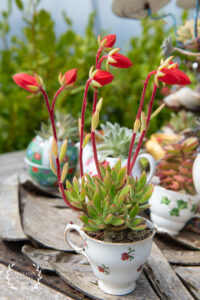
“Echeveria Harmsii – (Plush Plant) Well …” from corsesidenursery.com and used with no modifications.
Container and Wreath Ideas
The compact nature of Plush Plants makes them ideal candidates for container gardening. Consider planting them in shallow terra cotta dishes or bonsai pots that complement their natural coloring. Their relatively slow growth means they won’t quickly outgrow appropriately sized containers.
For a truly unique display, incorporate Plush Plants into living wreaths or vertical gardens. Their ability to root easily makes them suitable for these specialized planting methods, creating living art for your walls or door.
Designer Tip: Pair your Plush Plant with containers that enhance their coloration. Matte black or unglazed terra cotta pots create striking contrast against the plant’s silvery leaves and red tips, while turquoise or copper containers complement the reddish tones beautifully.
When designing container arrangements, consider the “thriller, filler, spiller” approach, using Plush Plants as the “filler” component alongside taller succulents and trailing varieties like String of Pearls for a professionally designed look.
Attracting Hummingbirds with Your Plush Plant
One delightful bonus of growing Plush Plants outdoors is their ability to attract hummingbirds when in bloom. The bright orange-red tubular flowers that appear on tall stalks in summer are perfectly shaped for hummingbird feeding, providing natural nectar that these tiny birds find irresistible.
To maximize hummingbird visits, place your flowering Plush Plants in a location visible from your window or patio where you can enjoy the aerial display. Consider creating a dedicated hummingbird garden section by grouping several Plush Plants together with other hummingbird-friendly plants like Salvia and Penstemon.
For the best flowering performance (and thus more hummingbird visits), ensure your plants receive adequate sunlight and follow proper watering techniques. Healthy, stress-free plants produce more abundant blooms, increasing your chances of attracting these fascinating birds.
- Position plants where you can observe hummingbird visits
- Group multiple plants together for greater visual impact
- Provide nearby perching spots like small branches
- Avoid using pesticides that could harm visiting birds
Photographing hummingbirds visiting your Plush Plant flowers can be a rewarding hobby, capturing the special relationship between these native birds and your carefully tended succulents.
Enjoy a Worry-Free Succulent Experience
Plush Plants offer the perfect combination of striking beauty and forgiving nature that makes succulent growing so rewarding. Their velvety texture, vibrant coloration, and ability to thrive with minimal care make them ideal choices for both beginners and experienced plant enthusiasts. Whether displayed indoors on a sunny windowsill or outdoors in a rock garden, these distinctive succulents bring unique character to any space while requiring little maintenance in return. For succulent lovers concerned about pet safety, their non-toxic status provides additional peace of mind. Consider adding a Plush Plant to your collection and discover why this charming Echeveria has captivated plant enthusiasts worldwide for generations.
Frequently Asked Questions
Below are answers to the most common questions about Plush Plant care, helping you troubleshoot any issues and optimize your plant’s health and appearance.
How often should I water my Plush Plant?
Plush Plants should be watered using the “soak and dry” method—thoroughly drench the soil until water flows from drainage holes, then wait until the soil is completely dry before watering again. For most indoor environments, this typically means watering every 2-3 weeks during growing season (spring and summer) and reducing to once monthly during dormant periods (fall and winter).
The exact frequency depends on your specific environment. Factors like humidity, temperature, pot size, and air circulation all affect how quickly the soil dries out. Always check soil moisture before watering by inserting a wooden skewer or your finger about an inch into the soil—if it comes out completely dry, it’s time to water.
Can Plush Plants survive winter outdoors?
Plush Plants are not cold-hardy below 40°F (4.4°C) and will suffer damage or death if exposed to freezing temperatures. In USDA zones 9-11, they can typically remain outdoors year-round. For colder regions, bring plants indoors before temperatures drop below 40°F, or consider them as seasonal outdoor plants to be replaced annually.
If you live in a borderline climate, you can extend the outdoor season by covering plants during unexpected cold snaps or planting them near buildings that provide some warmth and protection. For container plants, moving them against a south-facing wall during winter can create a microclimate several degrees warmer than the surrounding area.
Why are the leaves on my Plush Plant turning yellow?
Yellowing leaves on a Plush Plant typically indicate overwatering, which is the most common cause of problems with succulents. When roots sit in soggy soil, they can develop rot, preventing proper nutrient uptake and causing leaves to yellow and become soft. Immediately check the roots and repot in fresh, dry soil if root rot is present, removing any affected roots with sterilized scissors.
Other potential causes include nutrient deficiencies, pest infestations, or natural leaf aging. Lower leaves occasionally yellowing and dropping is normal as the plant grows, but widespread yellowing throughout the plant indicates a problem that needs addressing. Ensure your plant has well-draining soil, appropriate light, and a container with drainage holes to prevent recurring issues.
How fast do Plush Plants grow?
Plush Plants are moderate growers compared to other succulents, typically adding a few new leaves each growing season while gradually increasing in size. Under ideal conditions, a young plant might take 2-3 years to reach its full mature size of 6-8 inches in diameter, forming a bushy cluster through offset production.
Growth rate varies significantly based on environmental conditions. Plants receiving optimal light, appropriate watering, and occasional feeding during the growing season will develop more quickly than those in suboptimal conditions. Don’t be concerned if growth seems slow—this is natural for these plants and contributes to their compact, attractive appearance.
Do Plush Plants need fertilizer?
Plush Plants benefit from light fertilization during their active growing season (spring and summer), though they require far less than many houseplants. Use a balanced, water-soluble fertilizer specifically formulated for succulents or cacti, diluted to half the recommended strength. Apply once in spring and once in early summer, avoiding fertilization during fall and winter when the plant is relatively dormant.
Over-fertilization can cause more harm than good, resulting in soft growth, burned roots, or distorted new leaves. If your plant is growing in fresh potting mix, you may not need to fertilize at all during the first year, as quality succulent soil typically contains sufficient nutrients for initial growth.
For an organic approach, some growers prefer top-dressing with worm castings instead of using chemical fertilizers. A thin layer (¼ inch) applied to the soil surface in spring provides slow-release nutrients throughout the growing season without risk of chemical burn. For more detailed care tips, you can visit Succulents and Sunshine.