
Key Takeaways
- Platycerium alcicorne (Staghorn Fern) features distinctive antler-like fronds and can thrive for decades with proper care in indoor environments.
- This unique epiphytic fern requires bright indirect light, moderate humidity, and specific watering techniques that mimic its natural rainforest habitat.
- Staghorn ferns are non-toxic to pets and humans, making them safe additions to any household.
- Two primary varieties exist—Madagascar and African forms—with notable differences in shield frond appearance and care requirements.
- Greg’s plant care app helps track watering schedules and growth patterns, ensuring your Platycerium alcicorne thrives for years to come.
Platycerium alcicorne stands out as one of the most fascinating houseplants you can grow. Unlike typical potted plants, this epiphytic fern naturally grows attached to trees in its native habitat, creating a dramatic living sculpture in your home. While its care requirements differ from standard houseplants, mastering these unique needs rewards you with a truly spectacular specimen that can thrive for decades.
If you’re considering adding this botanical marvel to your collection, you’ll be pleased to know that despite its exotic appearance, the Platycerium alcicorne can adapt well to indoor environments with the right care approach. Its distinctive growth habit and visual impact make it well worth the specialized attention it requires.
What Makes Staghorn Ferns Special: The Stunning Platycerium Alcicorne
The Platycerium alcicorne belongs to a fascinating group of epiphytic ferns that have evolved to grow without soil, instead attaching themselves to trees or rocks in their natural habitat. What truly sets these ferns apart is their remarkable dimorphic frond system—they produce two distinctly different types of fronds, each serving a unique purpose in the plant’s survival strategy.
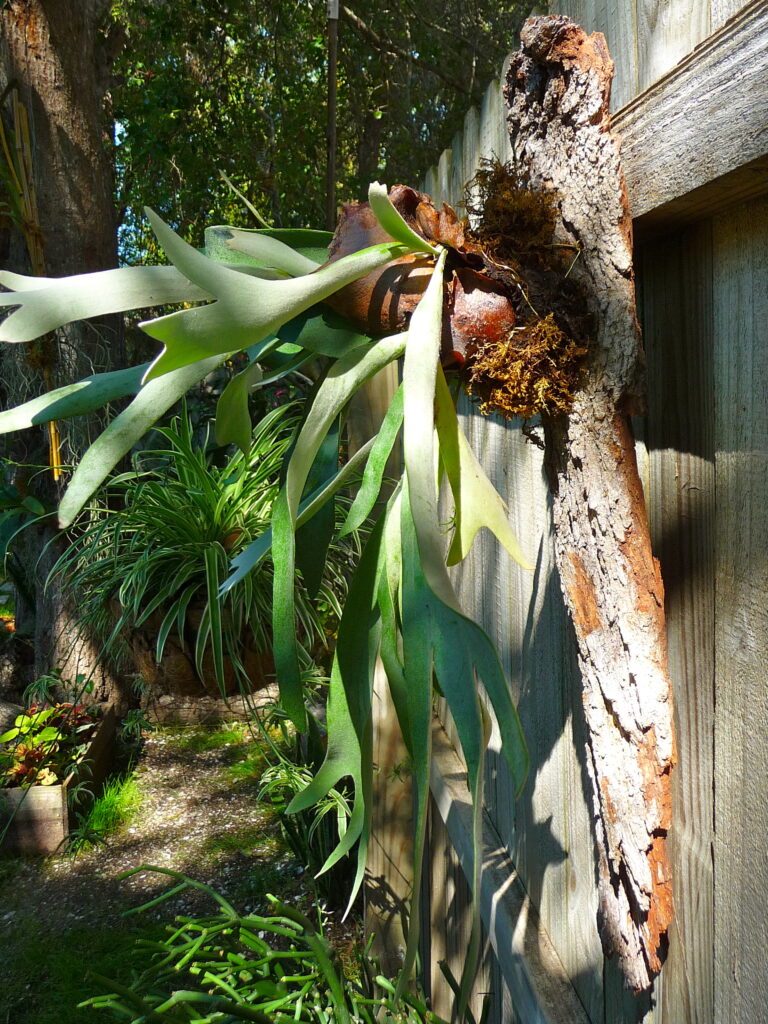
“How to Mount a Staghorn Fern to Wood” from craftorganic.com and used with no modifications.
Unlike typical houseplants that gather nutrients primarily through their roots, staghorn ferns have adapted to collect water and nutrients through their specialized fronds. The shield (or sterile) fronds form a protective base that secures the plant to its host and collects water and nutrients, while the dramatic fertile fronds—resembling deer or elk antlers—extend outward to photosynthesize and eventually produce spores for reproduction. This evolutionary adaptation allows them to thrive in the canopies of rainforests where conventional rooting systems would be impractical. For those interested in similar plant care, you can explore sword fern care tips which share some care principles with staghorn ferns.
- Epiphytic growth habit (grows on trees rather than in soil)
- Unique dimorphic frond system (shield and fertile fronds)
- Dramatic three-dimensional growth pattern
- Long-lived specimens that can become family heirlooms
- Conversation-starting appearance unlike any other houseplant
When properly cared for, Platycerium alcicorne creates a living sculpture that commands attention in any space. Their architectural quality makes them ideal for modern interiors, while their exotic appearance adds a touch of the tropics to your home. As they mature, these ferns develop an increasingly impressive presence, with fertile fronds that can extend over 35 inches in length.
Identifying Platycerium Alcicorne: Names and Distinctive Features
The scientific name Platycerium alcicorne offers insight into the plant’s appearance—”platy” means broad or flat, “cerium” refers to antlers, and “alcicorne” specifically references elk horns. This naming perfectly captures the plant’s most distinctive feature: the broad, flattened fertile fronds that resemble the antlers of an elk or moose. For more information on plant care and pet safety, explore related resources.
Common Names and Why They Matter
Platycerium alcicorne goes by several common names that reflect its unique appearance. Most frequently called the Staghorn Fern, it’s also known as Elkhorn Fern and Antelope Ears. These descriptive names all reference the distinctive shape of its fertile fronds, which dramatically extend outward from the plant’s base in a pattern reminiscent of antlers.
Understanding these common names can be helpful when researching care information or discussing your plant with other enthusiasts. Different regions may favor particular common names, but they all refer to the same remarkable species. When shopping for this plant, you might encounter any of these names, so recognizing them all ensures you’re getting the correct species.
The name “staghorn” has become somewhat of a catch-all term for several Platycerium species, so it’s always worth confirming the specific species (alcicorne) when making a purchase if you’re looking for this particular variety with its distinctive characteristics and care requirements.
Unique Physical Characteristics
- Shield fronds: Rounded to heart-shaped base fronds that eventually turn brown and papery, functioning to protect the root system and collect nutrients
- Fertile fronds: Dramatic, forking antler-like fronds that extend outward and upward, reaching up to 35 inches in length when mature
- Growth pattern: Circular arrangement with fronds radiating from a central point
- Texture: Leathery, slightly fuzzy surface on young fronds, becoming smoother with age
- Spore patches: Brown, velvety patches that appear on the undersides of mature fertile fronds
The texture and appearance of Platycerium alcicorne change throughout its life cycle. Young plants display more rounded, less divided fertile fronds, while mature specimens develop the dramatic forking pattern that gives them their distinctive appearance. The shield fronds transform from green living tissue to brown, papery protective shields that help the plant retain moisture and provide a secure attachment point.
Why Platycerium Alcicorne Commands Premium Prices
When browsing plant shops or online marketplaces, you might experience sticker shock at the price of Platycerium alcicorne specimens. The higher cost isn’t arbitrary—several factors contribute to these premium prices, making them an investment rather than just another houseplant purchase.
Rarity Factors and Limited Availability
Platycerium alcicorne commands higher prices primarily due to its slow growth rate and specialized propagation requirements. Unlike fast-growing plants that can be rapidly multiplied through cuttings, staghorn ferns reproduce via spores—a lengthy and unpredictable process that commercial growers find challenging to scale. Additionally, mature specimens take years to develop their impressive size and dramatic form, meaning that larger plants represent a significant time investment for growers. For those interested in similar care challenges, consider exploring artillery plant care for a unique gardening experience.
Unique Ornamental Value
The distinctive aesthetic appeal of Platycerium alcicorne justifies its premium price point. These living sculptures provide a three-dimensional art piece that changes and grows over time, offering a visual impact that few other houseplants can match. The architectural quality of their antler-like fronds creates a focal point in any space, with each plant developing a unique growth pattern that makes it a truly one-of-a-kind specimen.
Many plant enthusiasts consider staghorn ferns to be collectible heirlooms rather than disposable decorations. With proper care, these plants can live for decades—even being passed down through generations—making their initial cost more reasonable when viewed as a long-term investment in your home’s botanical décor.
Platycerium Alcicorne Toxicity: Safe for Homes with Pets?
Good news for pet owners who are drawn to the unique beauty of Platycerium alcicorne: these impressive ferns pose no toxic threat to your furry family members. This safety aspect makes them an excellent choice for households with curious pets who might occasionally nibble on houseplants.
While many dramatic-looking plants come with warnings about potential toxicity, staghorn ferns are a refreshing exception to this rule. Their non-toxic nature allows you to display them in any room without concerns about accidental poisoning, making them particularly valuable for pet owners who want to enjoy exotic plants safely.

“My staghorn fern with cat for scale : r …” from www.reddit.com and used with no modifications.
Safety for Cats and Dogs
According to the ASPCA, Platycerium species, including alcicorne, are non-toxic to both cats and dogs. Even if your pets manage to chew on a frond, they won’t experience poisoning symptoms. However, it’s worth noting that the leathery texture of staghorn fronds doesn’t make them particularly appetizing to most pets, and the fibrous plant material could potentially cause mild digestive upset if consumed in large quantities—though this is true of many non-toxic plants.
Human Toxicity Concerns
Platycerium alcicorne poses no known toxicity risks to humans of any age, making them safe choices for households with small children. While young children should always be supervised around houseplants to prevent damage to both the child and the plant, there’s no need for specific toxicity concerns with staghorn ferns. Their safe nature contributes to their popularity as gifts and as showcase pieces in public spaces like restaurants and offices where safety is a priority.
5 Essential Care Requirements for Healthy Growth
Despite their exotic appearance, Platycerium alcicorne can be surprisingly adaptable when their basic needs are met. Understanding the plant’s natural habitat as an epiphyte in tropical and subtropical forests provides the key to successful cultivation. These ferns have evolved to grow attached to trees, collecting nutrients and moisture from the air, rain, and organic debris that accumulates around their base.
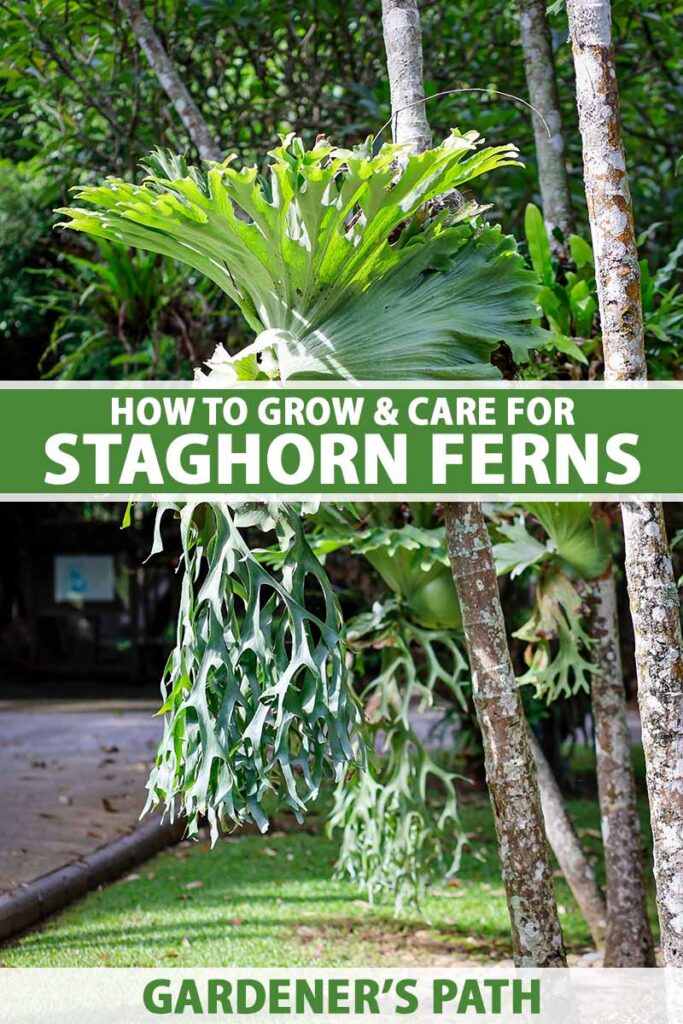
“How to Grow and Care for Staghorn Ferns …” from gardenerspath.com and used with no modifications.
The key to success with Platycerium alcicorne lies in mimicking these natural growing conditions while adapting to indoor environments. With attention to five core care areas, you can maintain a healthy, thriving specimen that will become more impressive with each passing year. For additional tips on plant care, you might explore fern care and placement for a comprehensive understanding.
1. Light Requirements and Placement
- Bright indirect light is ideal – morning sun or filtered light through sheer curtains works well
- Avoid harsh direct sunlight, especially during midday hours, which can scorch fronds
- Eastern or northern exposures often provide the perfect balance of light
- Can tolerate lower light conditions but growth will be slower and less robust
- Rotate occasionally for even growth if light comes primarily from one direction
In their natural habitat, staghorn ferns receive dappled light filtering through the forest canopy. Indoors, this translates to bright spaces away from direct sun rays. A few feet back from an east-facing window often provides ideal conditions, though they can adapt to various lighting situations with proper acclimation. Learn more about how sword ferns thrive indoors under similar lighting conditions.
If your home lacks naturally bright areas, Platycerium alcicorne can adapt to artificial lighting. A combination of standard overhead lighting and a supplemental grow light can provide adequate illumination. Look for signs like pale fronds or minimal new growth, which indicate insufficient light, or brownish scorched areas suggesting too much direct sun exposure. For more tips on ensuring your plants thrive indoors, check out this guide on fern care and placement.
Seasonal adjustments may be necessary as the sun’s angle and intensity change throughout the year. Plants that thrive in a particular location during winter months might need more protection during summer when the sun is stronger and days are longer. For more detailed care tips, you can check out this guide on Platycerium alcicorne.
2. Watering Schedule and Technique
Watering Platycerium alcicorne requires a different approach than soil-grown plants. These epiphytes absorb moisture through their fronds as well as their minimal root systems. The key is thorough but infrequent watering that mimics their natural exposure to tropical rain showers followed by periods of drying. For mounted specimens, submerge the entire mount in water for 10-15 minutes once or twice a week, allowing excess water to drain completely afterward. For basket-grown plants, water thoroughly when the mounting medium feels dry to the touch, typically every 5-7 days in average home conditions.
Seasonal adjustments to your watering schedule are essential for long-term success. During active growth in spring and summer, your staghorn will require more frequent watering. In winter, when growth naturally slows, reduce watering frequency to prevent root rot. Always check the shield fronds before watering—if they feel soft and pliable, the plant still has adequate moisture. When they begin to feel slightly firm or papery, it’s time to water again.
3. Humidity and Temperature Needs
Native to tropical regions, Platycerium alcicorne appreciates humidity levels between 40-60%, though it can adapt to the drier conditions found in most homes. If your home’s air is particularly dry, especially during winter heating months, consider increasing humidity through methods like grouping plants together, using a humidifier, or placing the plant on a pebble tray filled with water (ensuring the plant sits above, not in, the water). Misting provides only temporary humidity and can sometimes lead to fungal issues if water sits on fronds too long—making it less effective than other humidity-boosting methods.
Temperature-wise, these ferns thrive in typical indoor temperatures between 60-80°F (15-27°C). They can tolerate brief periods outside this range but should be protected from cold drafts and sudden temperature fluctuations. While they appreciate some seasonal temperature variation to trigger natural growth cycles, they should never be exposed to temperatures below 50°F (10°C), as cold damage can occur quickly and is often irreversible. For more detailed care instructions, you can visit PictureThis.
4. Mounting vs. Potting Options
As epiphytes, Platycerium alcicorne naturally grows attached to trees rather than in soil. Recreating this growth habit through mounting provides the most natural conditions and showcases the plant’s unique form. Popular mounting materials include cedar boards, cork slabs, or tree fern plaques, with the fern secured using fishing line, plant-safe wire, or biodegradable twine until it attaches itself. The mounting material should be covered with a layer of sphagnum moss, coco fiber, or orchid bark to provide a moisture-retentive base that mimics the plant’s natural growing medium.
While mounting is traditional, Platycerium alcicorne can also thrive in hanging baskets or shallow pots filled with an extremely well-draining epiphytic mix. This approach may be easier for beginners or in very dry environments where moisture retention is challenging. If potting, use a mix of orchid bark, perlite, charcoal, and a small amount of peat or coco coir. Never use standard potting soil, which remains too wet and leads to rot. With either method, ensure excellent air circulation around the plant to prevent fungal issues and promote healthy growth.
5. Fertilization Guidelines
Platycerium alcicorne has relatively modest nutritional needs compared to many houseplants. Over-fertilization can damage these ferns more easily than underfeeding, so a conservative approach works best. During the growing season (spring through early fall), apply a balanced orchid fertilizer or specialized fern fertilizer diluted to half the recommended strength once a month. Look for formulations with micronutrients and apply the solution directly to the shield fronds and growing medium, where the plant will absorb it gradually.
Some enthusiasts prefer organic approaches like placing a small amount of compost or banana peels behind the shield fronds to slowly release nutrients as they decompose. This mimics how staghorns naturally receive nutrition in the wild from decaying organic matter that collects around their base. Regardless of method, always reduce or eliminate fertilization during fall and winter months when growth naturally slows, and the plant enters a semi-dormant period requiring fewer nutrients.
Common Care Challenges and How to Overcome Them
- Brown tips on fertile fronds: Usually indicates low humidity or inconsistent watering
- Yellowing fronds: Often a sign of overwatering or poor drainage
- Shield fronds turning black: May indicate fungal issues from excessive moisture
- Stunted growth: Typically results from insufficient light or nutrients
- Pest infestations: Scale insects and mealybugs can sometimes affect staghorns
The most common challenge with Platycerium alcicorne is finding the right watering balance. Overwatering leads to rot, while underwatering causes dehydration and stress. Monitor your plant’s response to your current watering routine and adjust accordingly. Remember that seasonal changes and household conditions like air conditioning or heating can significantly impact how quickly your plant uses water, requiring periodic adjustments to your care routine.
Pest issues, while not extremely common, can occasionally trouble staghorn ferns. Scale insects and mealybugs represent the most frequent invaders, appearing as small brown bumps or white cottony spots on fronds. Catch infestations early by inspecting your plant regularly, particularly the undersides of fronds and crevices where shield fronds meet the mounting material. For light infestations, a cotton swab dipped in 70% isopropyl alcohol can effectively remove individual pests. For more serious problems, insecticidal soap or neem oil solutions applied every 7-10 days (away from direct light) usually resolves the issue without harming the plant.
Environmental stress often manifests as brown frond tips or edges. This typically results from low humidity, exposure to cold drafts, or inconsistent watering. Improving ambient humidity and establishing a more consistent care routine usually prevents further damage, though affected frond portions won’t recover. Only remove entirely brown or damaged fronds, as partially damaged ones still contribute to the plant’s photosynthesis and overall health.
Dealing with Brown Tips and Fronds
Brown tips on your Platycerium alcicorne often signal environmental stress rather than disease. The most common culprits include low humidity, inconsistent watering, or exposure to direct sunlight. To remedy this issue, first assess your watering routine—ensure you’re thoroughly soaking the plant when you water, but allowing it to dry slightly between waterings. Next, check humidity levels in your home, as indoor heating and air conditioning can create overly dry conditions that staghorn ferns find stressful. If brown tips persist, consider relocating your plant away from heating vents, air conditioners, or drafty windows that might be creating localized dry spots.
Preventing Root Rot
Root rot represents the most serious threat to your Platycerium alcicorne and typically results from overwatering or poor drainage. Unlike soil-dwelling plants, these epiphytic ferns evolved to have their roots exposed to air circulation, making them particularly susceptible to rot when kept too wet. To prevent this deadly condition, ensure your mounting material or potting medium drains extremely well and never allows water to pool around the root ball. When watering, thoroughly soak the plant but then allow it to dry partially before the next watering. If you notice black, mushy areas developing at the base of the plant, act quickly by trimming away affected portions with sterilized scissors and reducing water until the plant stabilizes. Applying a fungicide specifically formulated for ferns can help arrest the spread of rot if caught early. For more care tips, you can explore sword fern care tips that might be applicable.
Managing Pests Effectively
While Platycerium alcicorne tends to experience fewer pest problems than many houseplants, scale insects and mealybugs occasionally take up residence on these ferns. These sap-sucking pests typically appear as small brown bumps (scale) or white cottony masses (mealybugs) on fronds, particularly along veins and in protected crevices. Early detection is crucial for effective control, so inspect your plant regularly, especially when bringing it home from a nursery or returning it indoors after summer outside. For light infestations, dab insects with a cotton swab dipped in 70% isopropyl alcohol to dissolve their protective coatings. For more significant problems, horticultural oils or insecticidal soaps formulated for ferns provide effective control when applied every 7-10 days for several weeks. Always test these products on a small area first, as some staghorn ferns show sensitivity to certain formulations.
Hanging Display Ideas for Maximum Visual Impact
- Wall-mounted on decorative wooden boards or plaques with moss backing
- Suspended from ceiling hooks in macramé plant hangers
- Mounted on natural driftwood or cork bark slabs
- Displayed in hanging wire baskets lined with sphagnum moss
- Attached to vertically mounted tree fern poles in groupings
Platycerium alcicorne’s unique growth habit makes it ideal for creative vertical displays that showcase its dramatic silhouette. The most visually striking presentations elevate these plants to eye level or slightly above, allowing their antler-like fronds to extend freely in their natural downward-arching pattern. Consider placing your mounted staghorn against a contrasting background—dark-colored walls make the green fronds stand out dramatically, while neutral tones create a more subtle, organic aesthetic.
Creating a “living wall” with multiple staghorn ferns at different growth stages provides a gallery-like display that evolves over time. When planning such arrangements, ensure adequate spacing between specimens to accommodate their eventual size and to maintain proper air circulation. For added visual interest, consider pairing your Platycerium alcicorne with other epiphytic plants like orchids, bromeliads, or other fern varieties that share similar care requirements.
Lighting plays a crucial role in highlighting the three-dimensional quality of staghorn ferns. Position grow lights or track lighting to cast gentle shadows that emphasize the plant’s sculptural form. This indirect lighting not only enhances the visual drama but also provides the moderate light levels these ferns need to thrive. For a particularly striking effect, consider uplighting mounted specimens to emphasize their distinctive silhouettes against walls or ceilings.
Seasonal rotation of display locations can both enhance your home’s aesthetics and provide optimal growing conditions throughout the year. During winter months when indoor heating creates drier conditions, clustering your staghorn with other humidity-loving plants creates a microclimate that benefits all members of the grouping. In summer, suspended displays near east-facing windows often provide ideal light conditions while keeping the plants safely out of direct sun rays.
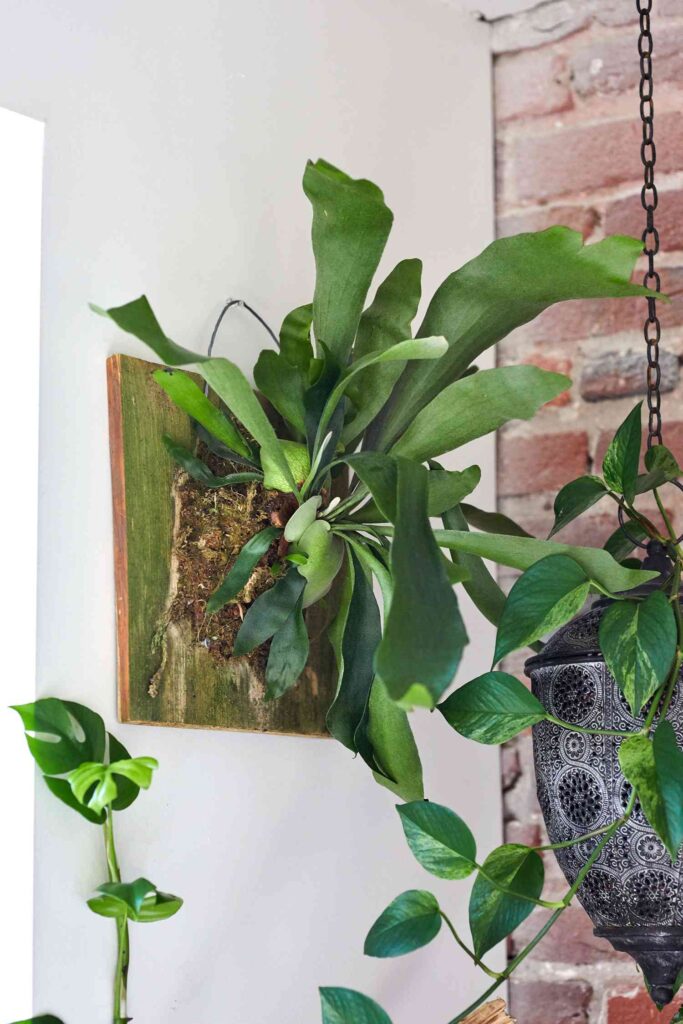
“How to Grow and Care for Staghorn Ferns” from www.thespruce.com and used with no modifications.
Best Mounting Materials
The mounting material you choose significantly impacts both your Platycerium alcicorne’s health and its visual presentation. Cedar boards remain the traditional choice due to their natural rot resistance and rustic appearance, though cork slabs offer a lighter-weight alternative that retains moisture well. For a more naturalistic look, consider tree fern fiber boards, driftwood pieces, or even sections of bark from decay-resistant trees like oak. Whatever base you select, always add a layer of moisture-retentive material between the fern and the mounting surface—sphagnum moss works exceptionally well, though coco fiber or sheet moss can also be effective. Secure your plant using fishing line, plant-safe wire, or biodegradable twine wrapped in a cross-pattern that holds the root ball firmly against the mounting material without damaging the sensitive growing point at the fern’s center. For additional insights on fern care, check out this fern care guide.
Ideal Placement in Your Home
The perfect location for your Platycerium alcicorne balances light requirements with aesthetic considerations. These ferns thrive in bright, indirect light, making them ideal candidates for east or north-facing windows where morning sun or filtered light creates optimal growing conditions. Bathrooms with adequate natural light offer naturally higher humidity levels that staghorns appreciate, while kitchens can also provide suitable environments thanks to the periodic humidity from cooking activities. Avoid placing these ferns near heating vents, air conditioners, or frequently opened exterior doors, as the temperature fluctuations and drafts can stress the plant.
Consider the architectural features of your space when positioning mounted specimens. The dramatic silhouette of a mature staghorn fern creates a living focal point when centered on a wall, while a series of smaller specimens creates rhythm and movement along hallways or stairwells. In spaces with limited wall availability, ceiling-hung installations allow these plants to occupy otherwise unused areas while creating the illusion of bringing the ceiling height down in rooms with overly tall proportions.
Is Platycerium Alcicorne Worth the Effort?
While Platycerium alcicorne requires different care than typical houseplants, the reward-to-effort ratio makes it a worthwhile addition to any plant collection. Few houseplants offer the same dramatic visual impact or conversation-starting appeal as a mature staghorn fern. The initial learning curve—understanding its epiphytic nature and specific watering needs—represents the steepest part of the ownership journey. Once you’ve established a suitable care routine, these ferns prove surprisingly adaptable and forgiving, often becoming less demanding over time as they establish themselves on their mounts. If you’re interested in other ferns, check out sword fern care tips for additional insights.
“My Platycerium alcicorne has become a family heirloom—it’s been with us for over 15 years, moving through three different homes. Visitors always ask about it, and watching it develop new fronds each year feels like witnessing a slow-motion sculpture taking shape. The effort to learn its specific needs has been repaid many times over in the joy it brings.” —Longtime staghorn enthusiast
The longevity of these plants further justifies their care requirements. Unlike trendy houseplants that may lose their appeal after a season or two, staghorn ferns develop character and presence with age, becoming more impressive with each passing year. Their slow growth rate means they won’t outgrow their space quickly, and their ability to thrive for decades makes them potential family heirlooms that can be passed down to future generations of plant enthusiasts.
From a practical perspective, Platycerium alcicorne offers several advantages that offset its specialized care needs. These ferns remain pest-resistant compared to many houseplants, rarely need repotting or remounting, and their non-toxic nature makes them safe choices for homes with pets and children. Their ability to improve indoor air quality while adding a touch of the exotic to your décor provides both aesthetic and health benefits that standard houseplants can’t match.
Frequently Asked Questions
As you embark on your journey with Platycerium alcicorne, you’ll likely encounter questions about specific aspects of care and maintenance. The following answers address the most common concerns that arise when cultivating these remarkable epiphytic ferns.
How often should I water my Platycerium alcicorne?
Watering frequency depends on environmental conditions, mounting method, and season. In average home environments, mounted specimens typically need thorough soaking once every 5-7 days during active growth seasons (spring and summer) and every 10-14 days during dormant periods (fall and winter). The best approach is to monitor your specific plant’s needs rather than adhering to a rigid schedule. When shield fronds feel slightly firm or papery rather than soft and pliable, it’s time to water. For mounted specimens, submersion in room-temperature water for 10-15 minutes provides ideal hydration, while basket-grown plants should be watered until moisture flows freely from drainage holes. For more on fern care tips, you might find this guide helpful.
Environmental factors significantly impact watering needs. Homes with air conditioning, heating, or low humidity may require more frequent watering, while naturally humid environments allow for longer intervals between waterings. Always err on the side of underwatering rather than overwatering, as Platycerium alcicorne recovers more readily from occasional drought stress than from root rot caused by excessive moisture.
Can Platycerium alcicorne survive in low light conditions?
- Platycerium alcicorne can tolerate lower light than many ferns but will not thrive long-term without adequate brightness
- Growth slows significantly in low light, with fewer new fronds produced
- Fronds may become elongated and pale as the plant stretches toward available light
- Sporulation (reproductive activity) rarely occurs in low light conditions
While these ferns can survive temporarily in lower light situations, they require bright indirect light to maintain their distinctive form and vigorous growth. Eastern exposures that provide gentle morning sun represent ideal natural lighting, though north-facing windows with good ambient brightness can also work well. If your home lacks naturally bright locations, supplemental grow lights designed for houseplants can provide the spectrum and intensity needed for healthy growth. For those interested in other ferns, check out sword fern care tips for both indoor and outdoor environments.
When assessing whether your location provides sufficient light, observe your plant’s behavior over time rather than relying solely on human perception of brightness. Healthy specimens produce new fronds regularly during growing season, maintain rich green coloration, and develop the characteristic forking pattern in mature fertile fronds. If your plant shows minimal new growth, pale coloration, or unusually elongated fronds, it’s signaling that light levels need improvement.
Seasonal adjustments may be necessary as daylight hours and sun angles change throughout the year. Plants that receive adequate light during bright summer months might need to be relocated closer to windows or supplemented with grow lights during darker winter periods, especially in northern climates where daylight hours shorten significantly.
How do I know if my staghorn fern needs repotting or remounting?
Platycerium alcicorne typically requires remounting or repotting every 2-3 years, though this timeline varies based on growth rate and mounting method. Signs that your plant has outgrown its current setup include: roots circling excessively or extending far beyond the mounting material; shield fronds covering the entire mounting surface with no room for expansion; mounting material breaking down or losing its structure; or decreased water retention causing the plant to dry out too quickly between waterings. The best time to remount is during the active growing season (spring or early summer) when the plant can quickly establish on its new base. Select a mounting surface approximately 25-30% larger than the current root mass to accommodate several years of growth, and use fresh sphagnum moss or mounting medium to ensure proper moisture retention and a clean growing environment.
What’s the best way to propagate Platycerium alcicorne?
Propagation of Platycerium alcicorne occurs primarily through division of offsets (pups) that mature specimens produce from their base. These baby plants develop their own shield fronds and root systems while still attached to the parent plant, making them relatively easy to separate once they reach about 3-4 inches in diameter. To divide offsets, wait until spring or early summer when active growth resumes after winter dormancy. Carefully detach the pup from the parent plant using a sharp, sterilized knife, ensuring that each division has both shield fronds and a portion of the root mass. Allow the cut surfaces to dry and callus for 24 hours before mounting the new plants on their own supports using fresh sphagnum moss as a base layer.
While spore propagation represents another option, this method requires significantly more time, specialized conditions, and patience. Fertile fronds produce spores in brown patches on their undersides when mature. To collect spores, place a piece of clean paper under a fertile frond showing brown spore patches and allow the paper to catch the fine, dust-like spores as they release. These can then be sown on sterile, moist growing medium and kept in high humidity until tiny gametophytes develop, eventually producing the familiar sporophyte fern form. This process can take months to years before resulting in plants large enough to mount. For more detailed care instructions, you can refer to this Platycerium alcicorne care guide.
- Division of offsets (fastest and most reliable method)
- Spore propagation (slow but produces numerous plants)
- Tissue culture (primarily used commercially)
Regardless of propagation method, young Platycerium alcicorne specimens require higher humidity and more consistent moisture than established plants. Create mini-greenhouses for small divisions using clear plastic containers or bags to maintain humidity, opening them periodically to prevent fungal issues. Gradually acclimate young plants to normal household conditions over several weeks once they show signs of active growth. For more on plant care, explore sword fern care tips that may also apply to your Platycerium alcicorne.
Commercial tissue culture has revolutionized the availability of previously rare Platycerium varieties, though home gardeners typically find division of offsets the most practical and rewarding propagation method. Each division carries the exact genetic makeup of the parent plant, ensuring that any desirable characteristics will be preserved in the new specimen.
Why are the shield fronds on my staghorn fern turning brown?
Shield fronds naturally turn brown as they age, transitioning from green photosynthetic structures to papery protective shields. This normal process shouldn’t cause concern—in fact, these brown shields continue to serve important functions, protecting the root system and collecting nutrients. However, if shield fronds turn brown prematurely or develop black areas, this may indicate problems requiring attention.
Excessive moisture represents the most common cause of problematic shield frond browning. When shield fronds remain wet for extended periods, particularly in cooler temperatures or with limited air circulation, fungal pathogens can take hold. This type of damage typically appears as black or dark brown areas that feel soft or mushy rather than papery. Improve air circulation around your plant, reduce watering frequency, and remove any severely affected shield fronds to prevent spread to healthy tissue.
Extreme dryness can also cause shield fronds to brown prematurely, though this typically produces a crisp, papery texture throughout the frond rather than localized soft spots. If your mounting medium has broken down or become water-repellent with age, the shield fronds may dry out faster than normal. Remounting with fresh materials usually resolves this issue. In particularly dry environments, occasional misting of the mounting material (not the fronds themselves) can help maintain appropriate moisture levels between regular waterings.
Remember that while the oldest shield fronds will naturally turn completely brown, the plant should always be producing new green shield fronds as it grows. A healthy Platycerium alcicorne maintains a balance of green, actively growing shield fronds and older brown ones. If you notice no new shield frond development for an extended period, assess your overall care routine, particularly focusing on light levels, watering practices, and whether the plant might benefit from fertilization or remounting.