
Key Takeaways
- Australian Shepherds need secure fencing at least 6 feet tall with buried barriers to prevent escapes through digging or jumping.
- Circular paths and distinct activity zones can satisfy natural herding instincts while reducing destructive behaviors.
- Strategic garden design with solid fence sections and strategic plantings can significantly reduce excessive barking triggered by visual stimuli.
- Creating designated digging areas and DIY herding courses helps channel your Aussie’s natural prey drive into positive activities.
- ASPCA-approved plants and thoughtful shade solutions are essential for creating a safe, enriching outdoor environment for your Australian Shepherd.
Creating the perfect garden for your Australian Shepherd isn’t just about aesthetics—it’s about designing a space that honors their herding heritage while keeping them safe, engaged, and happy. These intelligent, energetic dogs need more than just a patch of grass to thrive. A thoughtfully designed outdoor space can dramatically reduce problem behaviors while providing the mental and physical stimulation your Aussie craves.
Understanding your Australian Shepherd’s unique needs is the first step toward creating their ideal outdoor environment. These working dogs were bred to herd livestock for hours on end, covering miles of terrain with boundless energy and focus. ASPCA Pet Insurance recognizes that proper environmental enrichment is crucial for preventing the anxiety and destructive behaviors that can develop when herding breeds don’t have appropriate outlets for their natural instincts.
Your Aussie’s garden should be more than just a bathroom break location—it should be a canine wonderland that engages all their senses while keeping them secure. Let’s dig into the essential elements that transform an ordinary backyard into an Australian Shepherd paradise.
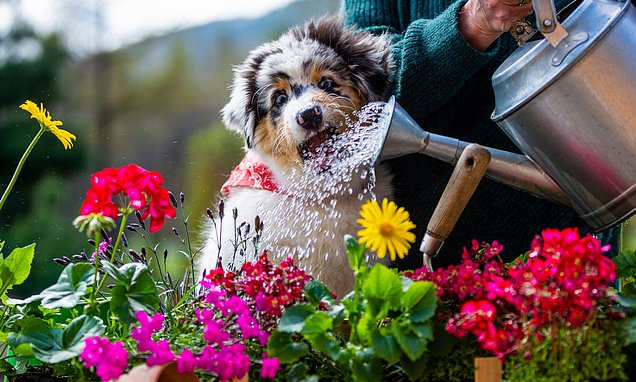
“garden plants that are harmful to dogs …” from www.dailymail.co.uk and used with no modifications.
Article-at-a-Glance
Australian Shepherds have specific needs that your garden design should address: security to prevent escapes, space for running, features that reduce nuisance barking, elements that channel prey drive constructively, and safe plants. This comprehensive guide covers everything from fence specifications to plant selections, helping you create a garden where your Aussie can thrive while preserving your landscape’s beauty and functionality.
We’ll explore practical solutions like proper fence height, strategic layout planning, and ASPCA-approved plants that can withstand the wear and tear of an active herding dog. With thoughtful design, you can create a harmonious outdoor space that satisfies both your aesthetic preferences and your Australian Shepherd’s instinctual needs.
By addressing these specific requirements, you’ll not only prevent common behavior problems but also enhance your bond with your four-legged companion through a shared outdoor sanctuary.
Australian Shepherd Garden Essentials
✓ Secure 6-foot minimum fencing with dig guards
✓ Circular pathways for natural herding movement
✓ Visual barriers to reduce reactive barking
✓ Designated areas for digging and play
✓ Safe, durable plant selections
✓ Multiple shade options and water access points
Why Your Australian Shepherd Needs a Custom-Designed Garden
Australian Shepherds aren’t just pets—they’re working dogs with centuries of herding instincts encoded in their DNA. Without proper outlets for these powerful drives, Aussies often develop problematic behaviors like excessive barking, digging, destructive chewing, and even escape attempts. A garden specifically designed for your herding breed transforms these potential challenges into opportunities for enrichment.
The intelligence that makes Australian Shepherds exceptional working partners also means they need mental stimulation beyond what a standard yard provides. These dogs thrive on problem-solving and having “jobs” to do. Your garden design can incorporate elements that engage their mind while safely channeling their energy—preventing the boredom that often leads to unwanted behaviors.
Beyond behavior management, a well-designed garden creates opportunities for bonding with your Aussie through shared outdoor activities. Whether it’s navigating obstacle courses together or simply having space to play fetch without constraints, your garden becomes a venue for strengthening your relationship while meeting your dog’s physical and psychological needs.
Secure Fencing: The Foundation of Aussie Safety
For Australian Shepherds, standard fencing rarely suffices. These athletic, determined dogs can clear impressive heights when motivated and will exploit any weakness in your perimeter. Proper containment isn’t just about preventing escapes—it’s about creating a secure environment where your Aussie can safely enjoy freedom without constant supervision.

“Are Australian Shepherds really not a …” from www.reddit.com and used with no modifications.
Best Fence Materials for Determined Herders
When selecting fencing materials for an Australian Shepherd garden, durability and visibility are key considerations. Chain link fencing provides excellent strength but offers too much visual stimulation for many Aussies, potentially triggering excessive barking at passing stimuli. Wooden privacy fences offer better visual barriers but require regular maintenance to prevent determined chewers or diggers from creating escape routes. For additional tips on managing your herding dog’s behavior, you might find this guide on training and socializing herding dog breeds helpful.
Vinyl fencing combines durability with lower maintenance requirements, though quality varies significantly between products. For the most secure option, consider commercial-grade welded wire panels with smaller openings at the bottom to prevent paws from gaining purchase. Whatever material you choose, ensure all hardware is secure and gates have redundant locking mechanisms—Australian Shepherds are notorious for learning how to manipulate simple latches.
Remember that fence material selection should account for your specific Aussie’s behavior patterns. Some are jumpers, others are diggers, and many are both. Observe your dog’s tendencies and reinforce your fencing accordingly, paying special attention to corners where determined dogs often concentrate their escape efforts.
Ideal Fence Height: 6 Feet Minimum
Six feet is the absolute minimum fence height recommended for containing an Australian Shepherd. These athletic dogs can easily clear lower barriers, especially when motivated by prey drive or the desire to herd something moving outside your yard. For particularly athletic individuals or those with demonstrated jumping abilities, seven or even eight-foot fencing may be necessary.
Beyond height alone, consider the fence’s design—avoid horizontal elements that could serve as “ladder rungs” for a climbing Aussie. The top of the fence should be smooth without decorative elements that could provide footholds. Some owners find that adding an inward-facing 45-degree “coyote roller” or similar device at the fence top provides additional security against determined jumpers.
Preventing Digging Escapes: Buried Barriers
Australian Shepherds often combine their intelligence with natural digging abilities to create escape routes under fencing. Effective countermeasures include burying hardware cloth or fence material 12-18 inches below ground level, extending outward in an “L” shape. This underground barrier frustrates digging attempts before they can create viable escape tunnels.
Gate Security Features Worth Installing
Gates represent the most vulnerable point in your perimeter and deserve special attention when you have an Australian Shepherd. Self-closing mechanisms ensure gates don’t remain accidentally open, while childproof locks or combination locks prevent clever Aussies from learning to manipulate simple latches. Some owners install double-gate systems (similar to airlock doors) to provide an additional layer of security during entries and exits.
Consider adding visual and auditory cues near gates to remind family members and visitors about security protocols. A simple sign saying “Please ensure gate is latched—Aussie escape artist on premises” can prevent the heartache of a lost pet. For additional peace of mind, backup systems like GPS trackers attached to your dog’s collar provide location information should containment measures ever fail.
Garden Layout: Size and Shape That Satisfies Herding Instincts
The configuration of your garden space significantly impacts how well it meets your Australian Shepherd’s needs. These dogs were bred to work expansive properties, covering miles daily while herding livestock. While few pet owners can provide acreage, thoughtful design can maximize even modest spaces to satisfy herding instincts. For more tips on creating a safe and beautiful garden for your dog, check out this ultimate guide.
Consider your garden from your Aussie’s perspective—they value running paths, vantage points, and varied terrain more than manicured lawns. Strategic layout planning creates a space that feels larger and more engaging to your dog while preserving areas for human enjoyment.

“Fenced Yard and Leaving Shepherd Alone …” from www.reddit.com and used with no modifications.
Minimum Space Requirements for Active Aussies
- Small yards (under 1,000 square feet): Require daily off-property exercise plus creative enrichment
- Medium yards (1,000-3,000 square feet): Can accommodate basic running with supplemental activities
- Large yards (3,000+ square feet): Allow for more natural movement patterns and dedicated activity zones
- Multi-acre properties: Ideal for full expression of herding behaviors with supervised exploration
Even with limited space, prioritizing unobstructed running paths along the perimeter can provide more exercise value than cluttered central areas. Remember that Australian Shepherds value movement opportunities over static space—a thoughtfully designed smaller yard with engaging elements often serves them better than a larger but barren area.
For urban dwellers with minimal outdoor space, consider whether your lifestyle can compensate for limited yard area. Australian Shepherds can adapt to smaller gardens when provided with regular dog park visits, hiking opportunities, or participation in dog sports like agility or herding trials. The garden then becomes one element in their enrichment rather than the primary exercise venue. For more tips on creating a dog-friendly garden, check out this ultimate guide.
Whatever your space constraints, avoid the temptation to cram too many features into limited area. Your Aussie needs open space for running and playing more than elaborate structures that consume valuable room for movement.
Circular Paths for Natural Herding Patterns
Australian Shepherds naturally move in curved patterns when herding—it’s instinctual behavior that helps them control livestock movement. Incorporating circular or curved pathways in your garden design allows your Aussie to express these natural movement patterns even without sheep to herd. A continuous loop around the perimeter with no dead ends provides the most satisfying running experience for herding breeds.
These pathways can be formal garden elements with proper surfacing or simply mown areas in naturalistic landscapes. The key is creating clear routes that invite your Aussie to run circuits rather than back-and-forth patterns that quickly become boring. For added enrichment, vary the width of these paths and include gentle curves that require your dog to adjust their stride and direction—creating more mental engagement during physical exercise.
Create Distinct Activity Zones
Breaking your garden into purpose-driven zones helps maximize functionality while preserving aesthetics. A well-designed Australian Shepherd garden typically includes separate areas for high-energy play, relaxation, elimination, and human enjoyment. This zoning approach prevents your entire yard from becoming a doggy free-for-all while ensuring your Aussie’s essential needs are met.
Sound-Dampening Landscape Features
Strategic landscaping can significantly reduce sound transmission both into and out of your yard. Dense shrubs and evergreen trees planted along fence lines absorb sound waves before they trigger your Aussie’s alert barking. Materials like cork, recycled rubber, and living walls can be incorporated into your garden design to further muffle urban noises that might otherwise stimulate excessive barking. Additionally, consider using ASPCA nontoxic plants to ensure a safe environment for your pets.
Channel Prey Drive Into Positive Activities
Australian Shepherds possess powerful prey drive—an instinct that once helped them control livestock but can become problematic in domestic settings. Without appropriate outlets, this drive manifests as chasing squirrels, digging after burrowing animals, or fixating on movement beyond your fence line. Thoughtfully designed garden features can redirect these instincts into enriching, non-destructive activities that satisfy your Aussie’s natural urges while preserving your landscape.
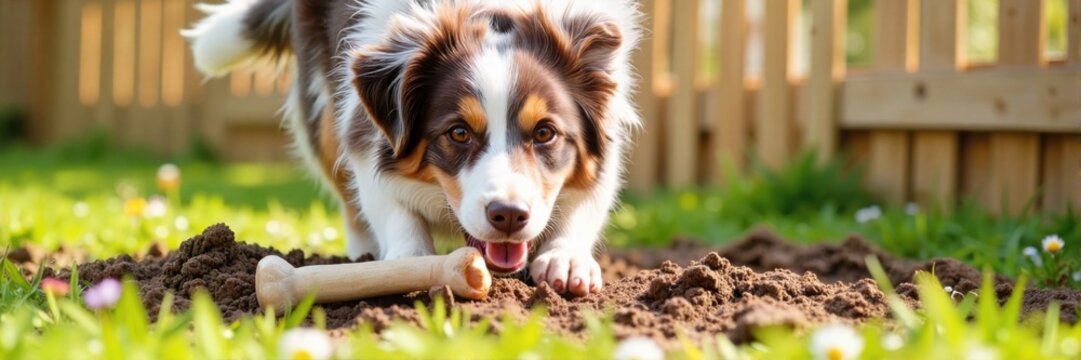
“Dog Digging Grass Images – Browse 2,168 …” from stock.adobe.com and used with no modifications.
Designated Digging Areas Your Aussie Will Actually Use
Creating an Irresistible Digging Pit
When planning your garden, consider incorporating safe garden ideas that will keep your Australian Shepherd engaged and happy. By providing a designated digging area, you can satisfy your dog’s natural instincts while keeping the rest of your garden intact.
• Location: Partially shaded area away from fence lines
• Size: Minimum 4’x4′ for adult Australian Shepherds
• Material: Mix of sand and soft soil (avoid pure sand which can be hot)
• Border: Natural stone, untreated wood, or commercial edging
• Incentives: Buried toys, occasional treats, praise for appropriate use. For more ideas on creating a safe and beautiful garden for your dog, check out this ultimate guide.
The key to a successful digging area is making it more appealing than your garden beds. Start by observing where your Aussie naturally attempts to dig—they’re often drawn to cool, loose soil in shaded areas. Position your designated digging zone in a similar microclimate to increase the likelihood they’ll choose it over your prized perennials.
Training your Australian Shepherd to use their digging pit requires consistency and positive reinforcement. Whenever you catch them digging inappropriately, immediately redirect them to the designated area and reward them when they dig there instead. Regularly “seed” the digging pit with partially buried toys and treats to maintain interest, especially during the training phase when you’re establishing the habit.
For persistent diggers, consider temporarily making unauthorized digging spots less appealing by placing chicken wire just below the soil surface in problem areas, or using pet-safe deterrent sprays containing bitter apple or citrus scents. Always pair these deterrents with positive reinforcement at the approved digging location for maximum effectiveness.
DIY Herding Course Elements
Creating a simple herding course satisfies your Australian Shepherd’s instinctual need to control movement without requiring livestock. Basic elements can be constructed from common materials and adapted to fit gardens of various sizes. The goal is to provide opportunities for controlled chasing, circling, and direction changes that mimic the mental and physical demands of herding work.
Start with large exercise balls secured to poles that allow them to spin when nudged—these simulate moving livestock without requiring constant human involvement. Position several at different heights to create varied challenges. For more advanced enrichment, install a flirt pole (essentially a large fishing rod with a toy attached) that allows you to control the movement of a “prey” object while your Aussie practices controlled chasing and stopping on command.
For Australian Shepherds with formal herding experience or strong instincts, consider a more elaborate setup with stakes positioned to create slalom courses that require precision movement. Adding verbal cues that mirror herding commands (“come bye” for clockwise movement, “away” for counterclockwise) adds mental stimulation to the physical exercise. Even modest-sized gardens can incorporate scaled-down versions of these elements to provide valuable enrichment.
Toy Rotation Stations
Creating designated locations for different types of toys keeps your Australian Shepherd engaged while preventing toy scatter throughout your garden. Weather-resistant containers positioned strategically around your yard can house different categories of toys—tugging items near open play areas, puzzle toys in shaded rest zones, and chase toys along running paths. Regularly rotating which toys are available maintains novelty and interest, crucial for intelligent breeds like the Aussie.
Surface and Terrain Options for Paw Health
Australian Shepherds cover miles of varied terrain when working livestock, developing tough, resilient paw pads in the process. Domestic Aussies benefit from similar terrain diversity in their garden environment, which strengthens paw tissues and provides valuable proprioceptive feedback that improves overall coordination and body awareness.
A well-designed Aussie garden incorporates multiple walking surfaces rather than uniform coverage. This variety not only benefits physical development but also creates natural speed controls—your dog will naturally slow down on certain surfaces and speed up on others, creating a more engaging exercise experience within limited space.
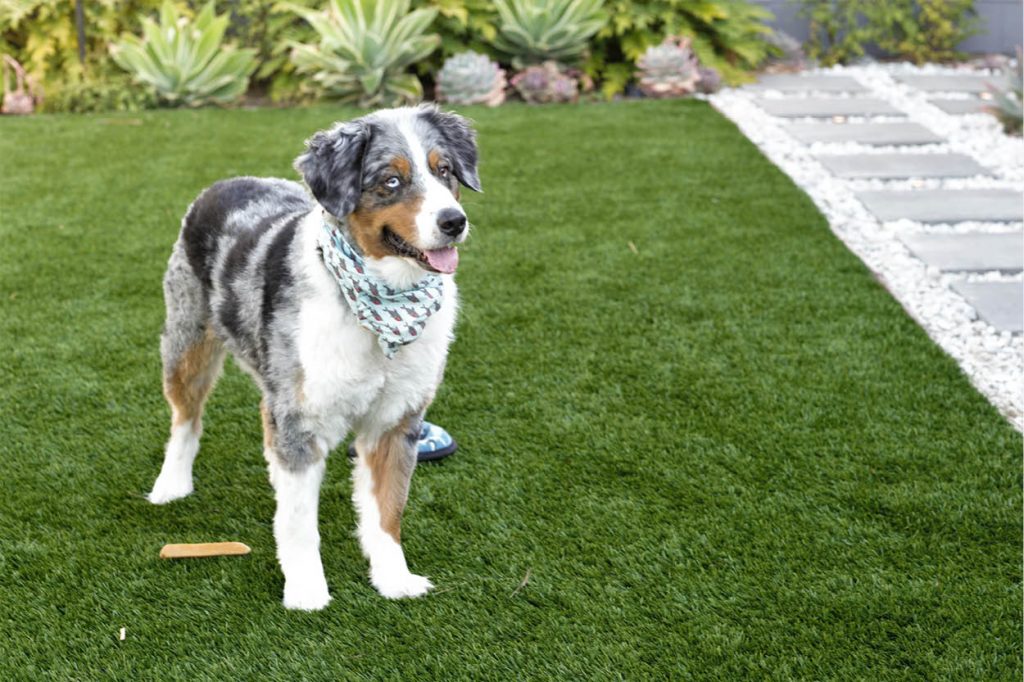
“Artificial Turf for Dogs: Why and Where …” from themotzgroup.com and used with no modifications.
Grass Varieties That Stand Up to Active Dogs
Traditional ornamental lawns rarely survive the running patterns of an energetic Australian Shepherd. For high-traffic areas, consider tough grass varieties like Bermuda grass, zoysia, or perennial ryegrass that can withstand regular pounding from active paws. These hardy varieties recover more quickly from wear and require less pampering than finer turf grasses, making them practical choices for herding dog households. For more tips on creating a pet-friendly yard, check out the ASPCA’s guide.
Consider separating your lawn into distinct zones with different grass types based on anticipated use. Reserve more delicate ornamental grass varieties for low-traffic areas where your Aussie rarely runs, while planting tougher varieties along established running paths. Some owners find that creating dedicated “dog lawn” areas with specialized seed blends developed specifically for canine traffic provides the best compromise between durability and appearance. For more ideas on creating a pet-friendly garden, check out these safe garden ideas.
Safe Mulch Alternatives
Many common garden mulches pose hazards for curious Australian Shepherds who may dig in or even ingest landscape materials. Avoid cocoa mulch (which contains compounds toxic to dogs), walnut shells (which can cause obstructions), and treated wood chips (which often contain harmful chemicals). Instead, opt for safer alternatives like pine straw, untreated cedar chips, or rubber mulch specifically formulated for playground use, which provides excellent durability in high-traffic areas while remaining safe if accidentally ingested in small quantities.
Creating Varied Terrain for Physical Challenge
Incorporating modest elevation changes and varied walking surfaces creates natural agility challenges that build your Australian Shepherd’s coordination and confidence. Something as simple as a line of flat stepping stones, a small gravel mound, or logs arranged as balance beams provides valuable proprioceptive input while making even a modest garden more interesting from your dog’s perspective. These natural obstacles encourage mindful movement rather than flat-out running, creating enrichment opportunities even in smaller spaces.
Shade Solutions and Water Features
- Strategically placed trees provide natural cooling and protection from UV exposure
- Shade sails offer immediate coverage in areas where trees aren’t established
- Covered dog houses or cooling platforms create retreat spaces during peak heat
- Dog-safe water features provide both cooling opportunities and sensory enrichment
- Multiple water stations throughout the garden prevent dehydration during play
Australian Shepherds originated in regions with moderate climates and can struggle in extreme heat, especially those with thicker coats. Their double coat provides insulation but also increases risk of overheating during intense activity. Creating multiple shade options throughout your garden allows your Aussie to regulate their temperature by moving between sun and shade as needed.
Effective shade planning considers how shadows move throughout the day, ensuring protection during the hottest afternoon hours when heat stress risk is highest. Remember that ground temperatures can remain dangerously high even in shaded areas during heat waves, so consider sun vs. shade care tips as part of your comprehensive heat management strategy.
Water features serve dual purposes in an Australian Shepherd garden—providing cooling opportunities while adding sensory enrichment through movement and sound. Even simple options like a shallow wading pool refreshed regularly or a motion-activated sprinkler system create valuable cooling resources during hot weather while adding dynamic elements that engage your Aussie’s curiosity.
Natural Shade vs. Constructed Options
Trees provide ideal shade for Australian Shepherds, offering cooling through both shadow and evapotranspiration—the natural process where moisture released through leaves cools surrounding air. Strategic placement of deciduous trees allows winter sun penetration while blocking summer heat. When selecting trees, avoid toxic varieties like cherry trees (whose pits contain cyanide compounds) and choose species with non-toxic leaves and limited fruit drop to minimize ingestion concerns.
For immediate shade while trees mature or in areas where planting isn’t feasible, constructed options like pergolas, shade sails, or canopies provide valuable heat protection. Look for UV-resistant materials designed for outdoor use, and ensure all structures are securely anchored to withstand wind and weather. Position these features to maximize protection during mid-day and afternoon hours when heat risk is highest for active Australian Shepherds.
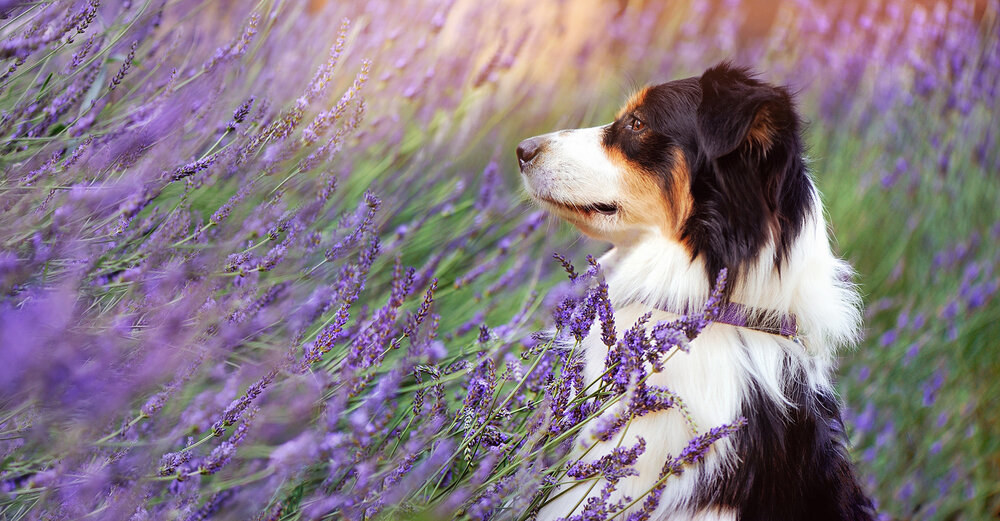
“Essential Oils to Help Your Dog’s …” from lindsaygiguiere.com and used with no modifications.
Fresh Water Access Points
Australian Shepherds need constant access to fresh, clean water, especially during active play. Single water sources are insufficient for larger gardens—instead, position multiple water stations throughout your yard to ensure your Aussie never needs to interrupt play for long treks to drink. Elevated bowls reduce debris contamination and are easier for adult dogs to access without straining their neck, while ground-level options may be better for puppies or seniors with mobility limitations.
Consider automatic water dispensers that maintain consistent levels and prevent emptying during extended outdoor sessions. Models with filters remove contaminants while circulating water to prevent stagnation and mosquito breeding. During hot weather, adding ice cubes to water stations helps lower your Aussie’s core temperature when they drink, providing additional cooling benefits beyond simple hydration.
DIY Cooling Stations for Hot Days
Create dedicated cooling zones by combining shade, airflow, and optional moisture for maximum heat relief. A simple cooling station might feature an elevated mesh bed positioned under dense shade with a small battery-powered fan to improve air circulation. More elaborate setups might include misting systems that activate during peak heat hours or cooling mats filled with pressure-activated gel that remains several degrees below ambient temperature without refrigeration—perfect for Australian Shepherds who need periodic cooling breaks during active play.
ASPCA-Approved Plants That Thrive With Aussies
Plant selection requires special consideration when gardening with Australian Shepherds, who may occasionally nibble greenery or dig around plant bases. The ASPCA maintains comprehensive lists of dog-safe plants that should form the foundation of your garden plan. Beyond toxicity concerns, look for sturdy varieties that withstand occasional brushing from an active dog and plants with flexible stems rather than brittle branches that might snap during play. Consider creating tiered plantings with sturdy, dog-resistant varieties at ground level and more delicate specimens elevated in containers or raised beds beyond your Aussie’s reach. For example, sword ferns are known to be pet-safe and can be a great addition to your garden.
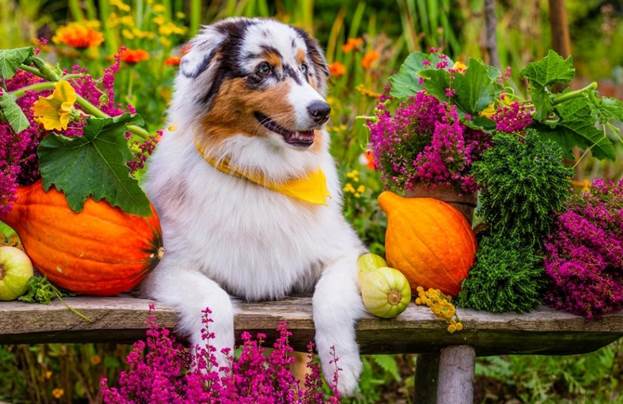
“Are tomatoes toxic to pets? Experts …” from www.companionlife.co.uk and used with no modifications.
Sturdy Border Plants That Can Take a Beating
- Ornamental grasses like Fountain Grass and Blue Fescue provide visual interest while withstanding dog traffic
- Creeping Juniper offers low-growing, dense coverage that discourages digging
- Russian Sage combines durability with pollinator attraction and natural pest repellent properties
- New Zealand Flax features tough, strap-like leaves that bounce back after being brushed by running dogs
- Day Lilies establish quickly and can recover from occasional trampling
When selecting border plants for Australian Shepherd gardens, prioritize varieties with flexible stems that bend rather than break when your energetic dog inevitably crashes through them during play. Ornamental grasses excel in these settings because their root systems remain undisturbed even when above-ground portions experience damage. Most ornamental grasses also recover quickly from trampling and provide interesting texture and movement that enhances your garden aesthetically. For more on attracting pollinators and selecting companion plants, explore additional resources.
Dense, woody groundcovers like creeping juniper create effective barriers that discourage Australian Shepherds from entering planting beds while standing up to occasional paw traffic. These plants form thick mats that protect soil from erosion and gradually train your dog to respect garden boundaries through their dense, somewhat uncomfortable texture that most dogs naturally avoid stepping on after initial exploration. For more ideas on maintaining a safe garden, explore safe garden ideas for pets.
For visual interest and durability, consider plants with naturally flexible stems like Russian sage, which springs back after being disturbed and offers the added benefit of mild pest-repellent properties. The silvery foliage adds aesthetic appeal while withstanding the occasional boundary test from your Aussie. New Zealand flax provides similar resilience with dramatic vertical interest, creating natural boundaries your dog will learn to navigate around rather than through.
Remember that even sturdy plants need protection during their establishment phase. Temporary barriers around new plantings give roots time to develop before facing the full impact of an Australian Shepherd’s activities. Once established, many of these plants will require minimal intervention to coexist successfully with your energetic companion.
Safe Sensory Plants for Enrichment
Australian Shepherds experience gardens primarily through scent, followed by texture and visual interest. Incorporating safe sensory plants creates natural enrichment that engages your Aussie’s remarkable nose while providing gentle stimulation. Herbs like chamomile, mint, rosemary and lavender offer fascinating scent profiles completely safe for curious dogs who might take an exploratory nibble. These aromatic plants can be strategically positioned along pathways where your Aussie’s movement will release their scents, creating an ever-changing sensory experience during garden exploration.
Beyond scent, consider plants with interesting textures that invite gentle investigation. Lamb’s ears (Stachys byzantina) features velvety-soft leaves that many dogs enjoy touching with their nose or paws, while ornamental grasses provide rustling sounds when brushed against during play. Positioning these sensory plants at dog height rather than only in elevated beds maximizes their enrichment value for your Australian Shepherd, creating a garden that engages all their senses.
Toxic Plants to Remove Immediately
Several common garden plants pose serious health risks to Australian Shepherds and should be completely eliminated from your landscape. Immediately remove any yew (Taxus species), sago palm, castor bean, foxglove, lily of the valley, autumn crocus, and oleander—all of which can cause severe symptoms or death even in small quantities. Other concerning plants include azalea, rhododendron, tulip bulbs, daffodil bulbs, and members of the nightshade family (including tomato and potato plants), which contain compounds toxic to dogs, especially when consumed in larger amounts.
When assessing your existing landscape, don’t forget to evaluate trees as well as smaller plants. Oak acorns, black walnut husks, horse chestnuts, and fruit pits from cherries, peaches, and plums all contain compounds harmful to dogs. While mature Australian Shepherds may not deliberately eat these items, younger dogs and puppies often explore with their mouths, putting them at higher risk. The ASPCA Animal Poison Control Center (888-426-4435) should be contacted immediately if you suspect your Aussie has ingested a toxic plant.
Container Gardens: Keeping Precious Plants Protected
Container gardening provides the perfect compromise for growing less dog-resistant plants in an Australian Shepherd household. Elevated planters, hanging baskets, and window boxes allow you to grow delicate flowers, non-dog-safe plants, and edibles beyond your Aussie’s reach. This approach creates vertical interest in your garden while clearly delineating dog spaces from plant-priority zones, allowing peaceful coexistence between your botanical interests and your energetic herding dog.
Year-Round Garden Maintenance for Aussie Owners
- Inspect fencing weekly for signs of digging, chewing, or wear that could lead to escapes
- Check plants regularly for toxic mushrooms that can appear overnight after rain
- Remove fallen fruit from trees immediately to prevent ingestion of pits or fermented fruit
- Clear yard of sticks and debris that could become choking hazards during play
- Monitor for pest control products used by neighbors that might drift into your yard
Seasonal maintenance becomes even more important when sharing your garden with an Australian Shepherd. Spring cleanup should include thorough inspection for emerging toxic plants, particularly bulbs that might have naturalized beyond their original planting areas. Remove winter debris that might hide hazards before allowing your Aussie full garden access, and check fence lines for winter damage that might have created potential escape routes.
Summer maintenance focuses on heat management and water quality. Clean water sources daily during hot weather to prevent algae growth and mosquito breeding, while ensuring shade structures remain secure against summer storms. Check ground temperatures in play areas during peak heat—if you cannot comfortably hold your palm against the surface for 10 seconds, it’s too hot for your Aussie’s paw pads and access should be limited to cooler periods.
Fall brings unique challenges with dropped fruits, acorns, and certain mushrooms that typically emerge with autumn rains. Australian Shepherds may investigate these interesting objects by mouthing or ingesting them, creating potential toxicity risks. Regular clean-up becomes particularly important during this season of natural abundance. Additionally, falling leaves can disguise holes or low spots that might pose injury risks during play, warranting more frequent inspections of running areas.
Winter preparation should include protecting vulnerable plants that provide important shade or boundaries during warmer months. Australian Shepherds typically remain active regardless of weather, so maintaining secure boundaries remains crucial even during colder seasons when you might spend less time in the garden yourself. Consider how snow accumulation might affect fence height effectively, possibly creating drift piles that could facilitate jumping by a determined Aussie.
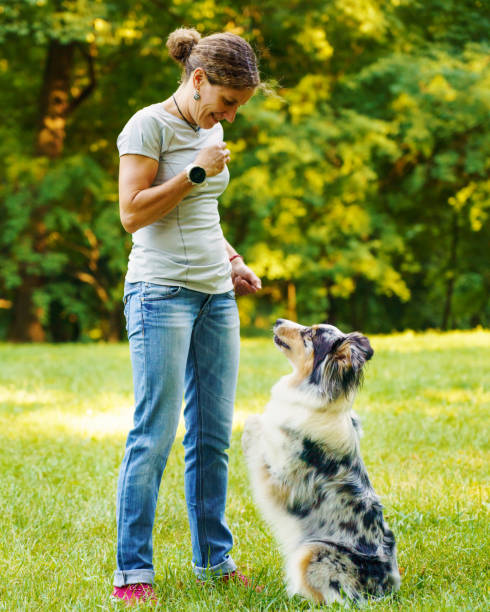
“Woman With Her Australian Shepherd Dog …” from www.istockphoto.com and used with no modifications.
Weekly Safety Checks
Establish a routine weekly inspection of your entire garden perimeter, checking fence integrity and looking for early signs of digging or chewing damage. Australian Shepherds are problem-solvers who may work persistently at potential escape routes, making early intervention crucial. Pay special attention to gates and hardware, testing latches and hinges for proper function, especially after weather events that might have caused shifting or expansion/contraction of materials.
Include plant health in your weekly assessment, looking for signs of toxic mushrooms that can appear quickly after rain, especially in mulched areas or around tree bases. Check lawn areas for foxtails, burrs and other plant awns that can become embedded in Australian Shepherds’ thick coats or between paw pads, causing painful infections if not promptly removed. These quick inspections prevent small issues from developing into significant problems while ensuring your garden remains a safe haven for your Aussie. For more tips on creating a safe and beautiful garden for your dog, visit this ultimate guide.
Seasonal Updates to Keep Your Aussie Engaged
Australian Shepherds thrive on novelty and can become bored with even the best-designed garden if it remains static year-round. Seasonal refreshes maintain engagement while addressing changing needs throughout the year. Consider rotating toys and play equipment quarterly, introducing weather-appropriate options like cooling toys in summer and more durable chew items during winter months when outdoor time might be more limited. For more ideas, check out this guide to creating a safe and beautiful garden for your dog.
Different seasons also offer opportunities to introduce new scents and sensory experiences. Spring might feature herb plantings with novel scents, summer could include shallow water features for cooling exploration, fall might introduce interesting textured gourds or pumpkins as safe play objects, and winter could include scent games with treats hidden in accessible areas. These seasonal enrichment strategies prevent habitat fatigue while providing appropriate stimulation as environmental conditions change.
Your Aussie-Friendly Garden: Final Considerations
Creating the ideal garden for your Australian Shepherd is an evolving process rather than a one-time project. Observe how your dog interacts with different garden elements and be willing to modify your design based on their preferences and behaviors. Some Aussies naturally respect plant boundaries while others require more structured deterrents. Some prefer certain types of surfaces for running while avoiding others. Your willingness to adapt based on observation will result in a more harmonious shared space that truly meets your dog’s needs while maintaining the aesthetic and functional elements important to you.
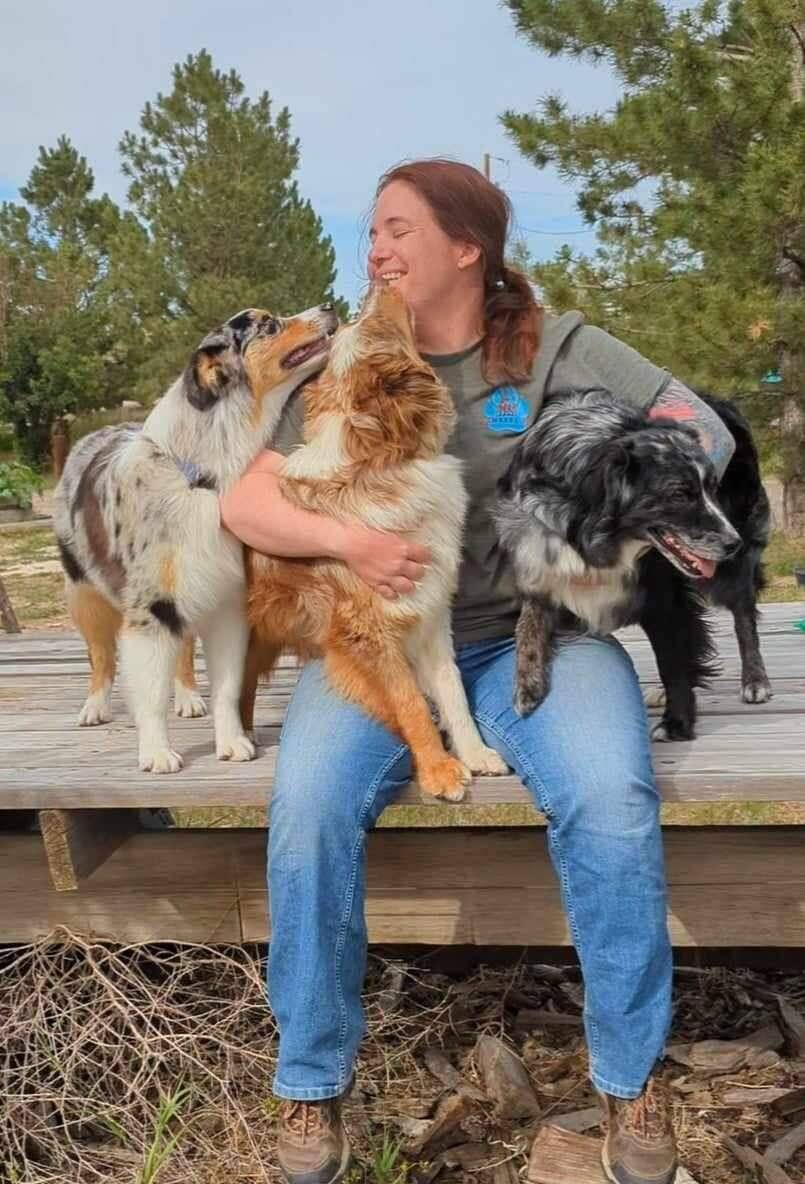
“Australian Shepherd Puppy Training …” from www.legacyranch.org and used with no modifications.
Remember that even the best-designed garden cannot completely replace the need for interactive play and training with your Australian Shepherd. These intelligent, people-oriented dogs crave engagement with their humans above all else. The garden you create should facilitate this relationship rather than serve as a substitute for interaction. When thoughtfully designed and maintained, your Aussie-friendly garden becomes a venue for strengthening your bond while providing a safe, enriching environment that honors your herding dog’s heritage and meets their unique needs.
Frequently Asked Questions
The following questions address common concerns Australian Shepherd owners have when designing or modifying their gardens. These practical answers provide quick solutions to specific challenges while supporting the broader principles of creating safe, enriching outdoor environments for herding breeds.
Can Australian Shepherds be left alone in the yard for extended periods?
Australian Shepherds should not be left alone in your garden for extended periods, regardless of how well-designed the space might be. These highly social, intelligent dogs form strong bonds with their people and experience stress when isolated for long periods. Extended solitary confinement often leads to nuisance barking, destructive digging, or escape attempts, even in otherwise well-behaved dogs. To better manage their behavior, it’s essential to train and socialize herding dog breeds effectively.
While a properly designed garden provides essential enrichment, it works best as a supplement to human interaction rather than a substitute. Your Aussie will benefit most from shorter supervised garden sessions interspersed with indoor time and structured activities rather than long periods of outdoor isolation. If your schedule requires longer absences, consider dog daycare, dog walkers, or companion animals to provide the social interaction these herding dogs require for emotional wellbeing.
How do I keep my Aussie from destroying my garden plants?
Successful plant protection requires a combination of physical barriers, training, and appropriate alternative outlets for natural dog behaviors. Start by creating clear visual boundaries around precious plants using decorative edging, river rocks, or low ornamental fencing that signals “off-limits” areas to your Australian Shepherd. Simultaneously, provide approved digging areas, appropriate chew items, and engaging toys that meet the needs your dog might otherwise satisfy through plant destruction.
What exercise equipment is worth adding to my Aussie’s garden?
The most valuable garden equipment for Australian Shepherds provides opportunities for both physical exercise and mental stimulation. Agility elements like jumps, tunnels and weave poles offer excellent versatility, developing coordination while providing structured exercise you can participate in together. These items need not be competition-grade—DIY versions using PVC pipe and inexpensive materials work well for home use and can be easily moved or stored when not in use.
For independent play, consider a spring pole (essentially a strong spring attached to a rope toy suspended from a tree limb or sturdy post) that allows for self-directed tugging games. Flirt poles—long poles with toys attached to a rope at one end—provide excellent prey-drive satisfaction with minimal space requirements. For mental stimulation, puzzle feeders and treat-dispensing toys that can be used outdoors create engaging challenges that reward problem-solving skills.
Remember that equipment value depends largely on your involvement—Australian Shepherds typically engage more enthusiastically with items you incorporate into interactive play rather than expecting them to use independently. The best garden equipment facilitates bonding activities rather than serving as a substitute for your attention and engagement.
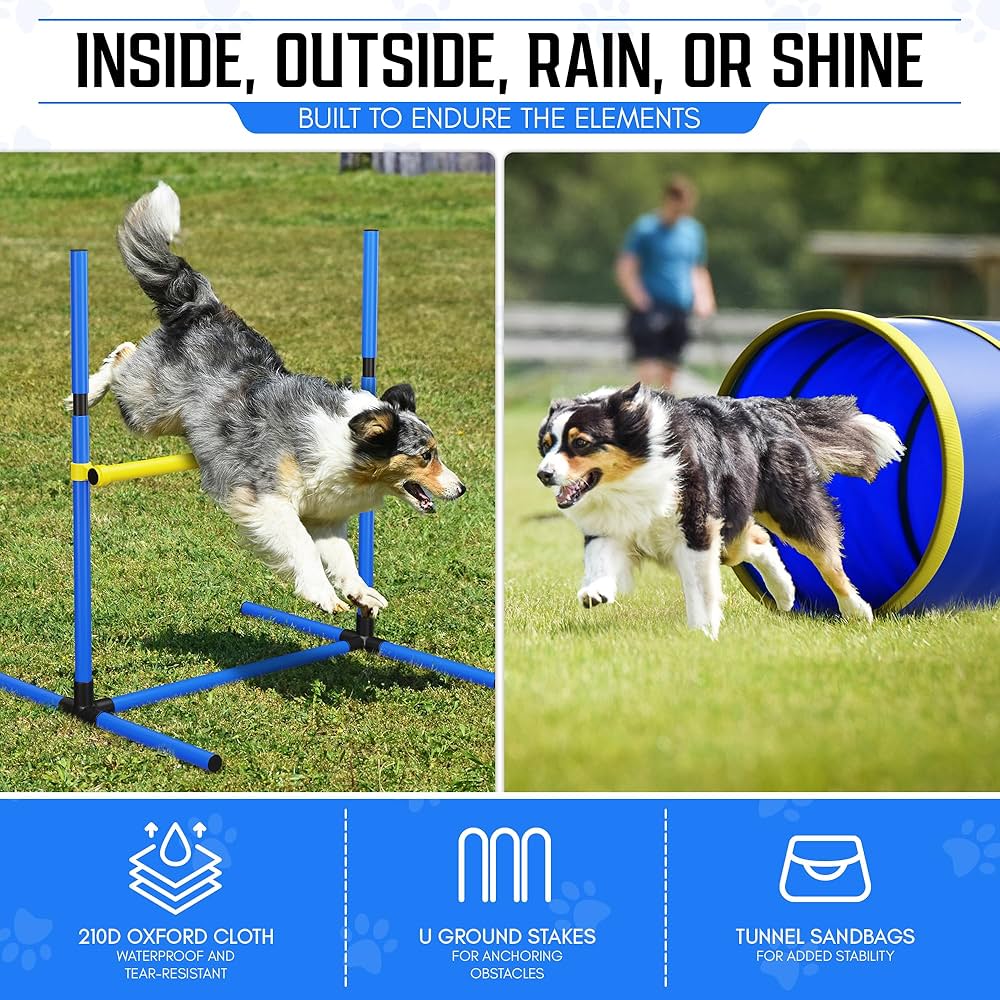
“Mighty Equipped Dog Agility Equipment …” from www.amazon.com and used with no modifications.
Are there specific hazards in gardens that are especially dangerous for Australian Shepherds?
Beyond toxic plants, several common garden elements pose particular risks to Australian Shepherds. Cocoa mulch, popular for its rich color and pleasant scent, contains theobromine—the same compound that makes chocolate toxic to dogs. This landscaping material can cause serious illness if ingested and should never be used in gardens where Aussies have access. Similarly, fertilizers, especially those containing blood meal or bone meal, often smell enticing to dogs but can cause digestive upset or blockages if consumed in quantity. For more tips on creating a safe and beautiful garden for your dog, check out this ultimate guide.
Compost piles represent another significant hazard, as decomposing food waste can contain molds that produce tremorgenic mycotoxins—compounds that cause severe neurological symptoms in dogs. Australian Shepherds’ curious nature and intelligence makes them particularly likely to investigate and potentially access improperly secured compost bins. Ensure all compost is contained in secure, dog-proof containers rather than open piles.
Garden tools left unattended create obvious physical hazards, but even properly stored tools can pose risks if your Aussie has access to the storage area. Many garden chemicals and supplies—from slug bait to certain organic preparations—can be toxic if ingested. Australian Shepherds’ problem-solving abilities make them particularly adept at accessing supposedly secure storage, so chemical safety requires properly locked cabinets rather than simple latched doors.
How do I balance my garden aesthetics with my Aussie’s needs?
Successful integration starts with embracing a “zoned” approach to garden design rather than trying to make every square foot serve both aesthetic and dog-friendly purposes. Designate specific areas where your Australian Shepherd’s needs take priority—running paths, play zones, digging pits—and others where landscaping aesthetics are emphasized. Clear visual boundaries between these zones help your dog understand where different behaviors are appropriate. For more guidance, check out this ultimate guide.
Within shared spaces, look for design elements that serve dual purposes. Ornamental grasses provide visual interest while withstanding dog traffic; curved pathways offer both landscape flow and natural running tracks; and raised beds create architectural elements while protecting precious plants. Consider dog-friendly hardscaping like smooth flagstones or decomposed granite that supports both visual appeal and comfortable paw travel.
Perhaps most importantly, adjust your expectations about garden perfection. Gardens shared with Australian Shepherds develop character—worn paths that show favorite routes, slight imperfections that reflect an actively enjoyed space. The most successful Aussie-friendly gardens embrace these elements as evidence of a well-lived life rather than flaws to be corrected. When you view your garden as a dynamic shared habitat rather than a static display, you’ll find greater satisfaction in the balanced environment you create together.