
Key Takeaways
- Russian knapweed is generally considered non-toxic to dogs and cats but can be deadly to horses, causing fatal “chewing disease” with irreversible brain damage.
- This invasive plant can be identified by its distinctive purple flowers, scaly bracts, gray-green leaves, and black scaly roots that can extend up to 23 feet deep.
- Russian knapweed produces allelopathic chemicals that inhibit the growth of neighboring plants, making it an aggressive invader that’s difficult to control.
- An integrated approach combining mechanical, chemical, and biological methods is most effective for controlling Russian knapweed infestations.
- While sheep and goats can safely graze on Russian knapweed and help with control, horses should never be allowed access to areas where this plant grows.
Russian knapweed might look harmless with its pretty purple flowers, but this invasive plant poses a serious threat to horses and the native ecosystem. While commonly overlooked in residential areas, knowing how to identify and manage this invader could save your horse’s life. PetMD’s invasive plant database helps pet owners identify potentially harmful plants like Russian knapweed that might be growing on their property, giving you the knowledge to protect your animals before problems arise.
This deceptively attractive plant goes by many names – Turkestan thistle, creeping knapweed, mountain bluet, Russian cornflower, and hardheads – all referring to the same dangerous invader. Originally from Eurasia, it now infests millions of acres across North America, choking out native vegetation and creating toxic monocultures that can persist for decades if left unchecked.
How to Identify Russian Knapweed in Your Yard
Catching Russian knapweed early requires knowing exactly what to look for. This perennial weed grows 1-3 feet tall and forms dense colonies that can quickly overtake pastures, yards, and natural areas. Unlike some invasive species that blend in with native plants, Russian knapweed has several distinctive features that make identification relatively straightforward once you know what to look for.
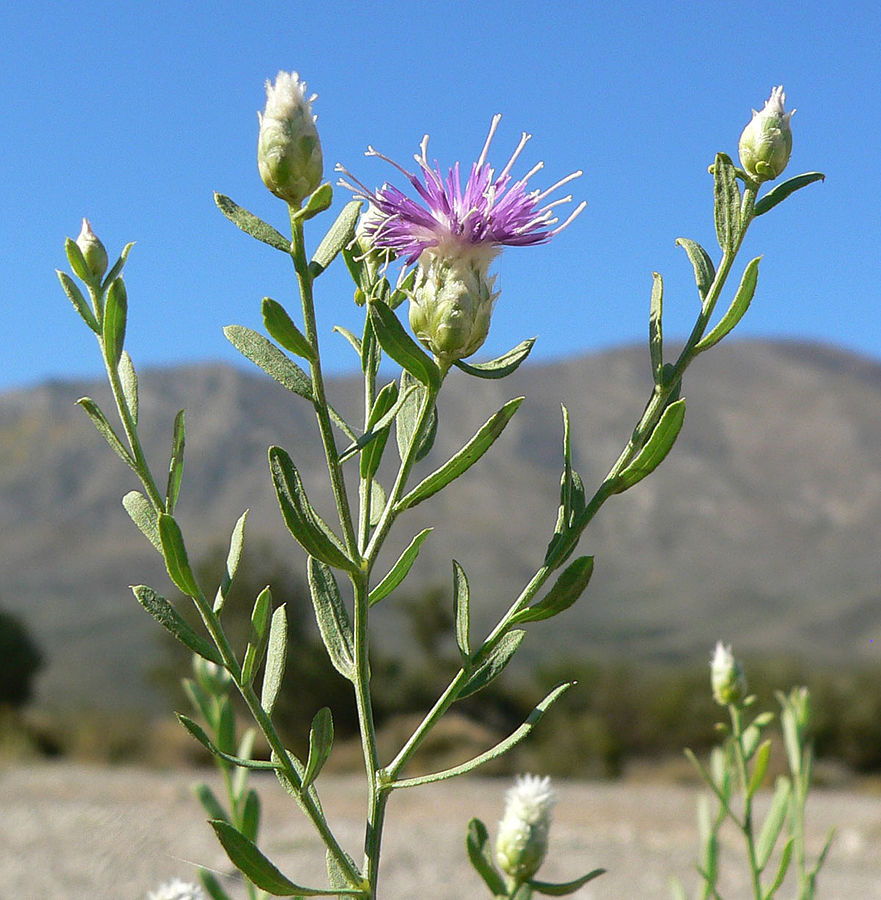
“Noxious Weeds – Twin Falls County” from twinfallscounty.org and used with no modifications.
Distinctive Purple Flowers and Scaly Bracts
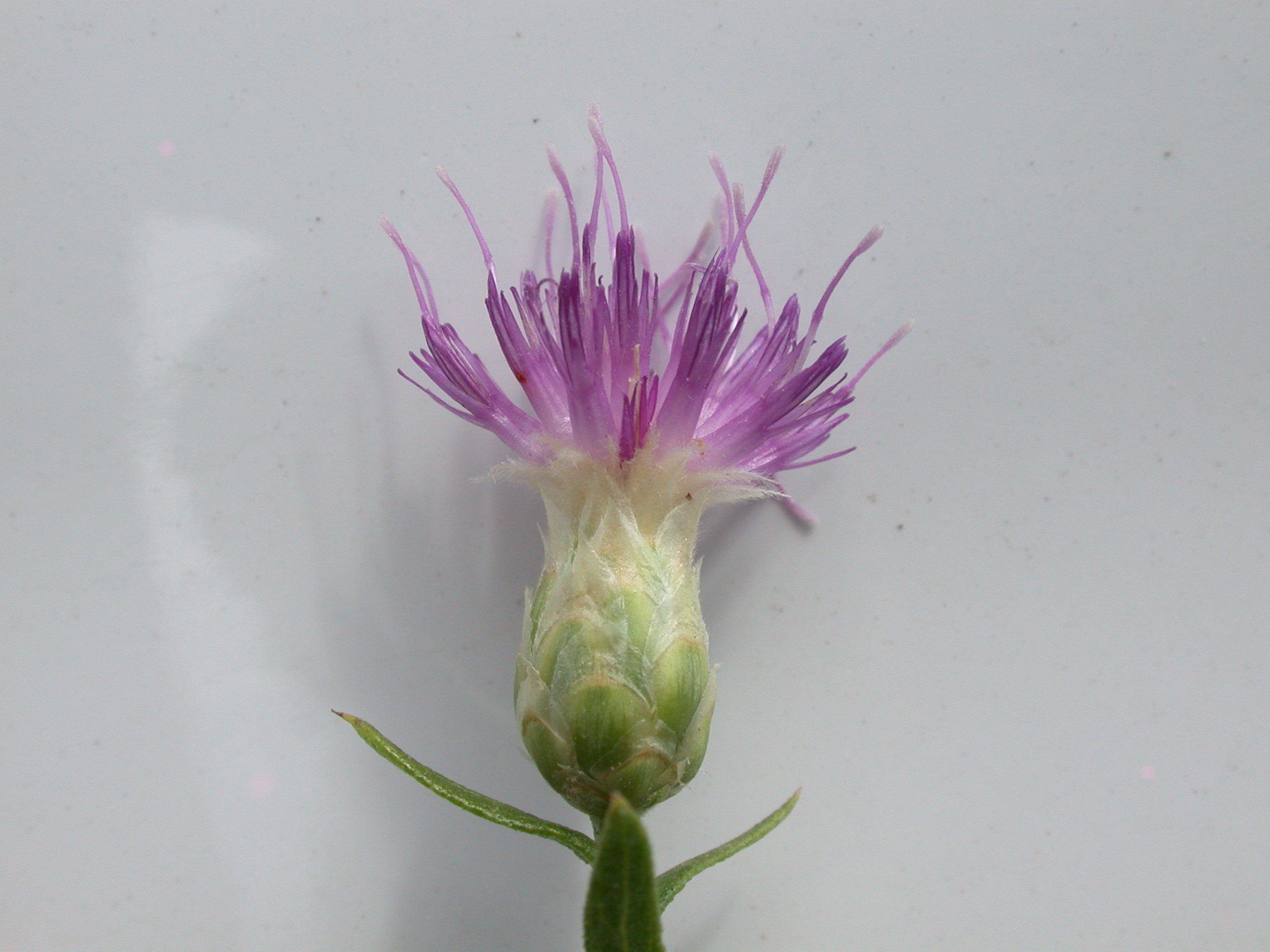
The most noticeable feature of mature Russian knapweed is its thistle-like purple to pink flowers that appear from early summer through fall. Unlike true thistles, these flower heads are relatively small (about ½ inch in diameter) and lack sharp spines. Look closely at the base of each flower head and you’ll notice papery bracts with distinctive rounded, transparent tips that have a papery or scaly appearance.
These flower heads grow singly at the ends of branches rather than in clusters, giving the plant a somewhat sparse appearance when in bloom. The flowers themselves resemble small artichokes with their overlapping bracts, though the pinkish-purple petals emerging from the center create a more ornamental appearance that sometimes leads homeowners to mistake them for desirable garden plants.
Gray-Green Leaves and Growth Pattern
Before flowering, Russian knapweed can be identified by its gray-green leaves that are covered with fine hairs, giving them a slightly woolly appearance. Lower leaves are deeply lobed and can reach up to 6 inches long, while upper stem leaves become progressively smaller and less lobed as they ascend the stem. The plant typically forms a rosette of leaves close to the ground in early spring before sending up multiple stems that branch in the upper portions.
The entire plant has a somewhat blue-green or grayish cast that distinguishes it from the bright green of many lawn grasses and ornamental plants. In late summer, the stems become increasingly rigid and woody, persisting through winter as straw-colored stalks that mark where colonies will reemerge the following spring.
Root System: The Black Scaly Giveaway
Perhaps the most definitive feature for identifying Russian knapweed is its distinctive root system. Dig up a suspect plant and examine the roots – Russian knapweed has a black or dark brown root with a scaly appearance that is unlike most other plants. This extensive root system is the key to the plant’s survival and what makes it so difficult to eradicate. Roots can extend vertically up to 23 feet deep and spread horizontally, allowing a single plant to spawn new shoots over a surprisingly large area.
These roots have a unique ability to fragment and regenerate, meaning that each piece left in the soil after attempted removal can potentially grow into a new plant. The black, scaly texture is particularly evident on the vertical roots and root crown, creating a distinctive appearance that experienced land managers learn to recognize immediately. For those interested in maintaining safe garden ideas that prevent overgrowth, understanding these characteristics is crucial.
Plants Commonly Confused with Russian Knapweed
Several plants share visual similarities with Russian knapweed, leading to potential misidentification. Spotted knapweed has similar flowers but features distinctive dark spots on its bracts. Diffuse knapweed can be distinguished by its white flowers and sharp, spine-tipped bracts. Canada thistle, while in the same family, has more deeply lobed, spiny leaves and forms different flowering structures.
Bachelor’s buttons (Centaurea cyanus), a common garden plant, resembles Russian knapweed but has larger, more vibrantly blue flowers and lacks the invasive root system. When in doubt, examine the root system – the black, scaly roots of Russian knapweed are unique among these look-alikes and provide definitive identification. For more on safe plant options, check out our guide on fern care and pet safety.
Russian Knapweed Toxicity: Is Your Pet at Risk?
The toxicity of Russian knapweed varies dramatically depending on which animals encounter it. Understanding these differences is crucial for pet and livestock owners who might have this invasive plant on their property. The plant contains several compounds that affect different species in unique ways, with some animals experiencing no ill effects while others face potentially fatal consequences.
“Chewing Disease” – The Deadly Threat to Horses
For horses, Russian knapweed is exceptionally dangerous. Extended consumption leads to a fatal condition known as “chewing disease” or nigropallidal encephalomalacia. This progressive neurological disorder causes irreversible damage to the horse’s brain, specifically the areas controlling facial muscles and the ability to chew and swallow. Once symptoms develop, there is no effective treatment or cure. For those interested in learning about pet safety regarding plants, check out this guide on plant care and pet safety.
The neurotoxins in Russian knapweed affect the black nucleus and the globus pallidus areas of the brain, causing degeneration of nerve cells that control motor function. Initially, horses develop facial muscle tremors and difficulty prehending food. As the disease progresses, they become unable to eat or drink despite showing interest in food, essentially starving while food is available. Most affected horses either die or require euthanasia within weeks to months of showing symptoms. For more information on similar issues, consider reading about American chestnut pet safety and its impact on animals.
What makes this particularly insidious is that horses don’t naturally avoid Russian knapweed. In fact, some horses seem to develop a preference for it, especially when other forage is limited. The effects are cumulative – horses typically must consume Russian knapweed for 30-60 days before showing clinical signs, but by then, the damage is irreversible.
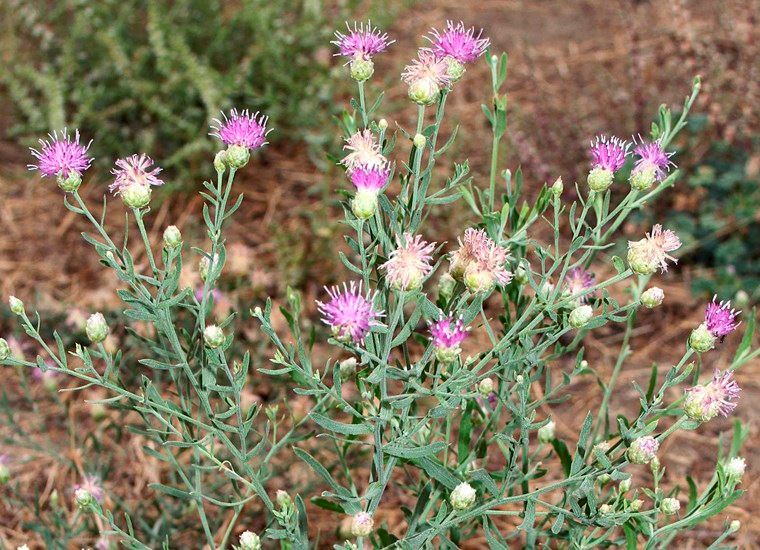
“Russian Knapweed | Summit County, UT …” from www.summitcountyutah.gov and used with no modifications.
Is Russian Knapweed Safe for Dogs and Cats?
Unlike horses, domestic pets appear to face minimal risk from Russian knapweed. According to the ASPCA, this plant is not listed among those considered toxic to dogs and cats. Most dogs and cats naturally avoid consuming significant quantities of the plant due to its bitter taste. The compounds that prove so devastating to equines don’t seem to affect our common household pets in the same way.
However, this doesn’t mean pet owners should be complacent. Any plant material can potentially cause mild gastrointestinal upset if consumed in large quantities. Additionally, individual animals may have unique sensitivities or allergic reactions. As a precaution, it’s best to prevent pets from consuming any invasive weeds, even those not considered officially toxic.
If you suspect your dog or cat has ingested Russian knapweed and is showing unusual symptoms like vomiting, diarrhea, or lethargy, consult your veterinarian. While serious toxicity is unlikely, it’s always better to err on the side of caution when it comes to your pet’s health. For tips on keeping your garden safe for pets, explore these safe garden ideas.
Warning Signs Your Horse Has Consumed Russian Knapweed
Horse owners should remain vigilant for early signs of knapweed poisoning. The initial symptoms are subtle and easily missed, typically appearing after 4-8 weeks of consistent consumption. Early indicators include slight facial muscle tremors, particularly around the lips and eyes, and mild difficulty grasping food. Affected horses may drop partially chewed food from their mouths or take longer than normal to finish meals.
As the condition progresses, symptoms become more pronounced. Horses develop a characteristic stance with the head extended and lips retracted in what some describe as a “grinning” expression. They typically remain alert and interested in food but become increasingly unable to eat or drink. Weight loss accelerates rapidly, and horses may become frustrated or anxious around feeding time due to their inability to consume food. Without intervention, affected horses will ultimately die from dehydration and starvation.
The window for effective intervention is extremely narrow. By the time obvious symptoms appear, brain damage is typically permanent. This makes prevention through proper pasture management and weed control the only effective strategy for protecting horses from this deadly threat.
Why This Weed Is So Invasive
Russian knapweed ranks among North America’s most problematic invasive plants due to its aggressive growth habits, resilient nature, and remarkable adaptability. Understanding why this plant is so successful at invading new territories helps explain why control efforts often fall short and why comprehensive management strategies are necessary.
Native Origins in Eurasia
- Originally from Central Asia, particularly Kazakhstan, Uzbekistan, and surrounding regions
- First introduced to North America in the early 1900s as a contaminant in alfalfa seed and crop shipments
- Evolved in harsh continental climates, giving it natural resilience to temperature extremes
- In native range, kept in check by specialized insects and pathogens that don’t exist in North America
Russian knapweed evolved in the steppes and semi-arid regions of Central Asia where it developed remarkable drought tolerance and cold hardiness. These adaptations give it significant advantages when introduced to similar climates in North America. Unlike in its native range, where it exists as just one component of diverse plant communities, in North America it lacks the natural enemies that would normally keep it in check.
The plant was never intentionally imported for ornamental or agricultural purposes. Instead, it arrived accidentally mixed with crop seeds and has since spread across the continent. This accidental introduction means the plant wasn’t selected for any beneficial characteristics that might offset its invasive tendencies, as is sometimes the case with deliberately introduced species.
In its native range, Russian knapweed has co-evolved with specialized insects that feed exclusively on its tissues and pathogens that limit its spread. The absence of these natural control agents in North America creates what ecologists call “enemy release,” allowing the plant to direct all its energy toward growth and reproduction rather than defense.
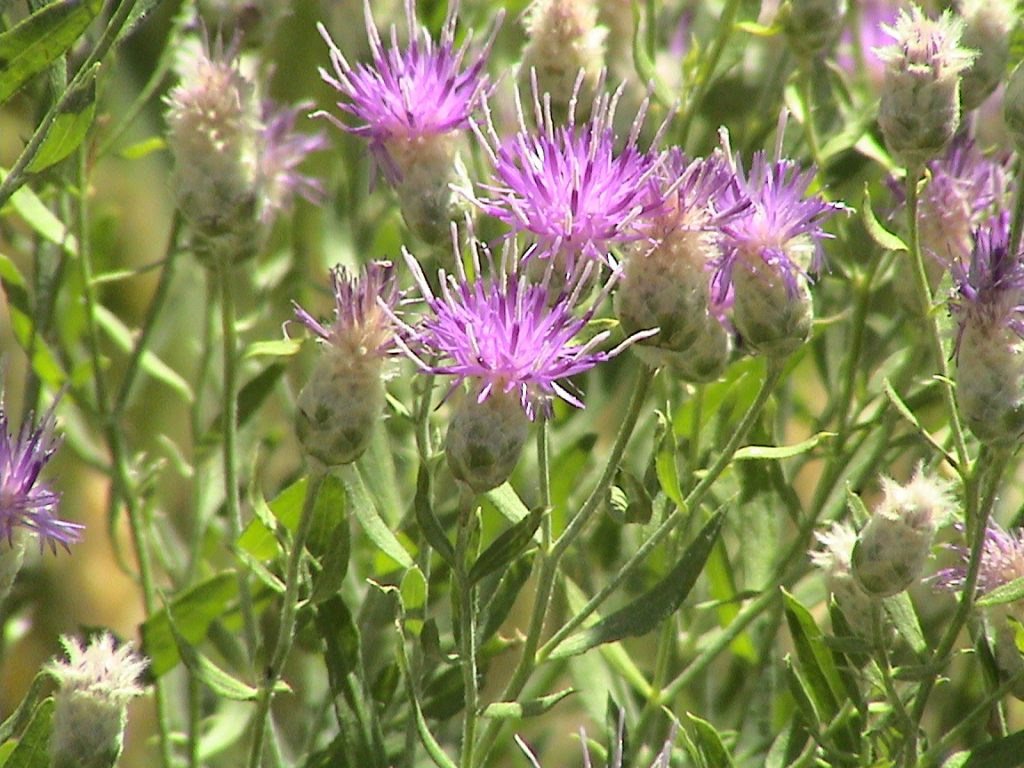
“Russian Knapweed – Adams County Extension” from adams.extension.colostate.edu and used with no modifications.
How It Spreads So Effectively
Russian knapweed employs multiple strategies to colonize new areas and expand existing populations. While seed production plays a role in long-distance dispersal, it’s the plant’s vegetative reproduction through its extensive root system that makes it particularly difficult to control once established. A single plant can expand to cover several square feet within just one or two growing seasons.
- Produces up to 1,200 seeds per plant that remain viable in soil for 2-3 years
- Seeds easily transported by wind, water, equipment, vehicles, and in contaminated hay
- Rapidly reproduces through creeping horizontal roots that can sprout new plants
- Root fragments as small as 1 inch can generate entirely new plants when disturbed
- Can regenerate from roots even after aboveground portions are completely removed
The most insidious aspect of Russian knapweed’s spread is its ability to regenerate from root fragments. Cultivation and tilling, which effectively control many weeds, actually exacerbate knapweed infestations by chopping and spreading root pieces. Each fragment can produce a new plant, turning one problem into dozens. This regenerative capacity explains why many common control methods prove ineffective or counterproductive.
Equipment and vehicles frequently transport both seeds and root fragments to new locations. A single contaminated tractor or mower can establish new infestations across multiple properties. The plant’s seeds, while not equipped with specialized dispersal mechanisms like some other invasives, are still easily spread by wind, water, and animal fur. They can remain dormant in soil for several years before germinating when conditions become favorable. For more information on managing invasive plants, check out this guide on controlling wild buckwheat growth.
The Allelopathic Advantage: Chemical Warfare Against Other Plants
Perhaps Russian knapweed’s most powerful invasive weapon is its production of allelopathic chemicals – natural compounds that inhibit the growth and survival of neighboring plants. The roots exude substances that act as natural herbicides, creating a zone around each plant where competitors struggle to germinate or grow. This chemical warfare gives knapweed a significant competitive advantage, allowing it to establish near-monoculture stands that exclude native vegetation.
Scientists have identified several polyacetylene compounds in Russian knapweed that interfere with cellular functions in other plants. These chemicals persist in soil for months to years, creating a legacy effect that continues to suppress native plant recovery even after knapweed is removed. This allelopathic effect partially explains why areas invaded by Russian knapweed remain barren of other vegetation and why restoration efforts often struggle to reestablish diverse plant communities without extensive soil remediation.
5 Effective Methods to Remove Russian Knapweed
Controlling Russian knapweed requires persistence and a multi-faceted approach. Due to its extensive root system and regenerative capabilities, quick fixes rarely provide lasting results. Instead, a sustained, integrated management strategy gives the best chance of success. The good news is that with diligence and the right techniques, even severe infestations can be managed effectively.
1. Mechanical Removal: What Works and What Doesn’t
Mechanical control methods alone generally prove ineffective against established Russian knapweed infestations due to the plant’s extensive root system. Hand-pulling small, isolated plants can work for very recent introductions, but you must remove the entire root to prevent regrowth. For most infestations, digging or pulling simply fragments the roots, potentially worsening the problem by creating multiple new plants from each piece left behind. For those dealing with other invasive species, learn about wild buckwheat control methods that might offer alternative solutions.
Mowing can help reduce seed production when timed correctly, but doesn’t address the root system. Schedule regular mowing just before flowering begins, typically in early summer, and repeat throughout the growing season. This depletes root reserves over time but requires multiple years of consistent implementation. Never mow after seed formation has begun, as this can spread seeds to new areas. For additional tips on garden maintenance, explore these safe garden ideas.
Tillage and cultivation are generally counterproductive unless performed repeatedly throughout multiple growing seasons. A single cultivation typically fragments roots and spreads the infestation. However, extremely frequent tillage (every 10-14 days throughout the growing season) can eventually exhaust root reserves, though this approach is rarely practical for most landowners.
2. Chemical Control Options for Homeowners
Herbicides offer the most effective approach for controlling established Russian knapweed infestations. Products containing aminopyralid, clopyralid, or picloram have proven most effective, though these may require professional application depending on local regulations. For homeowners, glyphosate products (like Roundup) can be effective when applied during the bud to early flower stage when the plant is actively moving sugars to the roots.
Timing is critical for herbicide success. Applications in late spring to early summer (at flower bud stage) or in fall after the first frost (but while leaves are still green) provide optimal results. Multiple treatments over 2-4 years are typically necessary for complete control. Always read and follow all label instructions carefully, as misapplication can damage desirable plants or create environmental hazards.
Selective herbicides that target broadleaf plants while sparing grasses can be particularly useful in pasture settings. These allow for the maintenance or reestablishment of competitive grass cover that helps prevent knapweed reinvasion. Be aware that many effective herbicides have restrictions regarding grazing, haying, or slaughter of animals that consume treated vegetation.
3. Biological Control Using Natural Predators
Several biological control agents have been introduced to help manage Russian knapweed in North America. The most promising include the gall midge (Jaapiella ivannikovi) and the gall wasp (Aulacidea acroptilonica), both of which attack the plant’s stems and flowers. These insects can significantly reduce seed production and plant vigor when established in sufficient numbers.
Biological controls work best as part of an integrated management approach rather than as standalone solutions. They rarely eradicate knapweed completely but can reduce its dominance and slow its spread. Establishment of biological control agents typically takes several years, making this a long-term strategy rather than a quick fix. Contact your local agricultural extension office to learn about availability and release programs in your area.
The advantage of biological controls is their self-sustaining nature – once established, they continue to work without additional input. They’re particularly valuable for large or remote infestations where other control methods may be impractical or prohibitively expensive. However, their effectiveness varies with climate and site conditions, making results somewhat unpredictable.
4. Grazing Management with Sheep and Goats
While horses must never graze areas containing Russian knapweed, sheep and goats can safely consume the plant and even help control infestations. These animals appear immune to the neurotoxins that affect horses and will readily graze knapweed when properly managed. Intensive rotational grazing with sheep or goats during the early growth stages can significantly reduce plant vigor and prevent seed production.
For effective control, grazing should begin in early spring when plants first emerge and continue throughout the growing season. High-intensity, short-duration grazing provides better results than continuous light grazing. Multiple years of targeted grazing are typically needed to achieve significant reductions in knapweed populations, but this approach can be incorporated easily into existing livestock operations.
The advantage of grazing as a control method is its ability to simultaneously generate income or food products while managing the weed problem. However, careful management is essential to prevent overgrazing of desirable species, which could actually worsen knapweed infestations by reducing competition. Additionally, grazing animals can spread seeds through their manure, so timing grazing to occur before seed development is critical.
5. Integrated Approach for Stubborn Infestations
The most successful Russian knapweed management programs combine multiple control techniques applied strategically over several years. An integrated approach might begin with herbicide application followed by reseeding with competitive grasses, then maintenance through targeted grazing or spot treatments of herbicide for new growth. This multi-pronged strategy addresses both existing plants and prevents reinvasion.
Revegetation with competitive native or adapted plants is crucial to long-term success. Bare ground created after knapweed control will quickly be recolonized, either by knapweed or other desirable species. Establishing a healthy stand of perennial grasses creates competition that helps prevent knapweed from regaining dominance. Species like pubescent wheatgrass, Russian wildrye, and western wheatgrass have proven particularly effective at competing with Russian knapweed.
Commitment to monitoring and follow-up treatments for at least 3-5 years is essential regardless of which control methods you choose. Russian knapweed’s persistent seed bank and regenerative root system mean that even seemingly successful control efforts can be quickly reversed without vigilance. Document your control efforts and results to help refine your approach over time, similar to how American chestnut restoration efforts are carefully tracked and adjusted.
Where You’ll Find Russian Knapweed Growing
Understanding where Russian knapweed typically grows helps property owners identify high-risk areas that warrant regular monitoring. This invasive plant has distinct preferences for certain environmental conditions, though it demonstrates remarkable adaptability once established.
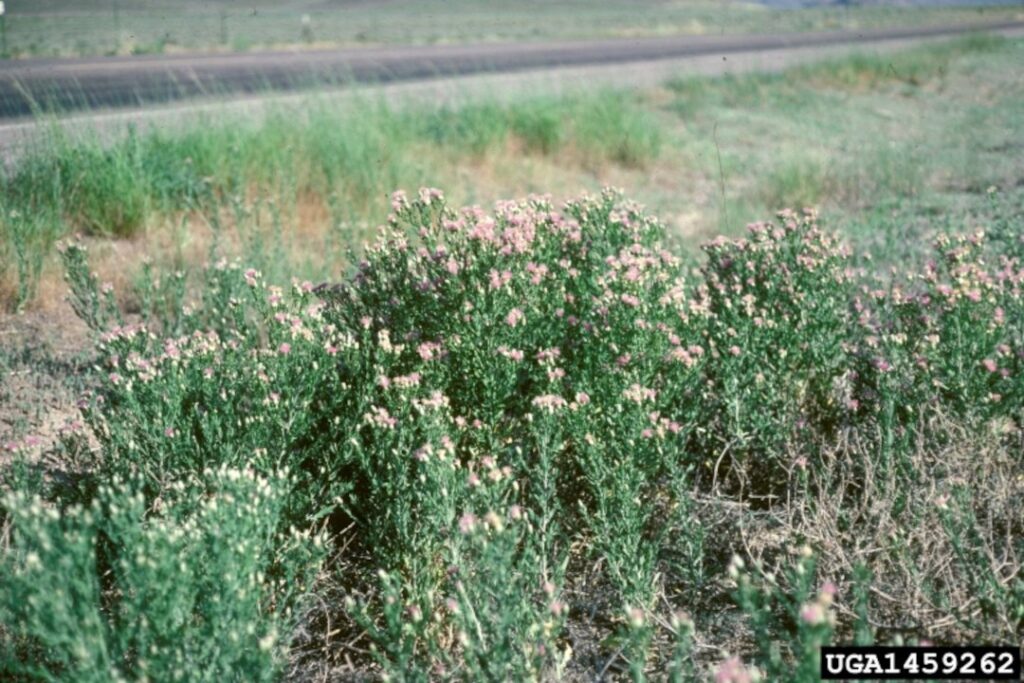
“Russian knapweed – Agricultural Biology” from agsci.colostate.edu and used with no modifications.
Climate and Soil Preferences
Russian knapweed thrives in semi-arid regions with 12-30 inches of annual precipitation. It’s exceptionally drought-tolerant once established due to its deep taproot that can access water sources unavailable to many native plants. This adaptation allows it to remain green and growing even during dry summer months when competing vegetation may become dormant. While it prefers areas with moderate moisture, it can survive in conditions ranging from fairly dry to occasionally wet. For more information, visit the Washington State Noxious Weed Control Board.
U.S. Regions Most Affected
The western United States has been particularly impacted by Russian knapweed invasions. States like Colorado, Wyoming, Montana, Idaho, Washington, Oregon, Utah, and California report significant infestations, with millions of acres affected collectively. The plant’s preference for semi-arid conditions makes these western states ideal habitat, though infestations have been reported in nearly every U.S. state. For more detailed information, you can visit the Washington State Noxious Weed Control Board.
Within affected regions, the plant is most commonly found in disturbed areas with access to at least seasonal moisture. River corridors, irrigation ditches, roadside drainage areas, and low-lying pastures frequently harbor the densest infestations. The combination of periodic moisture and soil disturbance creates ideal conditions for Russian knapweed establishment and spread.
Common Habitats in Residential Areas
In residential settings, Russian knapweed often first appears in disturbed soil areas like newly constructed landscaping, along driveways and fencelines, or in neglected corners of properties. It readily colonizes garden edges, vacant lots, and areas where irrigation runoff creates periodically moist conditions. The plant seems particularly adept at establishing in compacted soils where many desirable species struggle, making it a common invader of walkways, equipment storage areas, and other high-traffic zones.
Horse properties deserve special attention due to the plant’s toxicity to equines. Russian knapweed commonly invades pastures, particularly those that have been overgrazed or where bare soil is exposed. It also readily establishes along horse trails, in paddocks, and around water sources where soil disturbance is common. Horse owners should be particularly vigilant about identifying and controlling this plant before horses have access to affected areas. For more information on managing invasive plants, explore our guide on controlling growth with companion plants.
Protect Your Property and Pets from This Toxic Invader
Prevention remains the most cost-effective approach to Russian knapweed management. Regular property inspections, particularly of high-risk areas like pasture edges, disturbed soil, and waterways, can catch new infestations while they’re still manageable. Learn to identify Russian knapweed in all its growth stages, from spring rosettes to summer flowering to winter-dormant stems. When purchasing hay or other forage for horses, verify it comes from weed-free sources to prevent accidental introduction.
For horse owners, the stakes are particularly high. Create buffer zones between known knapweed infestations and horse pastures or paddocks. Consider fencing off affected areas until control measures have been completed and follow-up monitoring confirms the plant has been eliminated. Never assume horses will avoid toxic plants – many will readily consume Russian knapweed, especially when other forage is limited. Your vigilance in identifying and controlling this invasive plant could literally save your horse’s life.
Frequently Asked Questions
Russian knapweed management generates many questions from concerned property owners, especially those with livestock. Here are answers to some of the most common inquiries about this invasive plant.
How long does it take for Russian knapweed to affect a horse?
Horses typically must consume Russian knapweed for 30-60 consecutive days before showing clinical signs of chewing disease. However, this timeline can vary based on the amount consumed and individual horse susceptibility. Once symptoms appear, the damage is permanent and irreversible. Some horses may show subtle changes in eating patterns or facial muscle control after as little as 28 days of consumption.
The cumulative nature of toxicity means horses don’t immediately show effects from casual exposure. A horse that consumes small amounts occasionally is at lower risk than one grazing daily in an infested pasture. However, there’s no established “safe” level of consumption, so preventing any access remains the only reliable protection against this deadly condition. For further insights on pet safety, check out this guide on American chestnut pet safety.
Can Russian knapweed be safely composted?
Composting Russian knapweed is not recommended. While proper hot composting can kill seeds, it doesn’t reliably neutralize the allelopathic chemicals in the plant tissue that can inhibit growth of other plants. Additionally, root fragments may survive the composting process and establish new infestations wherever the compost is spread. For safe disposal, bag plants in plastic and send to landfill, or dry completely and burn where permitted by local regulations.
Will mowing alone eliminate Russian knapweed?
Mowing alone will not eliminate established Russian knapweed infestations. While regular mowing can prevent seed production and gradually deplete root reserves over several years, it rarely achieves complete control without additional management strategies. Mowing is most effective when integrated with other control methods like herbicide application or competitive planting. For best results when mowing, cut plants at the early bud stage and repeat whenever regrowth reaches about 6-8 inches in height throughout the growing season.
Does Russian knapweed cause skin irritation in humans?
Russian knapweed rarely causes skin irritation in humans, unlike some related species like yellow starthistle. However, some individuals may experience mild contact dermatitis from the plant’s sap or fine hairs, particularly with prolonged exposure during control efforts. Wearing gloves, long sleeves, and pants when handling the plant is recommended as a precaution. The primary human health concern with Russian knapweed is not direct contact but rather its impact on livestock, particularly horses, that may consume it.
How can I tell if Russian knapweed has invaded my pasture?
Look for patches of gray-green plants with a somewhat uniform height (1-3 feet tall when mature), often growing in dense stands where other vegetation is sparse or absent. From June through September, the distinctive pink to purple flowers provide easy identification. During other seasons, look for the rigid, somewhat woody stems that persist through winter, or the rosettes of lobed gray-green leaves in spring. Digging up suspicious plants reveals the definitive black, scaly roots that positively identify Russian knapweed. Regular pasture walks, particularly along fencelines, waterways, and disturbed areas, help catch new infestations early.
If you’re unsure about plant identification, many local extension offices offer free or low-cost identification services. Taking clear photos or carefully collecting samples (sealed in plastic bags to prevent spread) can help experts confirm whether Russian knapweed has established on your property. Early detection significantly improves control success and reduces management costs. For additional guidance on plant safety, you might find our article on sword fern pet safety helpful.